

There was a time when attending a burial was one of the few occasions when Ugandans could put aside their political differences, stand together and pay their last respects to the departed. Our Ugandan Musicians recently did it at Afrigo Band’s Moses Matovu’s Vigil. Sadly, those days are increasingly becoming history in the world of politicians. Today, one may need to consider not only the relationship they had with the deceased but also the political colour they intend to wear before attending a funeral.
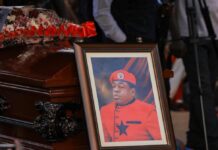
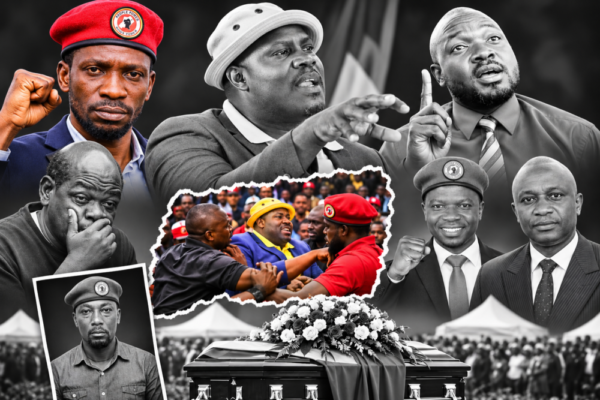
The October 25th, 2026, burial of former Busiro South MP Charles Matovu in Kungu-Lutale, Wakiso district, presented another disturbing illustration of how political intolerance is finding its way into even the most sacred of our cultural obligations.
Kibuku County MP Herbert Tom Kinobere reportedly found himself at the centre of a confrontation after attending the burial wearing a Patriotic League of Uganda (PLU) cap. According to accounts surrounding the incident, some individuals involved in managing security at the burial had reportedly communicated that he should not attend. He nevertheless proceeded to the venue, where he was confronted by a section of mourners and individuals identified as NUP supporters.
The confrontation reportedly escalated into physical intimidation. Kinobere was surrounded, roughed up and nearly pelted with objects. His vehicle was also targeted, with its tyres deflated and damage inflicted. Police subsequently confirmed an attack on Kinobere and other mourners perceived to support the ruling NRM. Twenty suspects were arrested.
One is left wondering whether the deceased had to belong to a particular political party for his friends and colleagues to be allowed to mourn him. Have we reached a point where even death cannot bring Ugandans together unless they first establish one another’s political affiliations?
Perhaps the most disturbing aspect of this incident is that it is not happening in isolation. Uganda has witnessed several funeral-related confrontations involving political supporters, with NUP supporters featuring prominently in a number of publicly reported incidents.
In October 2022, the burial of Suleiman Jakana Nadduli, son of former Luwero District Chairman Abdul Nadduli, was marred by confrontations involving NUP and NRM supporters. Police accused NUP activists of assaulting NRM supporter Ivan Kamuntu Majambere, who was reportedly beaten with chairs and blunt objects. Although the incident involved competing accounts of what transpired, the violence demonstrated how partisan disagreements could turn a family bereavement into a political battlefield.
In May 2024, during the burial of Pasikali Ssekasamba, a NUP supporter, MP Abed Bwanika reportedly had his microphone grabbed by a section of mourners while delivering his speech. The situation became tense, prompting NUP president Robert Kyagulanyi to intervene and apologise for the conduct of the supporters.
Then came the January 2025 burial of former Kawempe North MP Muhammad Ssegirinya. What should have been a dignified send-off became another episode of confrontation following disagreements over funeral arrangements and the parliamentary send-off. NUP supporters reportedly blocked the movement of the body to the venue designated by Parliament, resulting in scuffles and reported injuries. The disagreement exposed the divisions within the opposition party itself, with rival political interests overshadowing the occasion.
These incidents raise an uncomfortable question for NUP, a political organisation whose public identity is strongly associated with the struggle for democracy, human rights, political freedom and an end to intolerance.
It is one thing to demand that government respects the rights of opposition supporters, protects freedom of association and allows citizens to participate in public affairs without intimidation. It is another to demonstrate those same principles when the people involved happen to hold opposing political views.
Democracy cannot be a one-way street. Human rights cannot be selectively applied depending on whether the person exercising them wears a red beret, a yellow shirt or a PLU cap. Political tolerance is not a privilege that should be extended only to those who agree with us.
NUP leadership therefore has a responsibility to confront this contradiction. It cannot continuously preach political tolerance while remaining silent whenever supporters associated with its political establishment are accused of intimidating opponents. If the party expects the Government to hold its security agencies and supporters accountable, it must equally demonstrate that standard within its own ranks.
Perhaps NUP could borrow a leaf from the recent burial of its own supporter, comedian Mbuuse Yokana, popularly known as Kapere. Reports surrounding his burial indicate that his family had to defend his stated wishes concerning his final resting place amid disagreements with individuals claiming to be relatives. While this was primarily a family dispute rather than an established political confrontation, it provides another reminder of how important it is to respect the wishes of the deceased and allow families to conduct burials with dignity.
One would hope that future funeral arrangements, including those involving politically active individuals, would not require extraordinary precautions simply to guarantee a peaceful send-off. Surely, a deceased person’s final wishes should not become another battlefield for the living.
But NUP is not alone in this responsibility. The NRM and other political formations must also examine their conduct. Political intolerance, intimidation and violence are not acceptable simply because they are committed by supporters of the ruling party. The same standards of accountability must apply to everyone.
The circumstances surrounding Kinobere’s attendance also deserve scrutiny. If he had indeed been advised not to attend because of security concerns, as some accounts suggest, he should have exercised caution. Political leaders must understand the sensitivities surrounding public engagements. However, ignoring a warning, even if established, does not amount to consent to assault, intimidation or destruction of property.
There is a difference between asking someone to exercise caution and taking the law into one’s own hands to determine who deserves to attend a funeral. Burial organisers may establish reasonable arrangements to maintain order, but no political group should assume the authority to screen mourners according to party affiliation.
Deputy Speaker Thomas Tayebwa’s proposal for a parliamentary reconciliation committee involving representatives from both the Government and Opposition is a welcome opportunity for dialogue. His question about whether Uganda has become so politically divided that MPs cannot safely bury one another’s colleagues deserves serious national reflection.
However, reconciliation must not become an alternative to accountability. The police investigations into the Matovu burial should establish individual responsibility, while political leaders should publicly discourage violence and intimidation within their ranks.
More importantly, our political leaders must reconsider the language and conduct they encourage among their supporters. When political opponents are constantly portrayed as enemies, some supporters may begin to believe that ordinary social interactions are extensions of political battles.
The irony is that many of the people who fight over political colours at funerals will eventually share the same graveyards. The deceased cannot appreciate the political loyalty displayed in their name, and the bereaved family should not have to negotiate political allegiances before receiving mourners.
NUP has built much of its political message around the demand for a democratic Uganda in which citizens enjoy their freedoms without intimidation. That message carries an obligation: the party must demonstrate those principles even when the beneficiaries are political opponents. The NRM must equally demonstrate that political tolerance is not merely a slogan reserved for its opponents.
Perhaps the most important lesson from the Kinobere incident is that Uganda must stop allowing political competition to invade every aspect of community life.
A burial should not require a security briefing on the political identity of expected mourners. Nobody should have to seek permission from political supporters to mourn a colleague, friend or fellow citizen.
Surely, we have not reached a point where one must first establish the political colour of the deceased before deciding which colour to wear to their burial. Let the dead rest in peace, and let the living learn to live together.