

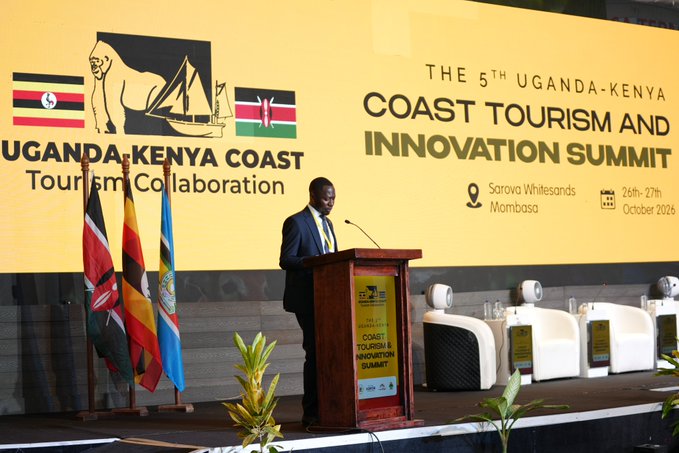
The 5th Uganda-Kenya Coast Tourism and Innovation Summit 2026 has opened at Sarova Whitesands Beach Resort & Spa in Mombasa, bringing together more than 300 tourism traders from both countries to strengthen regional cooperation, promote innovation and address barriers to seamless travel.
Held under the theme “Unlocking Tourism Opportunities: Resolving Policy Bottlenecks through Technology, Youth and Seamless Mobility across East Africa,” the summit seeks to unlock new opportunities for sustainable tourism growth through stronger partnerships and improved connectivity.
Key speakers included Suzan Nakawuki, Uganda’s Minister of State for Tourism, and Ambassador Charles Ssentongo, representing Uganda’s Permanent Secretary at the Ministry of Foreign Affairs.
Ambassador Ssentongo reaffirmed Ugandan government’s commitment to strengthening cross-border tourism cooperation, noting that tourism is central to the country’s Ten-Fold Growth Strategy, which aims to grow the economy from US$50 billion to US$500 billion by 2040. He called for practical, time-bound solutions to trade barriers affecting tourism and regional business competitiveness.
Ambassador Herbert Kiguli, Uganda’s Consul General in Mombasa, urged both countries to embrace complementarity rather than competition through the “Beach to Bush, Bush to Beach” concept, linking Kenya’s coastal attractions with Uganda’s wildlife, natural and cultural heritage.
Discussions on the opening day highlighted the need for multi-destination tourism packages featuring attractions such as Bwindi Impenetrable National Park, Kibale National Park and Murchison Falls. Participants also proposed digital visa solutions, streamlined travel insurance, greater technology adoption, complimentary local SIM cards for tourists, and better coordination of regional flight schedules.
The summit further emphasized youth entrepreneurship, data-driven tourism product development, and closer collaboration among tour operators and ground handlers.
The meeting is expected to advance practical solutions to policy bottlenecks, strengthen Uganda-Kenya tourism partnerships, and position East Africa as a more connected and competitive multi-destination tourism region.