


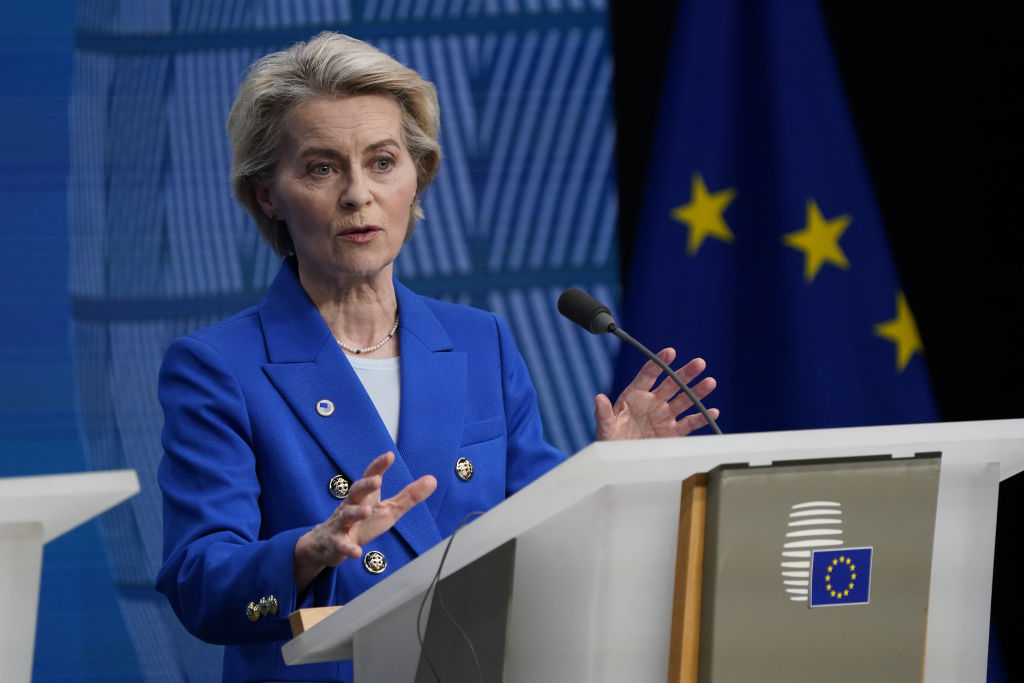
The European Commission has adopted the European Union (EU) KIDS Act to enhance the online safety of children throughout the Union.
The significant proposal prohibits children under the age of 13 from accessing social media platforms and establishes an EU-wide minimum age of 15 for minors to create their own accounts, like it is with the age limit of driving set at 18. Ensuring a gradual approach to online engagement for kids is necessary.
In a statement released by the EU commission on September 17th 2026, the KIDS Act also reverses the burden of proof, requiring service providers to demonstrate that their services are age-appropriate and safe by design.
Ursula von der Leyen, the Commission’s President highlighted that today children are engaging with the most sophisticated technologies ever created, technology which was never created with the wellbeing of the children in mind.
“Our KIDS Act is reversing the burden of proof – it is for platforms to show they are safe by design. And we put parents back in the driving seat, giving them the tools to help their children navigate a safer online world,” Leyen noted.
The proposed EU KIDS Act is premiered around four key pillars
Social Media Delay
In the statement the Act proposes that children can only create autonomous accounts on social media services from the age of 15. For those aged between 13 and under 15, parental control is mandated, allowing guardians to set up mini accounts that children can access through their guardian’s account.
The approach enables access to age-appropriate social media and video-sharing platforms while ensuring safeguards such as limited social contacts and restricted screen time of up to one hour per day. Children aged 3 to under 13 will be prohibited from accessing social media but can use specially designed child-friendly video-sharing services through accounts managed by their guardians.
Safety-by-Design
The EU KIDS Act imposes obligations on all online services providing social media, video sharing, online video games, AI companions, and chatbots to users under 18. These obligations include banning addictive features and profiling-based recommendation systems that lead minors into harmful content.
The Act also prohibits infinite scroll without stopping points, reward tricks, and push notifications during sleeping hours. AI companions and chatbots must be turned off by default and cannot simulate interpersonal relationships in ways that create emotional dependency.
Additionally, profiles for minors must be private by default, with geolocation, camera, and microphone access disabled.
Privacy-Preserving Age Assurance
Under the EU KIDS Act, online services and app stores are required to implement age assurance tools, such as the EU age verification app, which does not retain identity documents or biometric data.
This approach is geared towards ensuring the highest privacy-preserving safeguards. Social media services and video-sharing platforms will also be required to perform age verification when a new account is created. For existing accounts, providers must estimate the user’s age based on reasonable proxies, such as account creation dates and credit card details.
Effective Enforcement
The proposal reverses the burden of proof, making providers of large online platforms responsible for proving their services are ‘safe by design.’ They must submit a compliance plan to the Commission and an independent auditor for thorough assessment. Should the auditor find shortcomings, the Commission can request corrective measures.
The enforcement framework builds on structures established under the Digital Services Act and the Artificial Intelligence Act, introducing expedited enforcement procedures against noncompliant providers.
Henna Virkkunen,the Executive Vice-President for Tech Sovereignty, Security and Democracy, welcomed the new Act, saying it will help children enjoy their rights to learn online and improve their research.
“With our EU KIDS Act, we make sure our children can enjoy their rights online – to learn, stay connected, and explore. We also give parents the tools to accompany their kids to navigate a safe digital world. All of this by keeping the pressure high on platforms, because they must prove their services do not harm,” Virkkunen noted.
The legislative proposal has been submitted to the European Parliament and Council, aiming to initiate the legislative process for examination and adoption. Given the urgent demand for comprehensive action at the Union level, swift adoption of the act is deemed essential.
This initiative builds upon the report and recommendations from the Co-Chairs of the Special Panel on Child Safety Online, Dr. Maria Melchior and Prof. Dr. Jorg M. Fegert. Convened by President von der Leyen, the Special Panel comprised over 60 experts, including civil society representatives, youth advocates, parents, educators, child psychiatrists, public health specialists, neurologists, and tech specialists. It first convened in March 2026 and met three times before delivering its report in July 2026.
According to the statement the proposal reflects a growing consensus among Europeans for enhanced protection for children online, with 92% of respondents indicating the need to strengthen children and young people’s online safety as a top policy priority, addressing issues such as cyberbullying, exposure to harmful content, and addictive design.