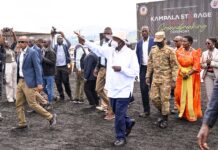

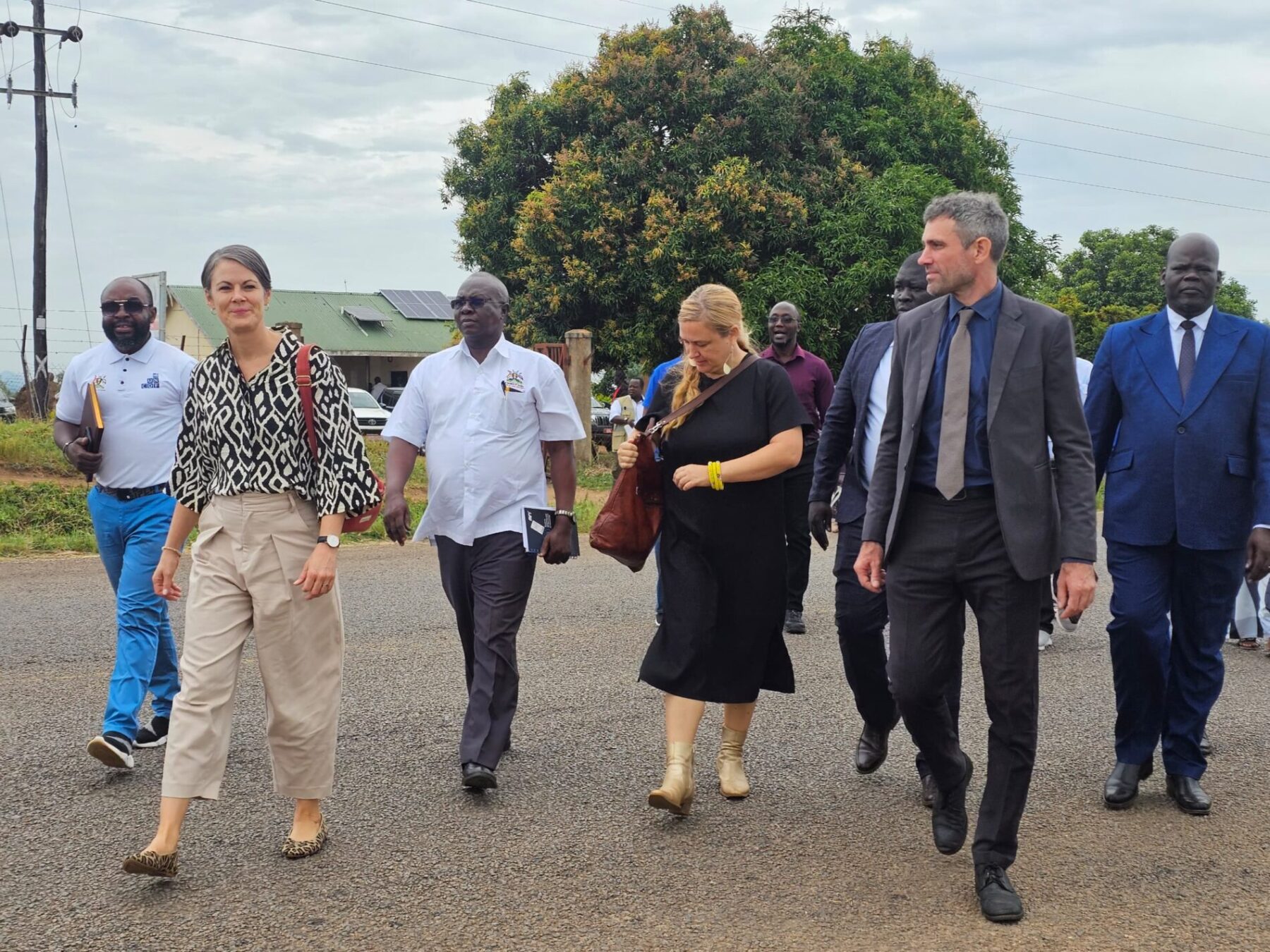
The Ministry of Local Government has launched the construction of the Pawel Langetta Mini Water Supply System in Kal village, Opara sub-county in Amuru district, alongside new Danish support to expand the Local Climate Adaptive Living Facility (LoCAL) to more districts in Uganda.
The water project, being implemented through the LoCAL Facility, will have a production capacity of 5,000 litres per hour and the ability to pump and store up to 32,000 litres. The system will cover a five-kilometre distribution network and is expected to serve about 1,300 people in Kal, Langetta and Opok villages.
The project will also supply water to key public institutions, including Pawel Langetta Primary School, Pawel Health Centre III, local markets and the Opara sub-county headquarters.
For residents, the project comes at a time when access to clean and reliable water has remained a persistent challenge.
The new system is expected to reduce the distance residents travel in search of water, improve school attendance and retention, and reduce the risks faced by women and girls who often travel long distances to collect water.
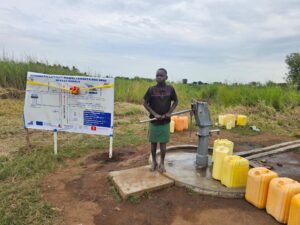

The water supply will also support small-scale irrigation at Pawel Langetta Primary School, create opportunities for women involved in market activities, and contribute to better sanitation, health and overall community wellbeing.
Representing the Permanent Secretary of the Ministry of Local Government, Ben Kumumanya, the Commissioner for Urban Inspection, Andrew Otim Kibwota commended Denmark for its continued support for climate-resilient investments in Ugandan communities.
“Climate resilience must translate into practical solutions that improve lives. This support brings climate finance closer to the people who need it most,” Kumumanya noted.
The launch also highlighted the growing international support for Uganda’s locally led climate adaptation programme.
Oyekunle-Ajai said Belgium provided seed funding in 2023 to launch LoCAL in Uganda, followed by support from the European Union, Ireland and now Denmark.
The Irish Ambassador to Uganda, H.E. Mags Gaynor said Uganda was well placed to attract more public and private climate finance if it continued to strengthen systems for evidence-based, locally led adaptation investments.
“Ultimately, I am confident that Uganda is well placed to demonstrate how to attract more public and private climate finance in Uganda with the right systems for evidence-based and locally led adaptation investment,” Gaynor said.
Speaking at the launch, Denmark’s Ambassador to Uganda, H.E. Signe Winding Albjerg, said Denmark had committed USD 23.47 million through the United Nations Capital Development Fund (UNCDF) to support rural communities in Uganda to adapt to the impacts of climate change.
The four-year support is expected to expand Performance-Based Climate Resilient Grants and technical assistance from 14 to 32 districts.
In the 2026/27 financial year, 62 climate-resilient investments are projected under the programme, with an estimated value of USD 4.8 million.
At the launch, Akun Lucy Odong, the Senior Clinical Officer and in-charge of Pawel Health Centre III, said the water system would make a significant difference to health service delivery.
“With water now closer to the health centre, sanitation and hygiene will improve, while patients, caregivers and expectant mothers will no longer have to cross the Juba Highway in search of water. This will also help reduce home deliveries associated with limited access to water at the facility,” Odong said.
Nathan Otutu, the Assistant Commissioner for Monitoring and Evaluation in the Office of the Prime Minister, urged the district local government to monitor the project and assess community satisfaction once construction is completed.
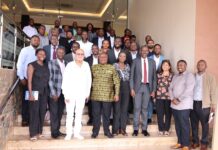
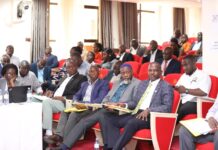
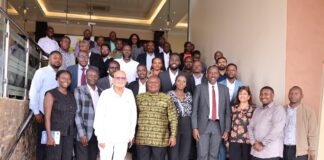
The launch brought together officials from the Ministry of Finance, Planning and Economic Development, the Office of the Prime Minister, the National Planning Authority, the Ministry of Water and Environment and the Ministry of Local Government.
Development partners supporting the LoCAL Facility, including Denmark, Ireland, Belgium, UNCDF and the European Union, also attended the event.