

The Democratic Party (DP) has defended a document on consociational democracy co-authored by General Salim Saleh and Professor Ogenga Otunnu, saying Ugandans should take time to read and improve it rather than criticise it without first understanding its contents.
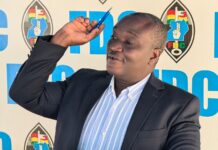
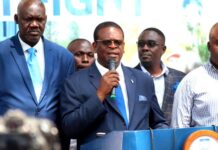
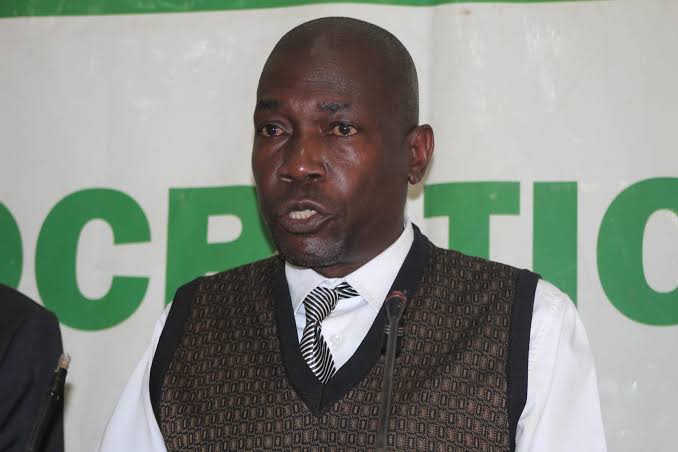
Speaking to journalists at a press conference on Tuesday, November 10th, 2026, at the DP headquarters on Balintuma Road, Fred Mwesigwa, the DP Press Secretary to the Office of the President General, said the document outlines a power-sharing model intended to promote stability in divided societies.
“What is concessional democracy? It is about power, political sharing system, designed to bring stability in divided societies,” Mwesigwa said.
Mwesigwa outlined four key features, including a grand coalition in which leaders from all significant groups participate in the executive, proportional representation, a mutual veto that allows minorities to block issues threatening their fundamental interests, and segmental autonomy, which gives groups a high degree of self-governance.
He said the document does not identify who should become president and is intended for Ugandans to consider. It sets out a timeline running from 2026 to 2031, after which the country would hold another election based on the consensus built during the intervening years.
Mwesigwa urged critics to study the document, acknowledge its contributions where appropriate and present alternative ideas.
“When you criticize, bring an idea,” he said.
He also called for the document to be translated into various languages and discussed with political parties, religious and cultural leaders, youth, women, elders, persons with disabilities and retired soldiers, before a national conference is convened.
Mwesigwa connected the proposal to DP’s long-standing commitment to dialogue and consensus, as well as the history of the Inter-Party Organisation for Dialogue.
“We are the authors of dialogue and democracy, human rights, rule of law. Those are our values,” he noted.
He warned that Uganda remains deeply divided by poverty, unemployment, religion and undemocratic practices, adding that failure to manage these challenges could push the country back into the crises of the past.
Mwesigwa also thanked the organizers of the recent 72nd anniversary celebrations in Buikwe, saying the event demonstrated that the party remains active.