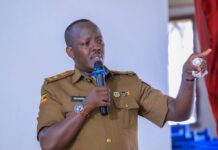

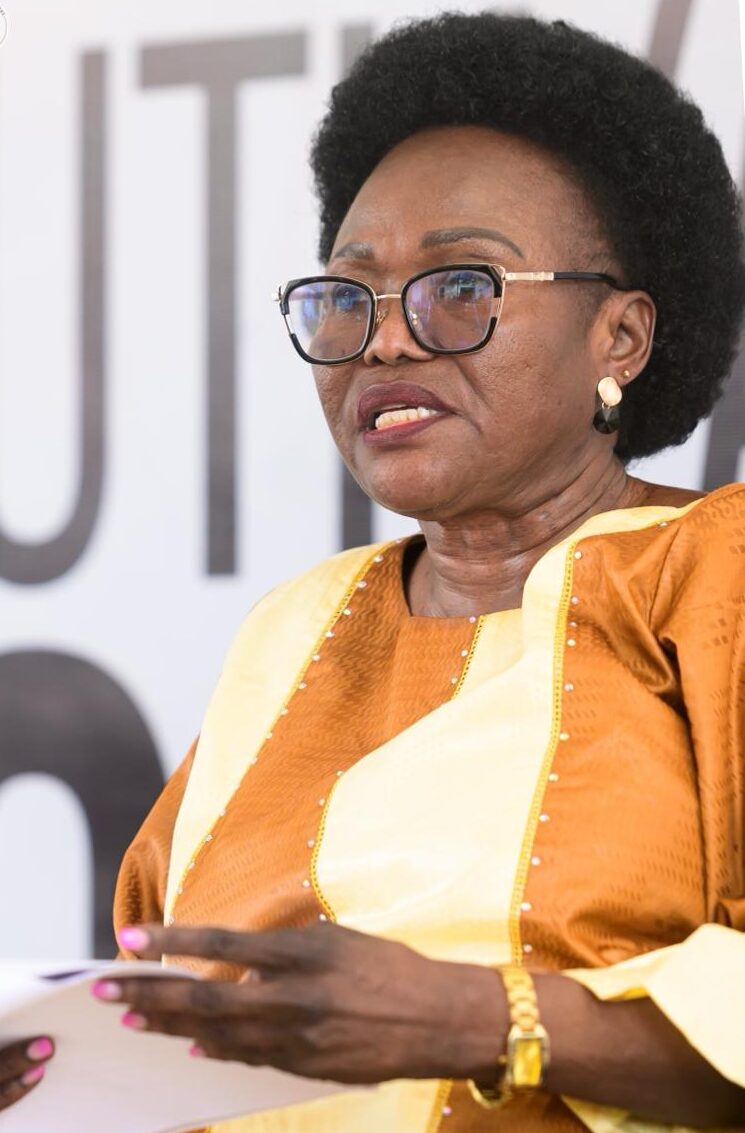
The Minister of State for Disability Affairs, Joyce Okeny Acan, has called for stronger action to remove the everyday barriers that continue to limit the participation of Persons with Disabilities (PWDs) in Uganda.
Speaking at the Uganda Media Centre on Wednesday, September 16th, 2026, Acan said disability inclusion should be reflected in the way public services are planned and delivered, rather than being treated as an issue for government to address separately from the wider development agenda.
Acan’s message comes as she begins her new term as Minister of State for Gender, Labour and Social Development in charge of Disability Affairs. She is also the representative of PWDs in the 12th Parliament.
For many Ugandans living with disabilities, the challenge is not simply the disability itself but the barriers they encounter in everyday life, from inaccessible buildings and transport to limited access to education, employment, information and other public services.
Acan’s portfolio places her at the centre of efforts to address those challenges and strengthen the participation of persons with disabilities in national development.
Her appointment was formally confirmed as part of the new Cabinet for the 2026–2031 term, and she subsequently took the oath of office alongside other ministers in June.
The minister has previously emphasised the importance of better information about persons with disabilities in helping government identify their needs and plan services more effectively.
That approach is particularly important in education, where children with disabilities can face multiple barriers before they even reach the classroom. Better information, accessible learning environments and appropriate support can determine whether a child remains in school or is pushed out.
For adults, the barriers often continue into employment and public life, where accessibility and opportunities for meaningful participation remain central concerns.
Acan’s message therefore puts the focus on a simple but important question: whether government systems work for everyone.
The disability affairs docket covers a population whose needs cut across almost every sector including education, health, employment, social protection, infrastructure, technology and local government. Parliament’s current records identify Acan as the national representative for persons with disabilities.
As she takes on the responsibility, the expectation from persons with disabilities and their organisations will be to see policy commitments translated into changes that can be experienced in ordinary life.
For a person using a wheelchair, that could mean being able to enter a government office without assistance. For a child with a disability, it could mean reaching school, accessing learning materials and receiving the support needed to stay in class. For a job seeker, it could mean an accessible workplace and a fair opportunity to compete.
It is in these everyday experiences, rather than policy statements alone, that the impact of Uganda’s disability agenda will ultimately be measured.