


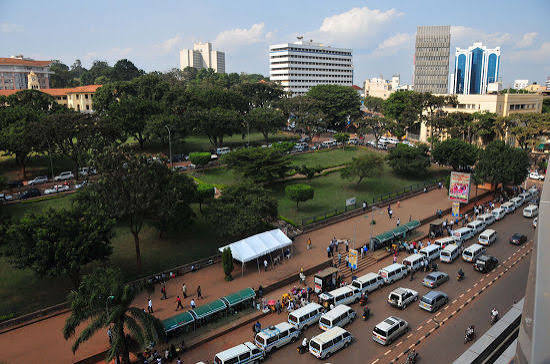
A plan to turn two acres of Kampala’s City Square into a modern commercial complex has received mixed responses as supporters point to investment and modernization, while critics worry about losing one of the city’s last public open spaces.
In a letter dated August 30th, 2026, addressed to the Minister of Kampala, Minsa Kabanda, President Yoweri Kaguta Museveni called for a review of businessman Hajj Hassan Balwada’s proposal to redevelop the site.
The proposal describes an “eco-friendly, modern commercial and business complex at City Square, Kampala,” featuring a solar-powered hotel and shopping mall.
Supporters argue that the development would bring new investment, jobs, increased commercial activity, and modern infrastructure to the Central Business District. Solar power could also make the complex more energy-efficient and environmentally friendly.
However, the proposal has drawn strong opposition from those who believe City Square should remain open.
Critics including netizens and some opposition political figures, among others argue that Kampala is already facing a severe shortage of public green and open spaces, with many former parks and recreational areas having disappeared as the city has expanded.
They say not every piece of open land needs to be developed, arguing that spaces such as City Square provide residents and visitors with places to gather, walk, relax and breathe.
The Kampala Lord Mayor, Eng. Ronald Nsubuga Balimwezo has also raised concerns about the square’s emergency function. In a letter to the Attorney General, he described City Square as the only remaining free emergency assembly space in Kampala’s Central Business District, serving millions of people who enter the city every working day.
The Leader of Oppositionin Parliament (LOP), Joel Ssenyonyi linked the proposal to previous controversial developments on public land. He cited the allocation of about 15 acres of UBC land in Nakasero for a hotel ahead of the 2007 CHOGM, as well as the 2011 eviction of more than 1,750 families from Naguru-Nakawa for a proposed 162-acre satellite city that, he said, has not materialised.
For opponents, these examples raise concerns about transferring valuable public land to private developers.
The debate therefore goes beyond the proposed hotel and mall. It raises a fundamental question for Kampala: should it preserve its remaining open spaces for public use, or convert them into commercial developments in the name of modernisation and investment?
For now, the future of City Square remains a subject of discussion, with hopes, concerns and questions surrounding what the proposed redevelopment could mean for one of Kampala’s familiar public spaces. As consultations continue, more details are expected to emerge on what lies ahead.