

Whenever corruption is exposed in Uganda, the first question we often ask is, “Who is to blame?” In many cases, the blame quickly goes to President Yoweri Kaguta Museveni and the NRM government. But the recent operations by the Local Government Minister, Balaam Barugahara and the State Minister, Justine Nameere should also make us look closer to home and ask ourselves whether corruption is really as far away from us as we like to think.
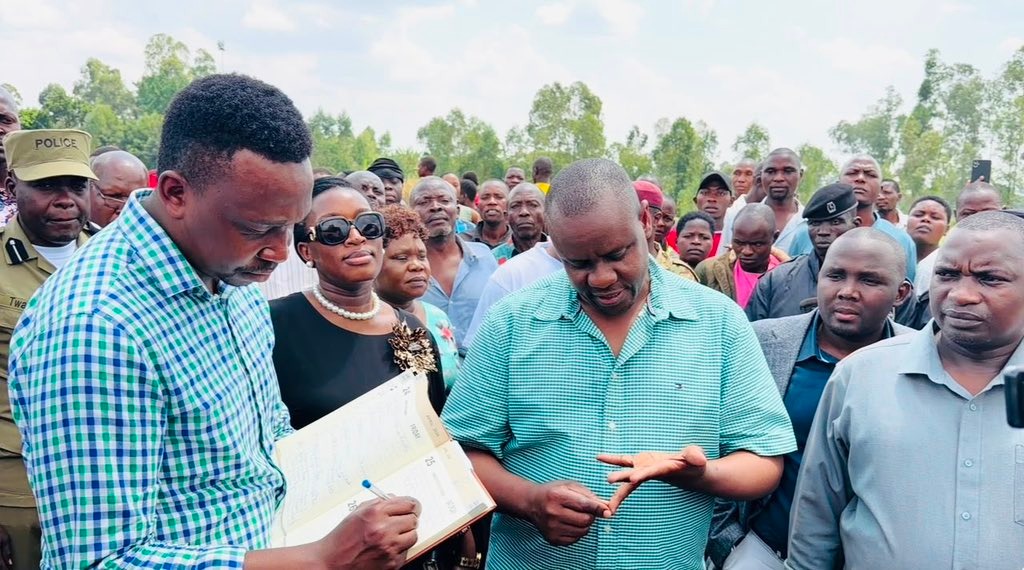
The ministers’ “Expose and Fight Corrupt Officials in Local Governments” campaign has taken the fight to different districts, where officials have been questioned over issues such as misuse of public resources, abandoned projects, revenue leakages and poor service delivery.
What we sometimes forget is that the people working in these local government offices are not strangers. They are Ugandans from our own communities, including our parents, brothers, sisters, uncles, aunties, cousins, friends and neighbours. The engineer accused of cutting corners is someone’s brother, blood relative, friend or someone from the same village. The same applies to an official accused of misusing public money, and a contractor who does shoddy work.
As a result, when such a person is caught, what happens? Sometimes, instead of demanding that they explain themselves, we start making phone calls, asking someone to intervene so as to protect them because, as we often say, “S/he is our own.”
This is the part of the corruption debate that we do not talk about enough. It is easy to blame President Museveni for corruption in a district that’s hundreds of kilometres away yet it is much harder to confront a relative, friend or neighbour when we discover that they are benefiting from the same corruption we complain about.
This does not mean that the central government has no responsibility. It does since the government must continue strengthening institutions, improving supervision, investigating corruption and ensuring that those found guilty are held accountable. The decision to send ministers Barugahara and Nameere to engage local governments shows that there is recognition that corruption and poor service delivery need to be addressed.
However, the government cannot fight corruption in isolation. For instance a president cannot personally inspect every road constructed in the country. A minister cannot be present in every district office while parliament cannot follow every procurement process, and the police cannot be at every government project. At some point, the people who know what is happening must also be willing to speak up.
This is why Barugahara’s call for citizens to expose corrupt officials without fear or favor is important. Citizens have a role to play in protecting public resources. If we know that someone is stealing government money, inflating the cost of a project or deliberately doing poor work, we should not protect them simply because we know them.
If we genuinely want corruption to reduce, we also have to stop treating it as a problem that exists only among politicians because it exists in our communities and institutions, and sometimes the people involved are people we know personally. We make corruption political when we want to blame the government, but corruption does not ask which political party someone belongs to before they take public money. An NRM supporter can be corrupt as well as an opposition supporter yet also, a civil servant who does not belong to any political party can also be corrupt. The important thing is that the person responsible should be held accountable.
So, before pointing fingers at the ruling government, perhaps we should also look around our own communities and ask ourselves, who is the person we defended because he is our relative? Who is the contractor we recommended because he is our friend? Who is the official we protected because he comes from our village? And who is the person we know is doing something wrong but have chosen not to report?
The lesson from the Balaam-Nameere operation should therefore go beyond simply saying that government has corrupt officials. It should instead remind us that corruption is also a problem within our own communities. If we want a cleaner Uganda, the fight cannot stop at government offices but has to involve all of us. We cannot complain about corruption when public money is stolen and then turn around and protect the person responsible simply because he is our brother, uncle, auntie, friend or neighbour.