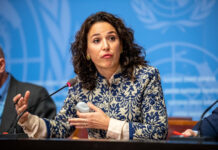



United Nations (UN) High Commissioner for Human Rights, Volker Türk has urged States and leading Artificial Intelligence (AI) companies to act immediately to ensure meaningful AI governance keeps pace with the technology’s rapid development and its growing risks to human rights.
In an open letter issued in Geneva on September 14th, 2026, Türk warned that the world was approaching an irreversible transformation that could affect both current and future generations.
“The current race towards ever more powerful AI is a step change towards greater existential risks to every aspect of our lives,” he stated.
Failures involving agentic AI systems, he said, could disrupt essential services, fracture communications, destabilise critical infrastructure and undermine democratic institutions. Entire populations could lose access to clean water, heating and financial services.
Türk also said agentic AI was already increasing the pace and reach of warfare while weakening safeguards against the use of weapons of mass destruction.
He stressed that these harms were not hypothetical. Essential services were being automated in ways that pushed people already at the margins further behind, emerging surveillance tools were eroding privacy on a large scale, and AI-powered disinformation was distorting public debate and putting additional pressure on democratic institutions.
The High Commissioner said frontier AI companies had both the responsibility and the capacity to reduce risks now through robust human rights due diligence, agreed safety standards and independent internal monitoring.
States hosting those companies, he added, had a particular duty to demand responsible conduct, independent verification of agentic capabilities, and access to models, documentation and testing environments.
“No country can govern this technology alone. No company should be able to decide by itself which risks the world must accept,” Türk wrote.
He called for urgent mobilisation through multilateral forums to govern advanced AI models in accordance with international human rights law, ensuring decisions are made openly and with future generations in mind.