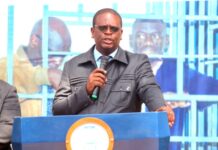


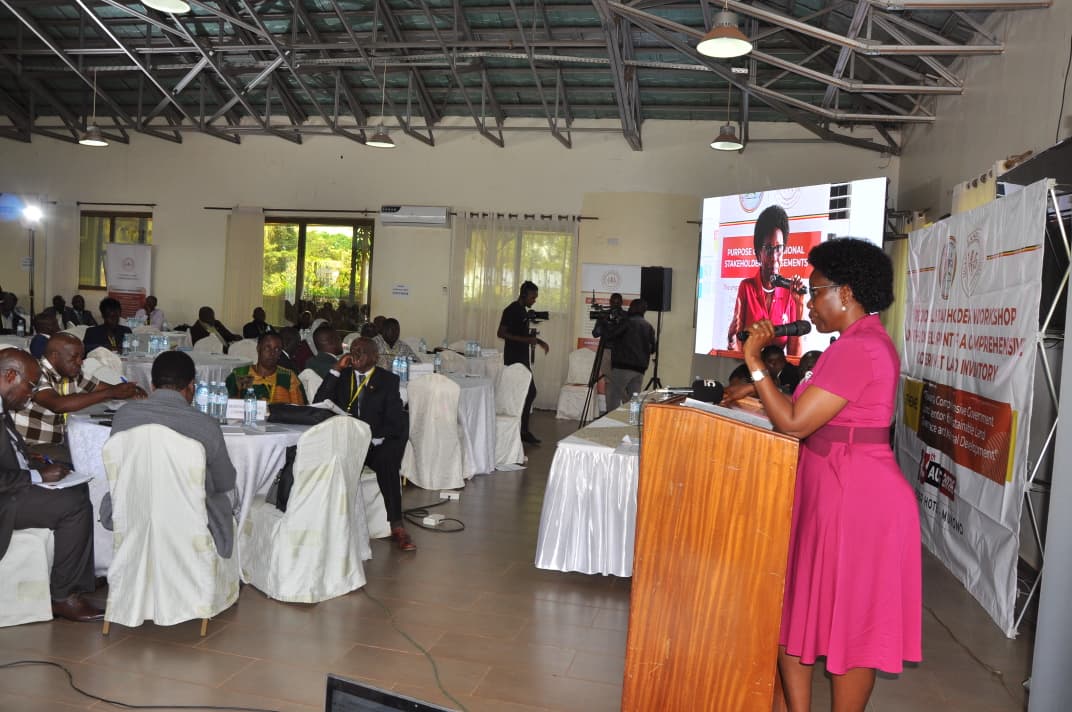
Lands Minister Judith Nabakooba has told government officials to stop treating public land as idle property that can be allocated, sold or claimed by individuals, warning that failure to protect it could leave the State fighting costly legal battles to recover its own land.
Speaking at a regional stakeholders’ workshop in Mukono on the development of a comprehensive government land inventory, Nabakooba said weak supervision, incomplete records and poor documentation continue to expose government land to grabbing and irregular transactions.
She directed district leaders, lands officers and other officials responsible for public land to identify government properties in their areas, document them and ensure they are protected.
“Even if a school or a hospital has no title, it’s your duty as a key stakeholder to first protect that property on that land before you parcel the land. Even if you think it’s dormant land, let’s first secure it,” she said.
Nabakooba was particularly critical of the issuance of freehold titles to private individuals on government land, saying such decisions can turn into lengthy and expensive legal disputes.
“Once you give out a freehold title, it becomes difficult to reverse because it may require us to go to courts of law to cancel such titles,” she said.
The minister said the government land inventory is intended to give the State a clear picture of what it owns, where the land is located, how it is being used and whether it is facing threats such as encroachment or competing claims.
“We believe that the inventory will help us establish where government land is located, its legal and physical status, its present use and any threats that require intervention from authorities,” Nabakooba said.

She urged officials to act quickly, particularly in areas experiencing rapid population growth and development, where pressure on land is increasing.
“We need to move very fast and protect the land we have for the future of our country,” she noted.
For Nabakooba, protecting public land is not simply a government responsibility but a matter of protecting assets held on behalf of Ugandans. She called for greater public awareness to discourage people from viewing government land as an opportunity for personal gain.
She also urged authorities to distinguish between unlawful occupation and legitimate claims, saying disputes should be handled through established legal processes.
“Where there are legitimate landowners, they must be treated fairly. Where there are disputes, we should pursue lawful, transparent and peaceful solutions,” Nabakooba noted.
The Uganda Land Commission Chairperson, Prof. Pen-Mogi Nyeko said the protection of government land is essential as the country prepares for more infrastructure, industrialisation and other major development projects.
He urged District Land Boards and local authorities to stop allocating public land to individuals and instead preserve it for developments that can generate jobs and expand infrastructure.
“Protect government land in your area for major government development,” Nyeko said.
Prof. Nyeko said local leaders, Resident District Commissioners, District Land Board members and other officials have valuable knowledge about land in their areas and should use that knowledge to help the government identify public property.
He singled out land occupied by schools and other public institutions as particularly vulnerable, noting that some lack titles and can easily be encroached upon or grabbed.
Beyond protecting existing public land, Nyeko said the inventory could help government identify land that should be reserved for future industrialisation and other strategic investments.
Emmanuel Kaganzi, representing the Permanent Secretary at the workshop, said government cannot afford to wait for land disputes to emerge before establishing what it owns.
“Information must reach government before the problem does,” he said.
Kaganzi said some government projects reach advanced stages after funding has been secured and technical designs completed, only for officials to discover that the proposed sites are affected by encroachment, boundary disputes, competing claims or incomplete records.
He said the inventory should establish whether government land has been surveyed, titled and properly demarcated, while also identifying encroachment and other threats.
However, Kaganzi cautioned that the exercise will only remain useful if the information is regularly updated. He called for sustained cooperation between the Uganda Land Commission, Ministry of Lands, local governments and government agencies occupying public land.
The Mukono workshop brought together leaders and technical officers from Kayunga, Buikwe, Wakiso, Nakaseke, Luweero and Nakasongola districts.