

The People’s Front for Freedom (PFF) has unveiled a Transition Policy Proposal calling for a structured National Democratic Transition and a Federal System of Governance as the long-term solution to Uganda’s persistent political challenges.
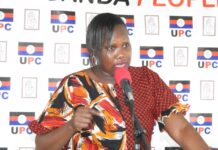
According to Bayiga Lulume, the Executive Chairman of the PFF Party, their party welcomed the dialogue, but insists that dialogue must go beyond cooperation among political parties and address the historical and structural causes of exclusion, mistrust and conflict in Uganda.
“The PFF recognizes and welcomes the idea of dialoguing, but a well-structured National Dialogue on how Uganda can manage its political, social, economic and institutional diversity,” Lulume said.
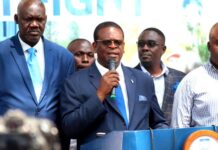
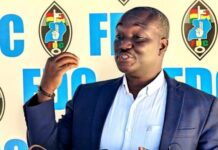
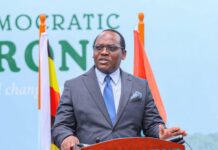
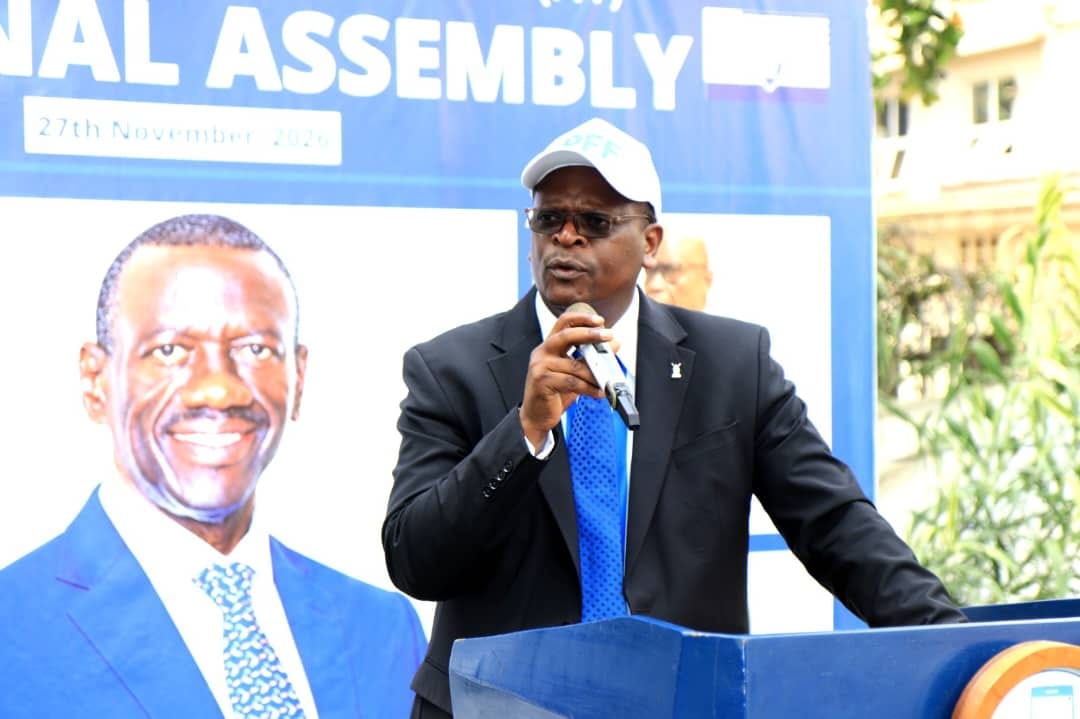
While speaking at the Party National Assembly held on Friday, November 27, 2026, at the party headquarters on Katonga Road, Lulume revealed that the proposal is built on two mutually reinforcing pillars, including the National Democratic Transition Agenda and a Federal System of Governance.
According to Lulume, the National Democratic Transition Agenda would be a nationally owned, inclusive and peaceful process through which Ugandans examine their political history, identify unresolved national questions, rebuild trust, establish credible democratic institutions and negotiate the conditions for a legitimate and durable constitutional settlement.
He added that Uganda’s political history since independence is marked by constitutional ruptures, military interventions, contested political legitimacy, concentration of state power, political violence and recurring disagreements over the organization of the state, something that has left fundamental questions about national unity, distribution of power, regional autonomy, accountability and the relationship between citizens and the state insufficiently resolved.
“Uganda’s persistent political challenges cannot be adequately addressed through political cooperation and incorporation alone. Cooperation confined to arrangements within existing institutions, without addressing those root causes, will not deliver lasting stability,” Lulume added.
The second pillar, federalism, proposes a Uganda organized into 15+1 semi-autonomous Federal States operating within a common national constitutional framework.
However, Lulume said the framework would guarantee equal citizenship, fundamental rights, democratic accountability, national solidarity and equitable development, adding that PFF does not propose federalism as a means of dividing Uganda, privileging particular ethnic communities, or transferring domination from the national level to local elites.
“Federalism is proposed as a means of ensuring that all Ugandans participate meaningfully in national affairs while exercising constitutionally protected authority over matters best managed closer to their communities,” Lulume said.
Lulume further noted that the two pillars reinforce each other because a transition agenda would create legitimate political conditions for discussing and agreeing on constitutional reform. At the same time, federalism would provide an institutional framework for addressing the concentration of power and accommodating Uganda’s diversity over the long term.
He said PFF recognizes dialogue and cooperation among political parties and other stakeholders as essential components of democratic development, but wants a broader national dialogue beyond the immediate question of cooperation among political parties.
“PFF accordingly invites Ugandans to a broader national dialogue beyond the immediate question of cooperation among political parties and to facilitate a structured process towards a National Democratic Transition and Constitutional Settlement,” Lulume said.
Lulume added that the proposal aims to promote inclusion, peaceful political competition, national cohesion and sustainable democratic governance.
Professor Wangoola-Wangoola Ndawula, a critical thinker, shared this view on feudalism, arguing that the owners of all land, natural resources, assets, and national assets in the country are the 15+1 Indigenous Nations and Peoples of Uganda.
He added that since all wealth comes from and is locked up and stored in land, once the proprietary power over the land of Uganda is taken back by the owners of Uganda, the people, by themselves directly, and by agency of their Indigenous Nations, they will be able to provide for themselves, moreover, in and with dignity, even more and better-quality schools, hospitals, roads, environment, culture and social progress.