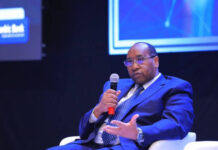



The Lands, Housing and Urban Development Minister, Judith Nabakooba has said that Africa’s growing housing deficit will require governments to rethink how land, finance and urban development are managed if the continent is to turn rapid urbanisation into an opportunity.
Africa’s urban population is projected to reach about 1.3 billion by 2050, while the continent already faces a housing shortage of more than 50 million units.
Nabakooba said the scale of the challenge calls for stronger regulation, innovative financing and improved land administration, with governments unable to meet the demand on their own.
“Government resources alone cannot meet this demand. We need better planning, stronger partnerships, new sources of finance and responsible investment,” she said.
She was speaking at Speke Resort and Conference Centre, Munyonyo in Kampala, during the 25th Annual Conference of the African Real Estate Society (AfRES), held under the theme, “Transforming African Real Estate for Sustainable Growth and Innovation.”


The minister said real estate should be treated as a central part of Africa’s development agenda because it supports housing, business and production while creating jobs in construction, valuation, brokerage, financing and property management.
For Uganda, she said, secure land, planned settlements, housing and infrastructure are critical to achieving the country’s development priorities under Vision 2040 and the Fourth National Development Plan.
Financing remains a major hurdle
Nabakooba identified the high cost and limited availability of long-term financing as one of the biggest obstacles to expanding access to housing.
She said Uganda is working towards a mortgage refinancing framework to provide liquidity to primary mortgage lenders and encourage longer-term lending.
However, she noted that mortgages alone would not address the needs of low- and middle-income households, calling for savings schemes, cooperative finance, housing microfinance, developer finance and rental housing finance.
Dr. Racheal Mirembe, an AfRES board member, said mortgage rates in Uganda remain prohibitively high, with the lowest bank rates at about 17 percent.
She called for longer repayment periods, potentially extending from the current five years to 25 years, to make home ownership more affordable.
Regulation and climate risks
Nabakooba also warned that climate change must increasingly shape decisions on where and how cities are developed, citing floods, extreme heat, drought and water scarcity as growing threats to property and infrastructure.
She said flood mapping, climate information and disaster-conscious building standards should be incorporated into planning and construction.
The minister also said Government is fast-tracking the Real Estate Bill, which is intended to professionalise the sector and protect the public from unqualified agents, fraud and false representation.


At the conference, MUBS Principal Prof Moses Muhwezi urged universities to provide reliable property data to support evidence-based decisions by government and industry.
He said MUBS, which has offered a Bachelor of Real Estate Management since 2007, is seeking to expand its training to postgraduate levels.
He also called for closer collaboration between universities, government and the private sector to turn research into practical solutions for Africa’s rapidly changing property market.