
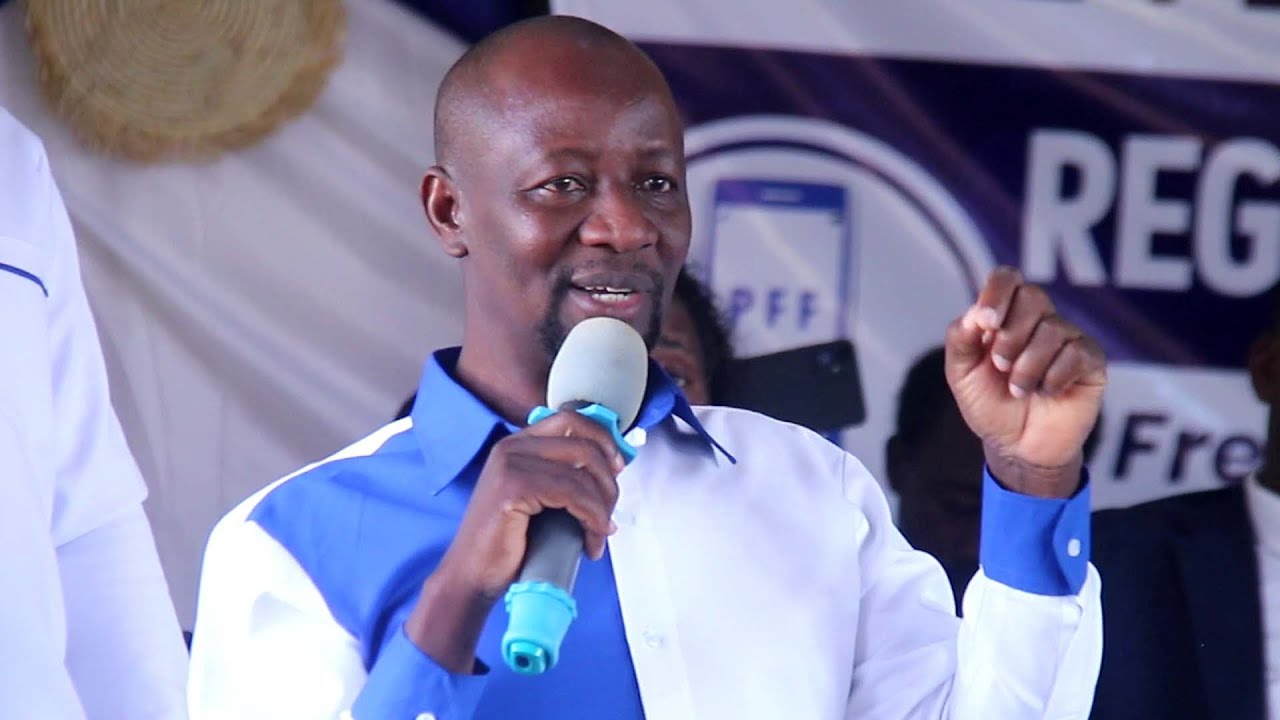
The Former Kira Municipality Member of Parliament, Ibrahim Ssemujju Nganda has raised questions about the leadership approach of the National Unity Platform (NUP) party president, Robert Kyagulanyi, popularly known as Bobi Wine, arguing that the opposition leader has focused more on his personal popularity than building a strong and sustainable political institution.
Speaking during a televised broadcast, Ssemujju contrasted Bobi Wine’s leadership style with that of veteran opposition figure Dr. Kizza Besigye, whom he described as more inclusive and collaborative in the struggle against what opposition groups have long termed “life presidency” and “family rule” in Uganda.
“I have worked with Dr. Kizza Besigye, and he believes in working with everybody in the struggle against the life presidency and family rule. I think Bobi Wine believed in himself and his group, and they thought that only they would do the work; and everyone had to go home,” Ssemujju said.
He further acknowledged Bobi Wine’s significant contribution to Uganda’s opposition politics, noting that the NUP leader’s rapid rise transformed him into the country’s leading opposition figure and presidential contender. Ssemujju, however, suggested that Kyagulanyi may not have anticipated the scale of his political success.
“He has made his contribution, and his rise to even become the main opposition candidate, I think, might have even surprised him. It’s not something that I think he prepared himself for,” Ssemujju added.
Ssemujju’s remarks come at a time when Uganda’s opposition is facing renewed scrutiny over its internal organization and long-term strategy following the disputed January 2026 general elections. Political analysts have increasingly debated whether opposition parties are sufficiently institutionalized or remain heavily dependent on the popularity of individual leaders.
Ssemujju also argued that while Bobi Wine enjoys widespread public support, popularity alone does not automatically translate into effective organizational leadership.
“I like Kyagulanyi and we have met before. We might have disagreed on some of the politics. I don’t think he has the capacity to process his popularity into managerial capability to run a political party and also run a country,” he said.
The former legislator’s comments have generated mixed reactions among opposition supporters and political observers. Some have interpreted the remarks as constructive criticism aimed at strengthening the opposition movement, while others view them as an unfair assessment of a leader who has mobilized millions of young Ugandans into active political participation.
Supporters of Kyagulanyi argue that his political movement has successfully expanded beyond his personal brand through nationwide structures, elected leaders, and grassroots mobilization. Critics, however, maintain that the party remains heavily reliant on his personal influence and visibility.
The discussion also highlights a broader debate within Uganda’s opposition regarding the balance between charismatic leadership and institution-building. Political observers note that while charismatic leaders can energize supporters and attract public attention, strong political institutions are often considered essential for ensuring continuity, internal democracy, and long-term effectiveness.
As Uganda’s opposition prepares for future political contests, questions surrounding leadership, unity, and organizational strength are likely to remain central to the country’s political discourse.