


In a country navigating rising fuel costs, growing urban unemployment, and increasing pressure to industrialize, businessman Gagan Gupta is steadily positioning himself at the centre of Uganda’s economic transformation debate.
Through ventures such as ARISE Integrated Industrial Platforms and Spiro, Gupta is advancing an ambitious vision built around clean energy, industrial growth, local manufacturing, and job creation sectors many economists believe will define Africa’s next phase of development.
The question now emerging is whether Uganda can fully harness that vision into measurable economic transformation.
The country’s youthful population continues to grow rapidly while pressure mounts on government to create jobs, lower operational costs for businesses, and reduce dependence on imported products and fuel. Against that backdrop, Gupta’s investments are increasingly being viewed as more than ordinary business ventures; they are becoming part of a larger conversation about Uganda’s economic future.
At the centre of this strategy is electric mobility.
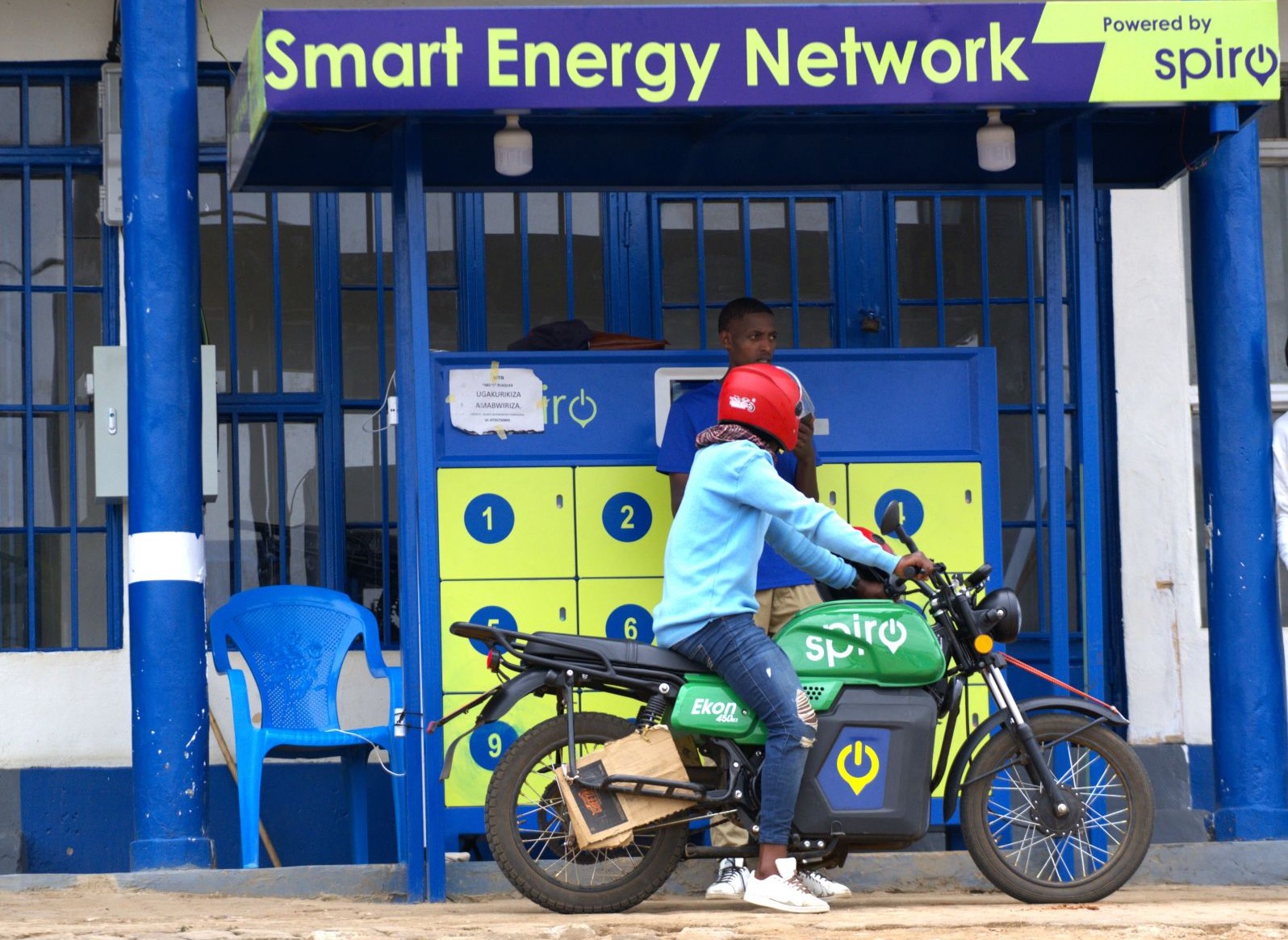
Through Spiro, electric motorcycles supported by battery-swapping infrastructure are gradually entering Uganda’s boda boda transport sector an industry that supports hundreds of thousands of livelihoods across urban centers.
For many riders, fuel remains one of the biggest daily operational expenses, with some spending between SHS 25,000 and SHS 40,000 every day simply to keep motorcycles on the road.
Electric mobility introduces a different model.
Lower fuel dependency, reduced maintenance costs, and access to battery-swapping stations could significantly improve daily earnings for riders already operating within a difficult economic environment.
In practical terms, this means a boda boda rider who saves money on fuel potentially takes home more income to support a family, pay school fees, or reinvest into business growth.
That is where the economic argument around electric mobility becomes more powerful than the technology itself.
Beyond transport, Gupta’s broader industrial ambitions through ARISE Integrated Industrial Platforms are attracting equal attention.
Across Africa, ARISE has invested in industrial parks and special economic zones aimed at promoting value addition, manufacturing, exports, and regional trade integration.
Uganda’s leadership has repeatedly emphasized industrialisation and import substitution as central pillars of long-term economic transformation, making such investments strategically attractive.
President Yoweri Kaguta Museveni’s engagement with Gupta in 2022 reflected that alignment.
Discussions focused on local assembly, technology transfer, industrial infrastructure, and creating employment opportunities for Ugandans.
Government support for such investments signals recognition that Uganda’s economic future cannot rely solely on exporting raw materials while importing finished products at higher costs.
If effectively implemented, industrial parks and local assembly plants could strengthen domestic manufacturing capacity, expand exports, and create thousands of direct and indirect jobs.
There is also a broader energy and environmental dimension to Gupta’s investments.
Uganda already generates much of its electricity from hydropower, positioning the country relatively well for electric mobility adoption compared to many economies still heavily dependent on fossil fuels.
A successful transition toward electric transport could reduce pressure on fuel imports while contributing toward cleaner urban transport systems and long-term environmental sustainability goals.
Yet optimism alone does not guarantee success.
Large-scale investments across Africa have historically faced major challenges ranging from delayed implementation and weak infrastructure to limited local participation and policy uncertainty.
Uganda itself has witnessed ambitious investment announcements that struggled to move beyond initial headlines.
For electric mobility to succeed sustainably, several realities must align: reliable electricity supply, affordable financing for riders, expansion of charging and battery-swapping infrastructure, and strong technical support systems.
Equally important is accountability.
Commitments around local job creation, skills transfer, local manufacturing, and environmental safeguards must eventually be measured against actual outcomes rather than projections.
Ugandans are increasingly demanding visible economic impact from major investment projects, especially at a time when unemployment and cost of living pressures remain high.
This is where Gupta’s Uganda gamble truly becomes a test — not only of investment capital, but of execution.
Still, there is little doubt that the sectors Gupta is targeting represent the future direction of modern economies.
Clean energy, digital infrastructure, industrial production, and sustainable transport are no longer optional policy discussions. They are increasingly becoming necessities for countries seeking long-term competitiveness and economic resilience.
For Uganda, the opportunity is clear.
If supported by strong policy implementation, local participation, infrastructure development, and transparent oversight, investments in clean mobility and industrialisation could significantly reshape sectors ranging from manufacturing to urban transport.
If poorly managed, however, the promise risks becoming another unrealized chapter in Uganda’s long list of ambitious economic transitions.
For now, Gupta’s growing footprint in Uganda represents both opportunity and expectation.
The promise is cleaner energy, lower operational costs, industrial growth, and jobs for a rapidly expanding population.
The real challenge lies in whether those promises can move beyond vision and become lasting economic reality.