
Uganda’s ruling party, the National Resistance Movement (NRM), has further strengthened its parliamentary foothold after a fresh wave of independent Members of Parliament-elect formally signalled their intention to cooperate with the party.
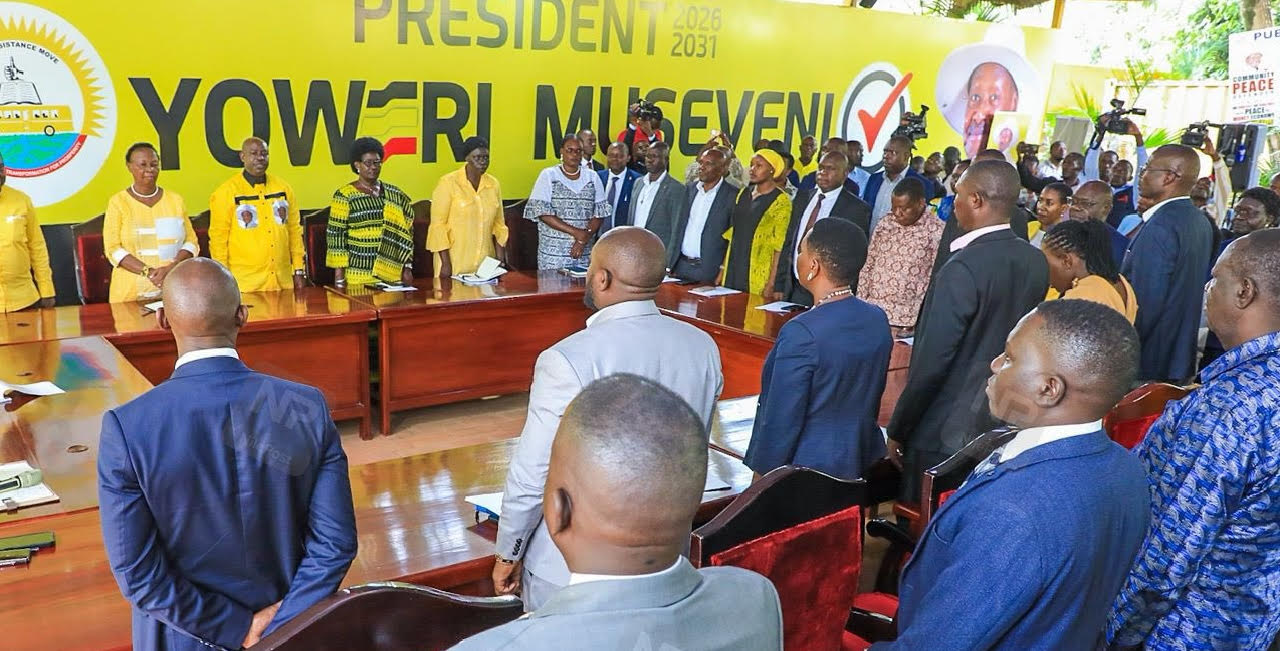
Earlier yesterday, Monday, March 23rd, 2026 the Speaker of Parliament, Anita Among, led a delegation of 30 independent MPs-elect to the NRM headquarters in Kyadondo.
The group met with the party’s Secretary General and signed a memorandum of understanding (MOU), indicating their willingness to work alongside the ruling party in the upcoming 12th Parliament.
Speaker Among, who also serves as the NRM’s Second Vice Chairperson (Female), revealed that independent legislators who have expressed interest in working with the NRM party will be invited to the upcoming Kyankwanzi Retreat, scheduled for April 7, 2026.
“During this retreat, we will officially welcome them and formally introduce those who will have signed to work with the party. We are ready to work with the independents and give them assignments both from the party and from Parliament,” Among said.
The meeting was also attended by the NRM Director of Legal Affairs, Counsel Enoch Barata, who welcomed the MPs and praised their decision to collaborate with the ruling party, describing it as a step toward advancing community development and achieving national objectives.
NRM Director of Communication, Emmanuel Lumala Dombo, said the growing number of independents joining forces with the party demonstrates its increasing political strength. According to Dombo, of the 68 independent MPs elected to the 12th Parliament, 62 approximately 90 percent have already agreed to cooperate with the NRM, with most having signed formal MOU agreements.
The NRM had initially secured 372 parliamentary seats, and with the addition of the 62 independents, the number of MPs expected to align with the ruling party rises to 434. This leaves the opposition with fewer than 50 seats in the next Parliament.
Political observers say the trend reflects a growing inclination among independent legislators to partner with the ruling party, citing improved access to government programs, increased influence in decision making, and better prospects for delivering development to their constituencies.
Uganda’s opposition appears to be struggling to attract independent lawmakers, with analysts pointing to internal divisions and a lack of clear strategic direction as key challenges.
As Uganda prepares for the swearing-in of the 12th Parliament in May 2026, the NRM’s expanding alliances position it with a leading legislative majority, hence easing service delivery in terms of implementing government policies and programs.