

A proposed Ebola quarantine facility backed by the United States government has sparked widespread debate and public protests in Kenya, with concerns mounting over public safety, transparency, and the country’s preparedness to handle one of the world’s deadliest diseases.
The facility, planned for Laikipia Air Base in Nanyuki, has become the centre of a growing political and public health controversy after reports emerged that Americans exposed to or infected with Ebola while abroad could be transferred there for treatment and isolation instead of being flown back to the United States.
The development has triggered strong reactions from sections of the Kenyan public, civil society organizations, and healthcare professionals, many of whom fear the project could expose the country to unnecessary health risks despite Kenya currently having no confirmed Ebola cases.
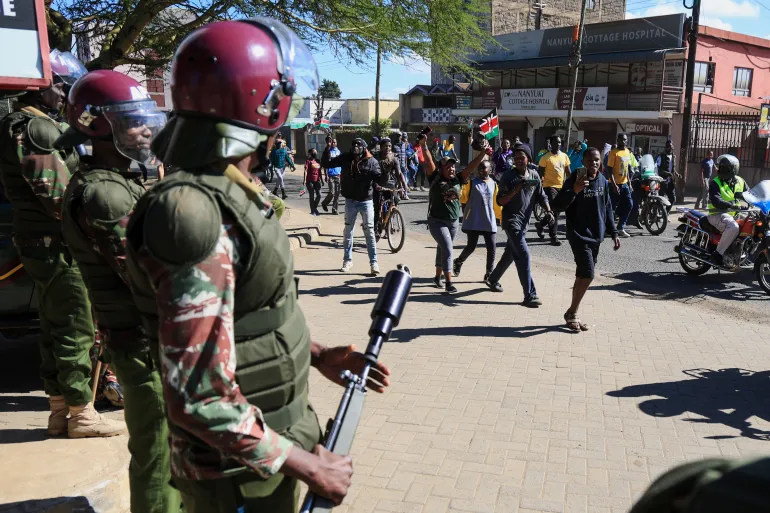
Protests erupted in Nanyuki earlier this week, with demonstrators demanding the suspension of the project and greater public consultation regarding its establishment. Reports indicate that the demonstrations turned violent, resulting in fatalities and injuries.
The controversy comes as East Africa remains on alert following an Ebola outbreak linked to the Bundibugyo strain in the Democratic Republic of Congo (DRC).
According to international health agencies, the Bundibugyo strain differs from the more common Zaire strain because there are currently no approved vaccines or treatments specifically designed for it.
Health experts warn that delayed detection of the outbreak, combined with declining international health funding in recent years, could complicate response efforts and increase the risk of further spread.
The Kenya Medical Practitioners, Pharmacists and Dentists Union has been among the strongest critics of the proposed facility.
“We will not watch Kenya be treated as a containment colony,” the union noted in a statement.The union further questioned why patients would be transferred to Kenya instead of receiving treatment in the United States.
“If it is too dangerous for America, it is too dangerous for Kenya.”
Under the proposal, the facility would reportedly include isolation and biocontainment units capable of handling suspected and confirmed Ebola cases. Initial reports indicated that the centre would begin operations with approximately 50 beds.
The project has also attracted legal challenges.
Civil society groups and legal activists have petitioned the High Court in Nairobi, arguing that the project was approved without adequate public consultation and raising concerns about Kenya’s capacity to safely manage imported Ebola cases.
In response, the court issued orders temporarily halting construction activities and suspending any plans to receive patients while the matter is being considered.
Despite the legal challenge, Kenyan President William Ruto has defended the arrangement, describing it as part of a longstanding partnership between Kenya and the United States.
According to President Ruto, the decision was made within the framework of bilateral cooperation and broader efforts to strengthen regional health preparedness.
“We are a responsible government. We know what we are doing,” Ruto said while responding to criticism surrounding the project.
The Kenyan government has also maintained that measures are in place to protect the country from an Ebola outbreak and that preparedness efforts have been strengthened in anticipation of potential regional health threats.
The United States government has similarly defended the initiative, arguing that the facility forms part of a wider response strategy aimed at preventing the virus from spreading internationally.
US officials have pledged additional financial support toward Ebola preparedness efforts in Kenya and the wider region as health authorities work to contain the outbreak.
However, reports from international outlets indicate that the proposal has also generated debate within some American public health circles, with questions being raised about whether infected US citizens should instead receive treatment closer to their families and support networks within the United States.
For now, the future of the facility remains uncertain as court proceedings continue and public opposition persists.
What is clear, however, is that the proposal has evolved beyond a public health issue into a broader national debate touching on sovereignty, public trust, healthcare capacity, and the balance between international cooperation and domestic concerns.
As authorities, health experts, and courts continue to weigh the matter, the proposed Ebola facility remains one of the most closely watched developments in Kenya’s public health and political landscape.