
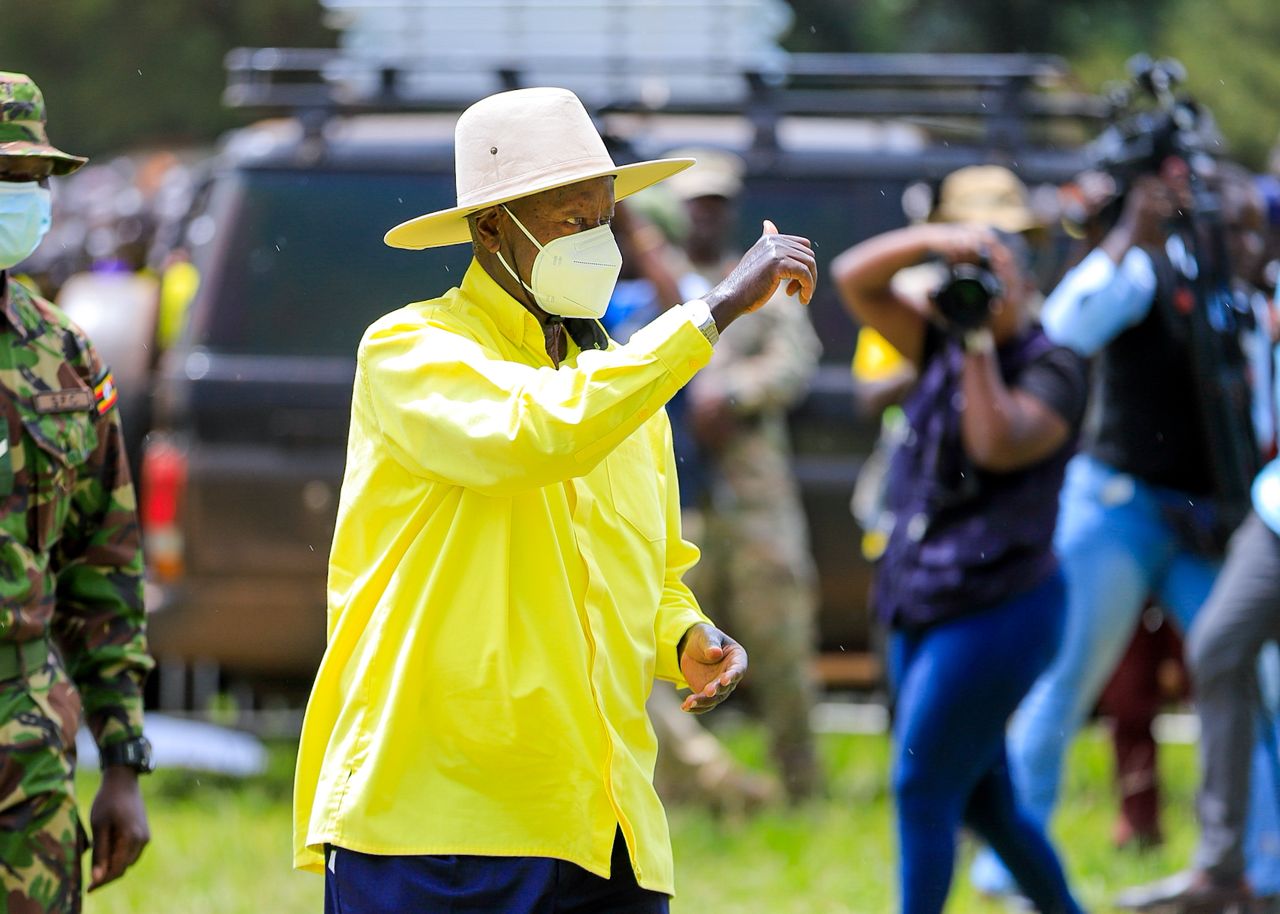
President Yoweri Kaguta Museveni has intensified his 2026–2031 re-election campaign in the Teso sub-region, using rallies in Amuria and Katakwi Districts to reaffirm the National Resistance Movement’s (NRM) development record while unveiling new strategies to deepen economic transformation, improve education, and expand healthcare.
On Saturday, 1st November 2025, while addressing massive crowds that gathered at the at Katakwi Town Council grounds in Katakwi district and later at Amuria SS grounds in Amura district, the President described Teso as one of the sub-regions that has made remarkable progress under NRM’s long-term stability and investment agenda.
He called on residents to “guard the peace and development” achieved so far and reject what he termed as “political opportunists who offer words instead of work.”
“The struggle now is not about politics but about chasing poverty out of homes. We have brought peace, schools, hospitals, and money for every parish — the next phase is to ensure every family joins the money economy,” Museveni said, drawing applause from cheering supporters.
In both Amuria and Katakwi, Museveni highlighted government progress in universal education, citing the expansion of primary and secondary schools, the construction of seed secondary schools, and the integration of vocational training into the formal system.
Amuria District now has government-aided schools in nearly every sub-county, while Katakwi boasts some of the highest UPE enrollment rates in Teso.
The President noted that the construction of Katakwi Seed Secondary School and the planned upgrade of selected institutions in Amuria under the Uganda Intergovernmental Fiscal Transfers (UgIFT) program are meant to ensure that “no child drops out due to lack of access.”
He also announced plans to expand the Presidential Industrial Hubs for Youth Skilling across the region, targeting trades like carpentry, tailoring, welding, and agribusiness. The initiative aims to reduce unemployment among youth who complete secondary school but lack employable skills.
“The youth must become creators of wealth, not job seekers. That is why we are skilling them so they can produce goods and services the country needs,” Museveni emphasized.
Museveni underscored NRM’s steady progress in improving healthcare services. Both districts have seen upgrades of Health Centre IIs to Health Centre IIIs, improved staffing levels, and the rehabilitation of Katakwi General Hospital and Amuria Hospital.
He announced government plans to establish new HCIIIs in sub-counties still lacking facilities, and to equip major hospitals with modern maternity wings, diagnostic laboratories, and solar-powered systems to ensure uninterrupted services.
Maternal health, immunization, and disease prevention campaigns have also been scaled up, with Museveni crediting NRM’s community health programs for the decline in preventable diseases across Teso.
In Amuria District, over Shs 20 billion has been disbursed to parish SACCOs, reaching thousands of beneficiary households, while Katakwi has recorded over 60% fund utilization under the same program. Museveni cautioned local leaders against diverting or delaying funds meant for the poor, warning that such corruption “betrays the revolution.”
He also emphasized agriculture as the backbone of Teso’s transformation, urging residents to embrace commercial farming with government support in irrigation, animal restocking, and value addition.
The rallies in both districts drew massive turnouts, signaling the NRM’s enduring dominance in the region. However, some sections of the population expressed frustration over delayed implementation of government projects and bureaucratic hurdles in accessing development funds.
In political terms, Teso remains largely loyal to the NRM, though sustained delivery and youth engagement will be key to maintaining that support ahead of 2026.