


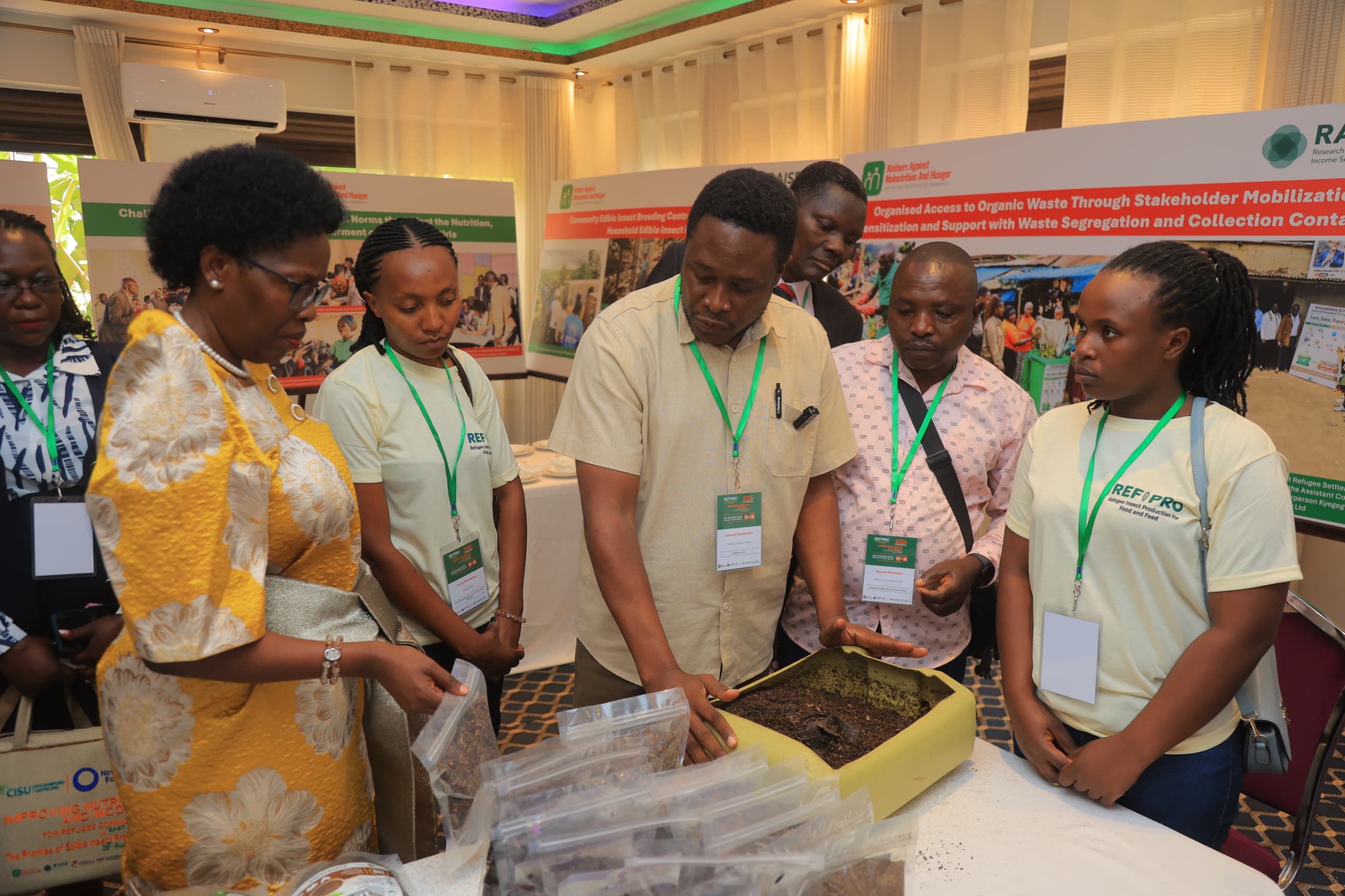
In Mityana, insects are taking on a new role in the lives of rural women, not as a nuisance, but as a source of income, affordable animal protein and hope for better livelihoods.
For members of the Mityana Women Insect Farmers’ Cooperative, rearing insects such as Black Soldier Fly larvae is emerging as a practical enterprise that requires little land while creating opportunities for households and young people.
The cooperative has more than 268 member households and over 40 young people. It grew out of work by Mothers Against Malnutrition and Hunger (MAMAH) at its research and farmer-training centre in Lulagala Village, Nakibanga Parish.
The farmers rear insects for sale and use the larvae as a protein-rich feed for poultry, pigs, fish and other livestock. The enterprise also offers a possible solution to two challenges facing communities: expensive animal feed and poorly managed organic waste.
At an international conference in Bulenga, Wakiso District, on August 26, Lands,Lands Housing and Urban Development Minister Judith Nabakooba Housing and Urban Development Minister Judith Nabakooba pointed to the cooperative as an example of what women can achieve when they have access to knowledge, technology, finance and markets.
“To the women of this cooperative, I want to say today: we see you, we recognise your courage, and we celebrate what you are building,” Nabakooba said.

She said insect farming challenges the idea that rural women need large pieces of land or huge amounts of capital to become entrepreneurs.
“With the right knowledge, organisation, technology, access to finance and markets, women can turn locally available resources into productive businesses,” Nabakooba said.
Beyond income, the minister said insect farming could help reduce the cost of animal production by providing locally produced alternatives to conventional protein ingredients in feed.
She also called for organic waste from markets, restaurants and agro-processing businesses to be separated from plastics and other contaminants so it can be safely used by insect farmers.
For the women already involved, the bigger opportunity may lie in turning what was once overlooked into a viable business.
Nabakooba urged government and development partners to strengthen farmer cooperatives with financing, extension services, technology, certification and access to larger markets.
She also warned that the future of insect farming should not depend indefinitely on donor-funded projects.
“The real test of REFIPRO and similar initiatives is whether farmers remain productive after project funding ends,” the minister noted.
That sustainability question now sits at the centre of efforts by the Refugee Insect Production for Food and Feed (REFIPRO) consortium, which is working to improve nutrition and incomes among refugee and host communities in East Africa.
For Mityana’s women farmers, the challenge is to turn the growing interest in insect farming into businesses that can stand on their own, and make insects a lasting source of opportunity.