
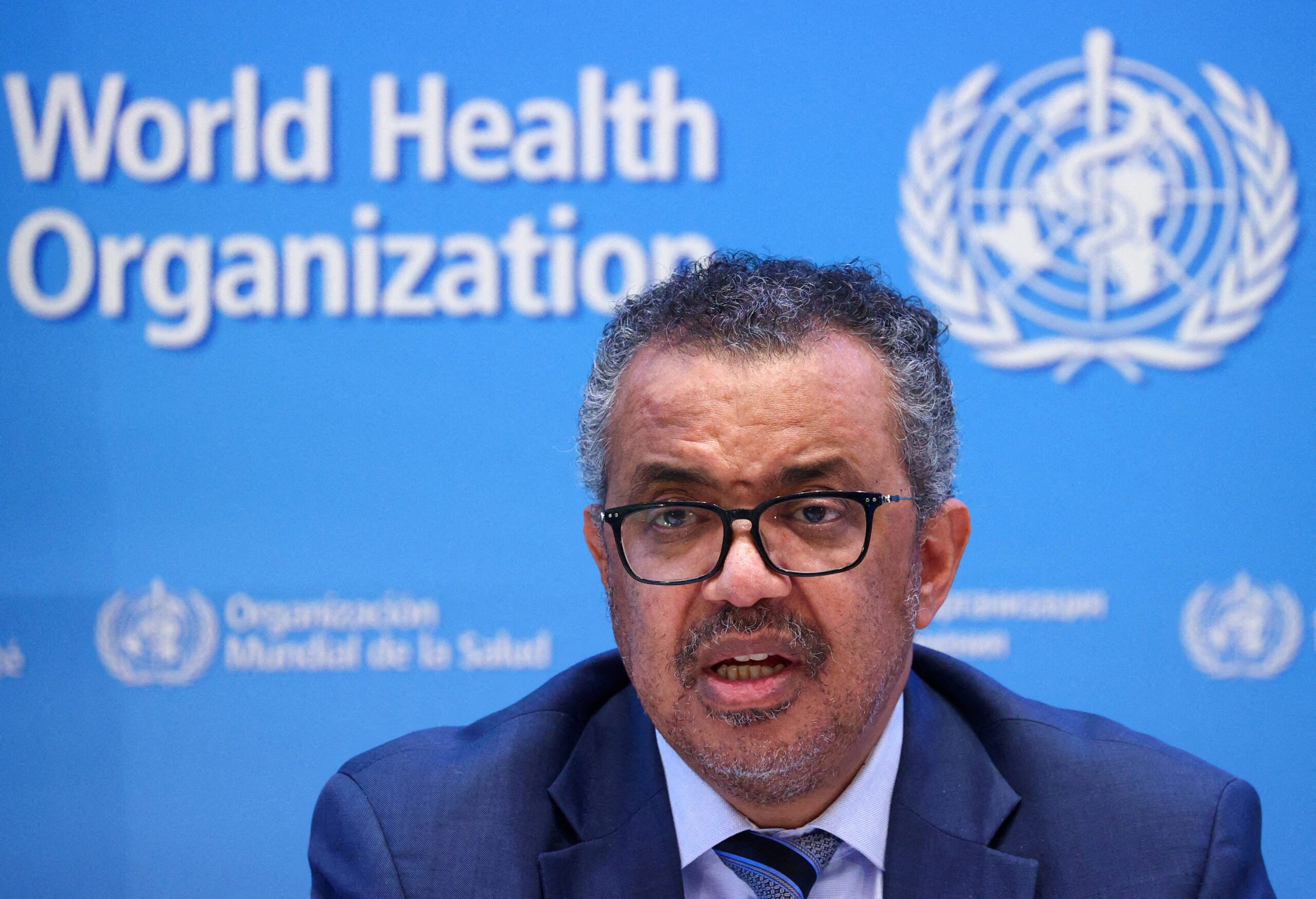
The World Health Organization (WHO) has released new guidelines to help countries respond to the global health financing crisis triggered by sharp aid reductions.
In its publication, “Responding to the health financing emergency: immediate measures and longer-term shifts,” WHO offers practical strategies for governments to protect essential health services and move toward sustainable, self-reliant systems.
According to the statement, WHO projects that external health aid will decline by 30 to 40 percent in 2025 compared to 2023, disrupting services in low- and middle-income countries. Data from 108 countries show reductions of up to 70 percent in key services such as maternal care, vaccination, and disease surveillance. Over 50 nations have also reported health worker layoffs and training disruptions, undermining progress toward universal health coverage.
Dr Tedros Adhanom Ghebreyesus, WHO Director-General acknowledged that sudden and unplanned cuts to aid have hit many countries hard, costing lives and reversing years of hard-won progress.
However, within this crisis, he sees a chance for countries to reshape their health systems to move from dependence to resilience.
“With this new guidance, WHO stands ready to support governments to mobilize domestic resources, spend smarter, and protect the most vulnerable,” Dr Tedros said.
Dr. Tedros emphasized that health spending must be seen as “an investment in national stability, not a cost to be contained.” He added that every country, regardless of income level, has the power to decide that health is not negotiable.
WHO praised early actions by countries stepping up domestic financing. Nigeria increased its health budget by US$200 million, Ghana lifted the cap on excise tax funding for its health insurance scheme boosting its budget by 60 percent and Uganda outlined a clear plan to integrate services and sustain access to care.
“Countries like Ghana, Nigeria, and Uganda are showing that even amid global uncertainty, leadership and innovation can keep health systems strong,” Dr Tedros noted.
WHO reaffirmed its commitment to supporting nations through technical assistance and peer learning, including the upcoming Universal Health Coverage Knowledge Hub, a partnership with Japan and the World Bank to be launched in December 2025.
As the world faces a new era of declining aid, WHO stresses that the future of health financing depends on domestic leadership, efficient resource use, and equitable investment. The organization’s message is clear: the road to resilient health systems begins with self-reliance and sustained commitment to the health and dignity of all people.
In January 2025, U.S. President Donald Trump announced a series of sweeping foreign aid reductions as part of his administration’s broader “America First” fiscal policy.
The cuts targeted multiple global health and development programs, including contributions to multilateral institutions such as the World Health Organization and the World Bank. The decision led to the suspension or downsizing of several U.S.-funded health initiatives in Africa, Asia, and Latin America, significantly contributing to the global aid shortfall now facing low- and middle-income countries.