

For a Ugandan filling up a car, riding a boda boda to work or buying a bunch of matooke at the market, events thousands of kilometres away can feel painfully close. That is the harsh reality of global economics on trend.
Brent crude has pushed above $105 a barrel after U.S. President Donald Trump rejected an Iranian proposal linked to reopening the Strait of Hormuz, while continuing attacks and security threats around Saudi Arabia and the wider Gulf have added to fears about global oil supplies. The latest escalation in the Middle East has once again demonstrated how quickly geopolitical tensions can ripple through energy markets.
For Uganda, this is not simply another international headline but a household problem. According to the Uganda National Oil Company (UNOC), Uganda imports about 95 percent of its petroleum products, with roughly 2.96 billion litres imported annually through Kenya alone. Monthly demand is about 240 million litres, and that demand is growing by around 7 percent a year.
That dependence means that when crude oil prices jump internationally, Uganda cannot simply look the other way. Eventually, the increase finds its way into the price of fuel and, from there, into the price of almost everything else.
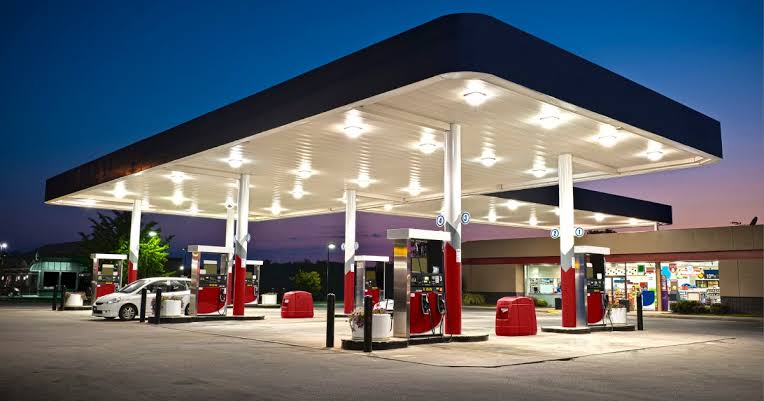
The first pain is obvious as motorists pay more to fill their tanks. But the bigger problem begins after the fuel leaves the filling station. Diesel powers trucks, buses, agricultural machinery, generators and much of the machinery that keeps Uganda’s economy moving. When diesel becomes more expensive as prices now are estimated to range between UGX 6410 and UGX 6900, while the petrol ranges between UGX 6400 and UGX 6890 depending on the fuel station, transporting a sack of produce from western Uganda to Kampala costs more. A trader in Kalerwe or Nakasero eventually has to recover that extra transport cost, and the consumer pays.
The same chain applies to almost everything, including food, construction materials, manufactured goods and even services. A boda boda rider facing a higher fuel bill has to consider whether the existing fare still makes economic sense. A taxi operator faces the same calculation. A farmer who uses fuel-powered equipment faces higher production costs, while a shopkeeper transporting stock from Kampala to an upcountry town has another expense to absorb. As a result, one increase at the pump can therefore become several increases elsewhere.
This is happening at a time when Ugandan households are already watching their budgets closely. Uganda’s annual headline inflation reached 4.1 percent in August 2026, up from 4.0 percent in July, according to the Uganda Bureau of Statistics (UBOS). Of course fuel is not responsible for all of that inflation, but when the cost of moving people and goods rises, the pressure on household budgets becomes harder to ignore.
UNOC’s bulk procurement system and strategic fuel reserves provide some protection against sudden supply disruptions. The company is responsible for bulk petroleum imports and has a mandate to manage storage facilities and strategic reserves, measures intended to strengthen Uganda’s security of supply. However, strategic reserves cannot repeal the laws of the global oil market. If international crude prices remain elevated, the cost of replacing imported fuel eventually rises. Storage can provide breathing room but it cannot permanently insulate Uganda from international prices.
The scale of Uganda’s dependence is substantial. For instance, basing on the UBOS data, in the third quarter of the 2024/25 financial year alone, the country imported about 681 million litres of petroleum products, including roughly 374 million litres of petrol and 296 million litres of diesel. Those numbers help explain why a crisis in the Middle East can quickly become a conversation about transport fares, food prices and household budgets in Kampala.
There is another channel through which expensive oil can hurt Uganda, and that’s foreign exchange. Imported fuel has to be paid for largely in foreign currency, so when international prices rise, importers need more dollars to purchase the same physical volume of petroleum products. If the shock persists, that can increase demand for foreign currency and add pressure to the exchange rate. And when the shilling weakens, the consequences extend beyond fuel.
Uganda imports medicines, machinery, vehicles, industrial inputs and many consumer goods, meaning a more expensive dollar can amplify the original oil shock. This is how an international energy crisis becomes a domestic cost-of-living problem.
There is, however, a potential long-term change on the horizon. Uganda is moving towards commercial oil production from the Tilenga and Kingfisher developments, with current plans pointing to commercial production beginning by the end of 2026 rather than the 2027 timeline often cited previously. Uganda’s recoverable oil reserves are estimated at about 1.65 billion barrels, with peak production expected to reach roughly 230,000 barrels per day.
That is significant, but there is an important distinction between producing crude oil and producing the refined petrol and diesel Ugandans put into their vehicles. Uganda is preparing to export its crude through the East African Crude Oil Pipeline, while the country also has plans for a 60,000-barrel-per-day refinery. The refinery, however, is still a project rather than an operating facility.
Uganda may therefore soon become an oil-producing country without immediately becoming a country insulated from imported fuel prices. A barrel of Ugandan crude being produced in the Albertine region does not automatically mean cheaper petrol at a filling station in Kampala the next morning. The benefits of domestic oil production will depend on how the country manages production, refining, infrastructure, revenue and the wider energy system.
That distinction matters to the ordinary consumer because the current Middle East crisis is a reminder that Uganda’s energy vulnerability is not an abstract policy issue, but rather, it is sitting in people’s fuel tanks, transport fares, market prices and monthly household budgets. For the driver, it may mean making fewer unnecessary trips, while for the boda boda rider, it may mean working longer hours to cover the same fuel bill. For the trader, it may mean thinner margins, whereas for the parent, it may mean discovering that money that comfortably covered transport and groceries last month no longer stretches as far this month.
Uganda cannot control what happens in the Strait of Hormuz, what decisions are made in Washington or how long geopolitical tensions in the Middle East last. But it can reduce how vulnerable its citizens are to the next crisis. That means building reliable strategic reserves, strengthening transport and storage infrastructure, accelerating domestic value addition and, ultimately, ensuring that Uganda’s own petroleum resources translate into greater energy security at home.
Until then, the price displayed on a petrol station board in Kampala will continue to carry a message far bigger than the numbers themselves: when the world catches an oil cold, Uganda’s households feel the fever.