

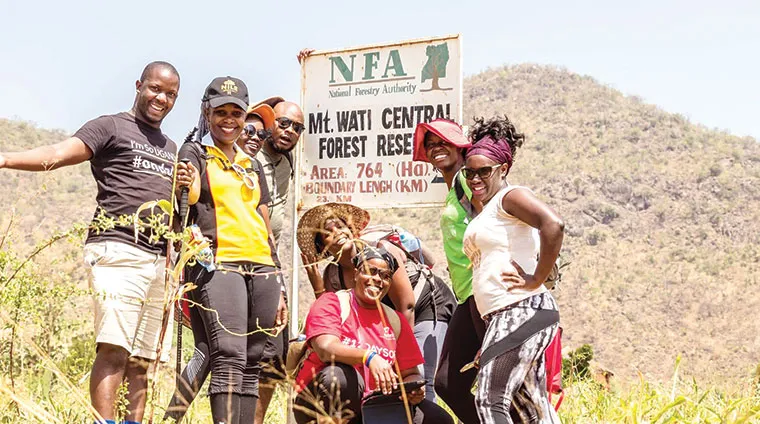
Rising 1,250 meters above the West Nile landscape, Mount Wati is far more than a mountain. It is a sacred landmark, a cradle of Lugbara heritage, and a natural wonder that calls explorers to uncover its legends, history, and breathtaking beauty.
Known locally as Eti or Iti, its peak, Ortega, rewards climbers with sweeping vistas, whispering winds, and the thrill of discovery. The mountain has long been a place of mystery and significance, from offering refuge to those fleeing the slave trade to serving as a strategic lookout for rebels, and as sacred grounds for the Lugbara people.
Visitors today can trace the same paths once walked by ancestors, encounter ancient graves and ritual artifacts, and hear stories of glowing giant snakes that roam the night.
For the Lugbara, Mount Wati holds deep spiritual significance. It is believed to be the ancestral home of Oli Banyale and the site where Dribidu, the founder of the Lugbara, settled and married the first Lugbara woman.
Scattered across its slopes are ceremonial objects such as grinding stones, granary poles, and the iconic clay pot known as saku, tangible reminders of a rich cultural heritage.
The mountain is surrounded by rolling hills, lush forests, and the nearby Offude Hills, offering endless opportunities for exploration. Hiking trails cater to both seasoned trekkers and slower climbers, with a round trip to the peak achievable in around four hours.
Birdwatchers and photographers find endless inspiration, while local guides bring Mount Wati’s legends to life with tales of ancestral spirits and nocturnal wonders. At the base, Olewa Falls along the serene River Enyau provides a perfect setting for picnics, meditation, and cultural ceremonies, blending adventure with reflection.
Tourism around Mount Wati is gradually reshaping the local economy. Youths work as guides and porters, while women’s groups sell handcrafted souvenirs.
Nearby homesteads are being transformed into community lodges, and local farmers supply fresh produce to hikers. Cultural troupes perform traditional dances and storytelling sessions, preserving heritage while generating income.
Despite its potential, Mount Wati remains largely underdeveloped. Terego District tourism officer Boniface Anika notes, “We cannot close the place for tourists just because it has not been developed. We welcome private sector investment to help us realize this vision.”
Former Arua District chairperson and West Nile tourism ambassador Richard Andama Ferua adds that gaps remain in facilities such as sanitation, accessible roads, accommodation, and emergency services.
“Since Mount Wati is part of a forest reserve under the National Forest Authority, development requires collaboration with the forest authority and other stakeholders,” he explains.
Recognizing its potential, the Uganda Tourism Board (UTB) and local leaders are taking steps to enhance the site. Feeder roads are being graded, directional signage installed, and guides trained in hospitality and safety.
Plans are also underway to formally recognize Mount Wati as a regional ecotourism destination, with support from the Ministry of Tourism. These initiatives aim to promote sustainable tourism, protect the environment, and integrate the mountain into Uganda’s broader tourism map.
Accessible year-round, with December to February and June to August being ideal for hiking, Mount Wati invites visitors to lace up their boots, carry water, and explore its trails under the guidance of local experts.
As both domestic and international tourism grows, the mountain stands as a symbol of West Nile’s natural beauty, cultural richness, and resilience, offering adventure for travelers and opportunity for the communities that call its slopes home.