
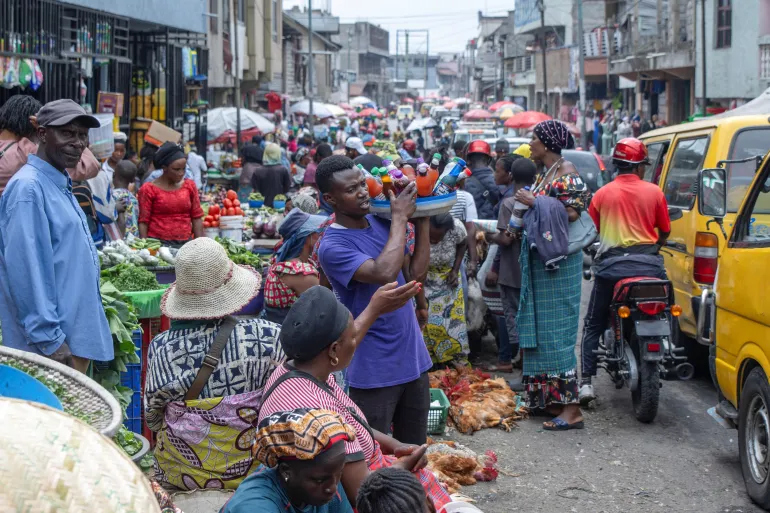
Thousands of traders and residents who depend on daily cross-border commerce between eastern Democratic Republic of Congo (DRC) and neighboring Rwanda are facing growing economic hardship following the closure of key border crossings over Ebola concerns.
The restrictions, introduced after a confirmed Ebola case was reported in Goma on May 16, have effectively halted movement through the busy Petite Barrière border post, a critical commercial gateway linking Goma in North Kivu Province and the Rwandan town of Gisenyi.
For years, the crossing served as an economic lifeline for thousands of small-scale traders who relied on daily movement of goods to support their families. However, more than a month after the restrictions were imposed, many say their incomes have collapsed.
Among those affected is Murielle Ihora, a mother of three who earns a living through cross-border trade in agricultural produce.
Like many traders, Ihora previously crossed into Rwanda at dawn to purchase goods for resale in Goma. With the border now closed, she has been forced to travel longer distances within eastern Congo to source products, increasing costs and reducing profits.
The closure has also affected traders dealing in fruits, vegetables and household commodities, many of whom say they are struggling to sustain their businesses.
Economic analysts warn that the impact extends beyond individual traders. The restrictions have disrupted one of the busiest informal trade corridors in the Great Lakes region, affecting transport operators, market vendors and small businesses on both sides of the border.
According to previous estimates, tens of thousands of people crossed the Petite Barrière border post daily, with cross-border trade serving as a major source of household income for residents of both Goma and Gisenyi.
Health authorities have defended the measures as part of efforts to prevent the spread of Ebola beyond affected areas.
Neighbouring countries, including Rwanda and Uganda, have strengthened surveillance and introduced public health restrictions aimed at limiting transmission of the virus.
However, some public health experts argue that enhanced screening and surveillance at border points may be more effective than complete closures.
They contend that while disease prevention remains essential, prolonged restrictions can have severe economic and social consequences for communities that depend on cross-border movement.
The World Health Organization has previously cautioned against blanket border closures during Ebola outbreaks, maintaining that robust surveillance systems and screening mechanisms are generally more effective in containing the disease while minimizing economic disruption.
Meanwhile, pressure continues to mount from traders’ associations and community groups seeking the reopening of the border under strict health protocols.
Representatives of small-scale traders say they are willing to comply with all Ebola prevention measures if it allows them to resume business activities.
The closure comes at a particularly difficult time for eastern DRC, where communities are already grappling with insecurity, displacement and economic challenges linked to years of armed conflict.
For many residents of Goma, the question is no longer only about controlling the outbreak but also about how long families can survive without the trade that sustains their livelihoods.