
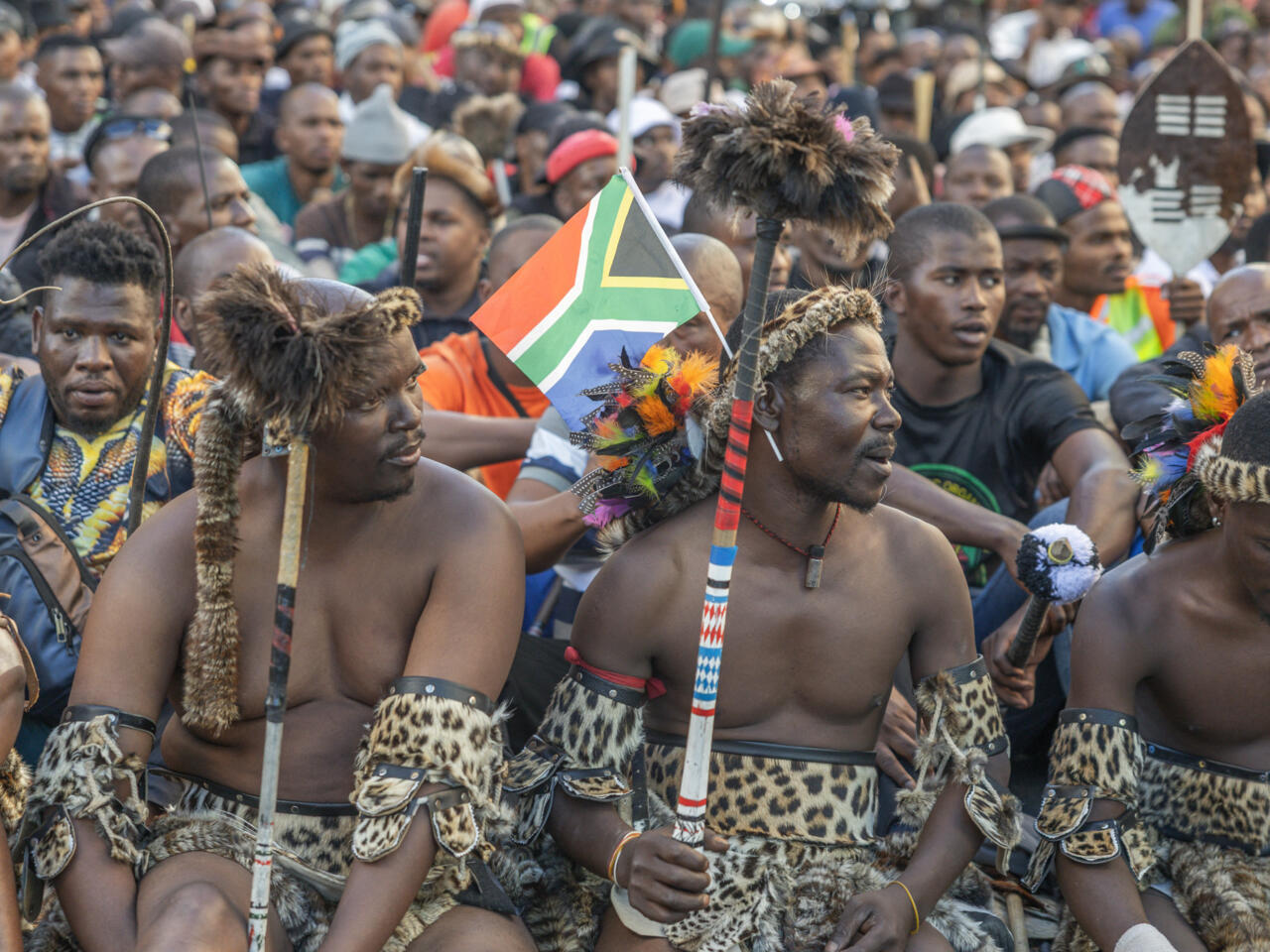
South African authorities have heightened security across the country ahead of a June 30TH deadline issued by anti-migrant groups demanding that undocumented foreigners leave the country, raising fears of renewed xenophobic violence.
The move comes after weeks of tension and attacks targeting foreign nationals, incidents that have already left at least two people dead and forced thousands of migrants to flee their homes or seek repatriation to their countries of origin.
Acting Police Minister Firoz Cachalia announced on Monday that law enforcement agencies had elevated their operational readiness nationwide to prevent violence and protect vulnerable communities.
“The South African Police Service has elevated its operational readiness across all provinces, with comprehensive deployment plans in place to protect communities, critical infrastructure and key public spaces,” Cachalia said.
He emphasized that while peaceful demonstrations are protected under the law, authorities would take firm action against any acts of violence, intimidation or destruction of property.
“Criminality, intimidation, violence, the destruction of property and any attempt to undermine public safety will not be tolerated,” he warned.
The government has also placed the military on standby to support police operations if the security situation deteriorates.
Defence Minister Angie Motshekga said security agencies would safeguard strategic installations, including airports and transport hubs, while remaining prepared to assist police where necessary.
The latest tensions stem from calls by several anti-migrant groups demanding that undocumented foreigners leave South Africa by June 30. Although the ultimatum has no legal standing, it has heightened anxiety among migrant communities and human rights organizations.
South Africa has long been a destination for migrants from across the African continent due to its relatively developed economy. However, persistent unemployment, poverty and inequality have frequently fueled resentment against foreign nationals.
The country’s unemployment rate remains above 30 percent, with migrants often accused by some groups of taking jobs, straining public services and contributing to crime—claims that researchers and migration experts have repeatedly challenged.
Human rights advocates argue that the growing hostility towards migrants reflects deeper socio-economic frustrations.
Mpho Makhubela, an activist with the Consortium for Refugees and Migrants in South Africa (CoRMSA), said anti-foreigner sentiment is being driven by broader economic challenges facing the country.
“Vigilante groups feed off the country’s frustrations over unemployment, socioeconomic decline and the lack of effort to address inequality gaps,” Makhubela said.
South Africa has a troubled history of xenophobic violence. In 2008, anti-migrant riots claimed the lives of at least 62 people, while subsequent outbreaks of violence in 2015, 2016 and 2019 left several more dead and displaced thousands.
Analysts say the latest tensions are unfolding against the backdrop of local government elections scheduled for November, with migration increasingly becoming a political issue.
Several political parties have intensified calls for stricter immigration controls, while others have urged government to address unemployment and inequality without targeting foreign nationals.
Security concerns have also been heightened by recent election-related violence. Authorities confirmed that four people linked to political parties were shot dead during voter registration activities over the weekend.
Among the victims were two individuals associated with the opposition uMkhonto we Sizwe (MK) Party led by former President Jacob Zuma, a Democratic Alliance candidate and an African National Congress councillor.
As the June 30 deadline approaches, police have appealed for calm and urged communities to resolve grievances through lawful means.
For thousands of migrants living in South Africa, however, uncertainty remains high as authorities work to prevent the country from sliding into another wave of xenophobic