The Government of Uganda has announced a temporary closure of its border with the Democratic Republic of Congo (DRC) following a continued escalation of the Ebola Virus Disease (EVD) outbreak in the region and increased cross border risk.
In a press statement issued by the Ministry of Health, the country confirmed that Uganda has recorded no new confirmed Ebola cases since Monday, May 25, 2026. However, authorities noted that the number of contacts linked to confirmed cases has risen, the majority being health workers. The current tally stands at seven confirmed cases with one death.
The outbreak has been attributed to the Bundibugyo strain of Ebola Virus Disease (BUDV).
Citing heightened regional risk due to worsening transmission in eastern DRC and frequent cross-border movement, the National Task Force on Ebola Response chaired by the Vice President resolved on a series of containment measures.
“Following the continued escalation in the scale of the Ebola outbreak in the DRC and the challenges associated with cross-border movements, leading to a higher risk of the spread into Uganda, the National Task Force agreed on immediate measures including temporary border closure,” the statement reads in part.
Under the new directives, only authorized Ebola response teams, humanitarian agencies, essential food and cargo transporters, and security personnel will be allowed to cross the border, subject to strict screening and monitoring procedures.
The Immigration Authority has been instructed to enforce mandatory health screening, completion of locator forms, and continuous surveillance for all permitted entrants.
The Ministry further directed that all persons returning from the DRC will undergo mandatory 21-day self-isolation under supervision of district surveillance teams.
Schools in border districts will remain open but are required to strictly follow Ministry of Health Standard Operating Procedures (SOPs). School administrations have been instructed to identify learners who recently returned from the DRC and monitor their temperatures daily for 21 days. Any student showing symptoms such as fever is to be referred to designated health facilities for further assessment.
“All RDCS/RCCs are instructed to strictly ensure implementation and enforcement of all Ebola prevention and control guidelines issued by the Ministry of Health and the National Task Force,” the statement added.
The government also directed media houses to dedicate at least 30 minutes of prime-time programming daily to public education on Ebola prevention, detection, and reporting.
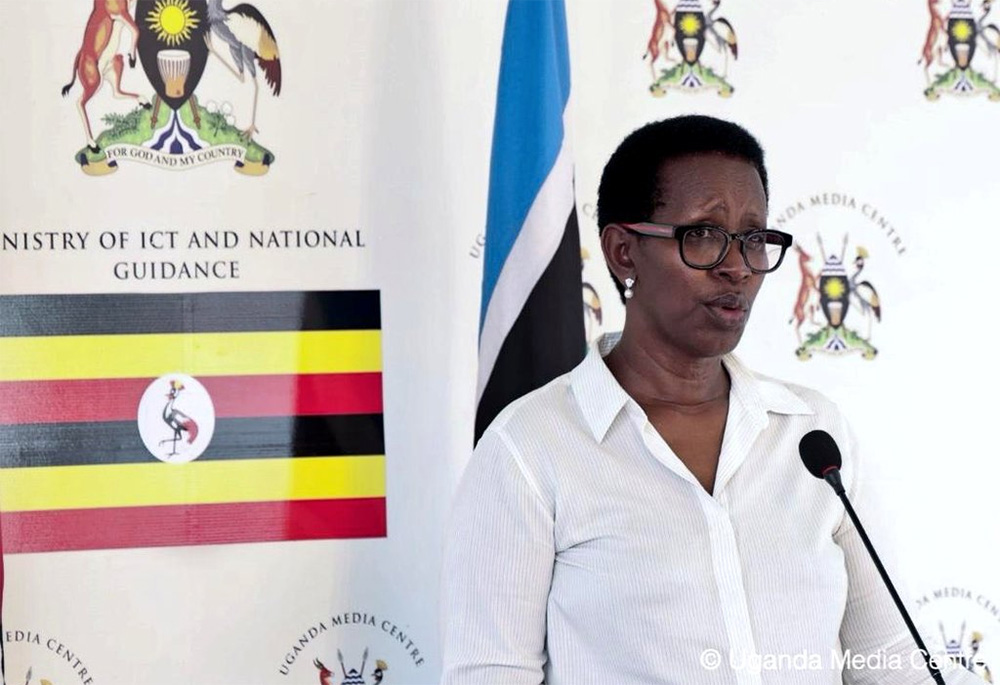
Ministry of Health Permanent Secretary Dr. Diana Atwine urged the public to remain calm while strictly observing health guidelines.
“The public is urged to remain calm, vigilant, and strictly adhere to all Ministry of Health guidelines. Any suspected cases should be reported immediately to the nearest health facility or through the toll-free line 0800-100-066,” Dr. Atwine said.
She further reaffirmed Uganda’s commitment to continued collaboration with the DRC in managing the outbreak, noting that both countries had agreed to strengthen cross-border surveillance and coordination mechanisms.
“Uganda remains committed to sustained cooperation and information sharing with the Democratic Republic of Congo to safeguard the health and safety of our people,” she added.