

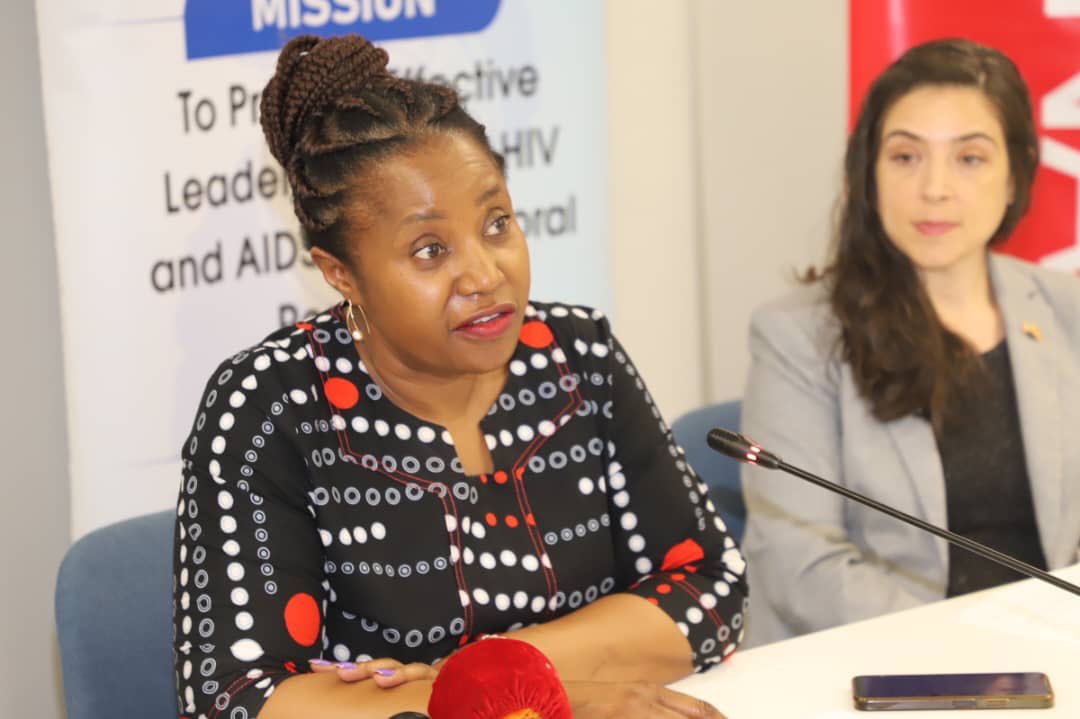
The Joint United Nations Programme on HIV/AIDS (UNAIDS) Country Director, Jacqueline Makokha, has called on all stakeholders to intensify their efforts to eliminate AIDS as a public health threat by 2030.
Speaking during a press briefing at the UNAIDS Headquarters in Mbuya on July 17, 2025, Makokha warned that global progress remains insufficient to meet the critical 2025 targets.
“In 2024, 41 million people worldwide were living with HIV, with 1.3 million new infections, including 120,000 children,” Makokha stated.
She noted that while there has been a 55% decline in new infections since 2010, Sub-Saharan Africa remains the epicenter of the epidemic, accounting for half of all new cases globally.
According to the latest UNAIDS report, notable progress has been made in both treatment and prevention.
Globally, AIDS-related deaths have decreased by 50% since 2010. In Sub-Saharan Africa, they have declined by 60%, largely due to expanded access to antiretroviral therapy (ART). As of 2024, 31.6 million people worldwide were receiving ART.
“Our region is approaching the ambitious 95-95-95 targets.Currently, 87% of people living with HIV know their status, 77% of them are on treatment, and 73% have achieved viral suppression,” Makokha said.
Uganda has made significant strides, with life expectancy rising to 72 years in 2024, well above the regional average of 62.3 years, up from 56.5 years in 2010.
However, Makokha expressed concern over lagging treatment outcomes for children and men.
“With 92 million people globally still lacking access to treatment and 1.3 million new infections in 2024, there is a need for stronger prevention efforts,” she said.
She urged stakeholders to unite in a final push to prevent 2.9 million potential new infections by 2030.