

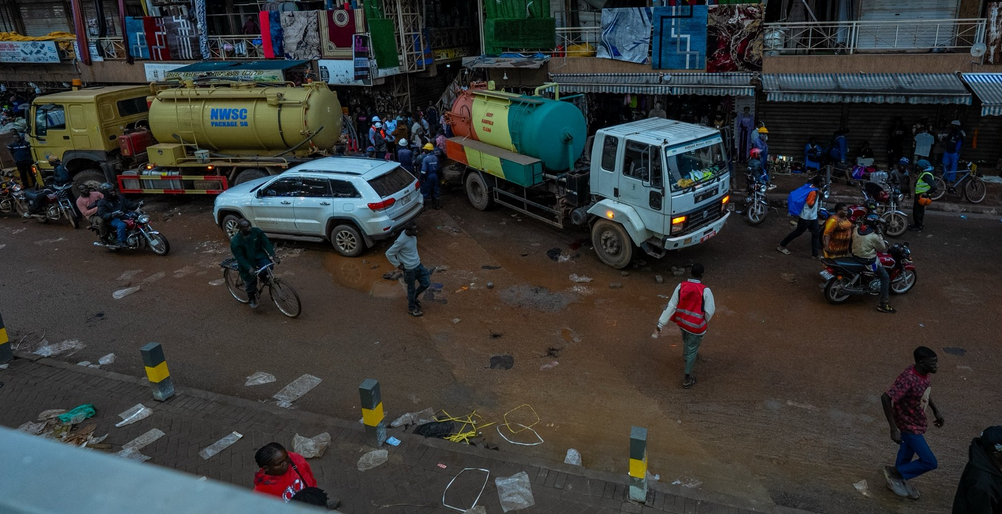
Heavy rainfall caused flooding in several parts of Kampala on March 6, 2026, prompting the Kampala Capital City Authority (KCCA) to deploy emergency drainage teams to affected areas.
According to KCCA Executive Director Sharifah Buzeki, the rains caused temporary flooding in areas including Sebana Road, Clock Tower, Forest Mall, Golf Course, and Allen Road.
However, Buzeki noted that in most cases the water receded within minutes, which is a significant improvement compared to previous incidents when floods would persist for hours or even days.
“Yesterday’s heavy rainfall put our drainage systems in Kampala to the test, and the results are encouraging, although we have not yet achieved our target level of resilience,” Buzeki said.
She explained that the quicker drainage of floodwaters follows recent improvements to the city’s drainage system, including the construction of 16 crossing culverts along Allen Road and Sebana Road that channel storm water into the Nakivubo Channel.
KCCA teams were also dispatched to assist buildings that experienced flooding.
“Two buildings, Totala Business and Qualicell, experienced basement flooding due to drainage challenges internal to them, and the KCCA drainage team was quickly deployed with suction trucks to help evacuate the water,” Buzeki said.
She added that KCCA continues to undertake additional drainage works across the city, including longitudinal drainage along Ben Kiwanuka Street and a planned box culvert on Namirembe Road under the Greater Kampala Metropolitan Area Urban Development Project.
While acknowledging the inconvenience caused by the flooding, Buzeki urged residents, traders, and building owners to support efforts to improve drainage in the city.
“As drainage improvement works continue, the inconvenience caused by this natural occurrence is regretted,” she said.
“Our call to residents, traders, and building owners is to dispose of waste responsibly and avoid blocking drainage channels,” she added.
KCCA says it remains committed to improving the city’s drainage infrastructure as part of broader efforts to build a cleaner, safer, and more flood-resilient Kampala.