

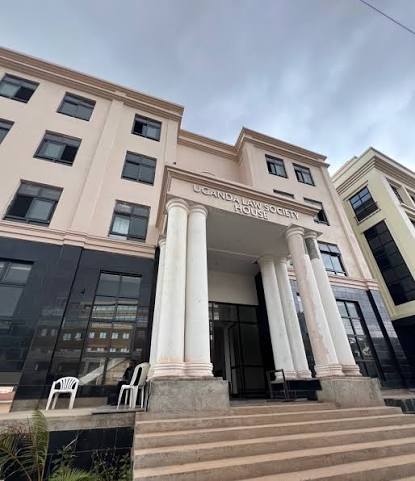
The Uganda Law Society (ULS) has issued Executive Order RNB No. 9 of 2026, criticizing state-appointed defense lawyers Sarah Awero and Richard Kumbuga for failing to speak out about the location of a highly sensitive murder trial being held in Ggaba.
The trial, which began on April 11th, 2026, is taking place at Ggaba Community Church in a temporary structure within the same community where the alleged crime occurred. The accused, Christopher Okello Onyum, is facing charges related to the killing of four toddlers at a local daycare centre, a case that has left the community deeply shaken.
In its order, signed on April 17th, 2026, at the Law Society’s Kololo offices, ULS stated that the venue raises serious concerns about fairness and impartiality. It pointed to Article 28(1) of the Constitution of Uganda, which guarantees the right to a fair hearing, and warned that justice must not only be done but must also be seen to be done.
“This particular venue may raise a reasonable apprehension of bias according to the objective test of impartiality,” the order stated.
The Society also highlighted Human Rights Application No. 170 of 2026, which it filed to formally challenge the trial venue before the presiding judge, Justice Alice Komuhangi Khaukha. However, it says its representatives were prevented by police from presenting their concerns and were forcibly removed from the court area.
According to the Executive Order, Awero and Kumbuga, who are representing the accused under the State Brief Scheme, remained silent despite being aware of the Law Society’s formal objections.
ULS said they did not raise any challenge in court or publicly question the venue.
The society further described this silence as a failure to uphold a core duty of defense lawyers to actively protect their client’s right to a fair trial, especially in a case that has drawn strong public emotion.
The order called on the lawyers to immediately take a clear position and push for the case to be moved to a neutral High Court facility.
It also renewed calls for urgent reform of the State Brief Scheme and faster implementation of the National Legal Aid Act 2022, saying lawyers must be able to act independently without fear or hesitation.
The directive takes immediate effect and has been shared with key justice institutions, including the Judiciary, the Director of Public Prosecutions, the Chief Justice, and international human rights organizations.