
The Forum for Democratic Change (FDC) party has critiqued the 2026/27 national budget, arguing that despite its record size, it fails to address the pressing needs of ordinary Ugandans.
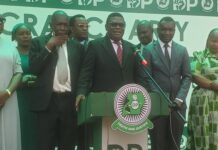
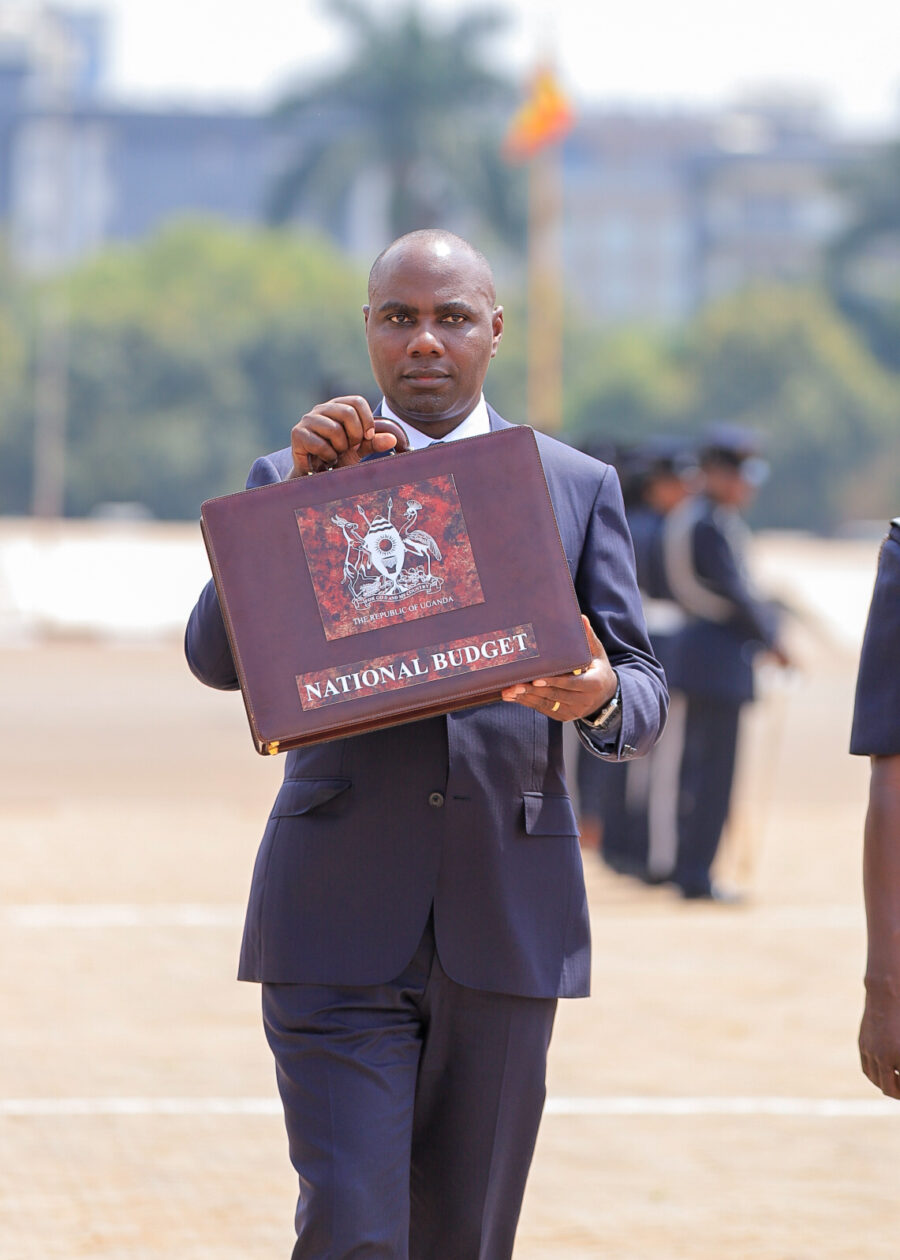
Speaking at the party’s weekly press conference in Najjanankumbi on June 15th, 2026, the FDC Deputy Spokesperson, Robert Franco Centenary said the UGX 84.39 trillion budget presented to Parliament on June 11th by Finance Minister Henry Musasizi was designed to benefit those in power rather than the average citizen.
“We have carefully studied the National Budget for the Financial Year 2026/27 presented to Parliament on June 11, 2026, totaling UGX 84.39 trillion. After going through every figure and every allocation, we reached a conclusion that this budget was not written for the ordinary Ugandan. The budget was made for the comfort of those in power,” Centenary said.
He argued that while government spending has steadily increased over the years, many Ugandans have seen little improvement in their living conditions.
“Mr. Museveni has over the years always compared our budget in 1986 and now, but life has not improved for many Ugandans. Uganda’s total public debt now stands at UGX 126.19 trillion, equivalent to USD 34.86 billion, with a debt-to-GDP ratio of approximately 53%,” Centenary noted.
According to Centenary, corruption and waste continue to undermine public spending, with a significant portion of the national budget allegedly failing to reach its intended beneficiaries.
“This means, out of UGX 84.39 trillion in this year’s budget, between UGX 16 trillion and UGX 25 trillion will disappear into corruption, ghost projects and inflated procurement,” he noted.
The opposition politician also questioned the UGX 10.21 trillion allocated to security, governance and rule of law, describing it as excessive for a country that is not facing an external conflict.
“In total, the security and intelligence apparatus of this government takes the biggest share in the national budget. Uganda is not at war with any foreign nation, yet the budget for this small group exceeds what is spent on the health of 48 million people, the education of over 10 million school children and the water needs of rural communities across the country,” he added.
Centenary further criticised spending on State House, saying it was difficult to justify at a time when many Ugandans are struggling to afford basic necessities.
“A poor Ugandan does not benefit from a state-of-the-art military headquarters or UGX 1 trillion in presidential inland travel. A poor Ugandan needs a functioning health centre, affordable fuel, affordable cooking oil and a child who can finish school without fees breaking the family,” he said.
Additionally, he highlighted on the issue of new tax measures approved under the budget, warning that they would increase the cost of living for many households.
“Excise duty on cooking oil increased from UGX 200 to UGX 400 per litre, but this oil is not a luxury; it is a household basic. Taxing it harder hits the poorest families the hardest,” Centenary noted.
He added that increasing taxes on cement, boda boda operators and imported second-hand clothes would place further pressure on low-income Ugandans.
“Used clothing, locally called mivumba, is how millions dress themselves and their children. Doubling this levy makes clothing more expensive for the poor,” Centenary stated.
Centenary also accused the government of undermining the informal sector through evictions and demolitions that have left many people without livelihoods.
“These are not the actions of a government that cares about monetising Uganda’s economy. These are the actions of a government that is at war with the informal sector, which employs the majority of Ugandans,” he said.
The FDC maintains that the 2026/27 budget prioritises debt repayment, security spending and government administration at the expense of investments that directly improve the lives of ordinary citizens.