
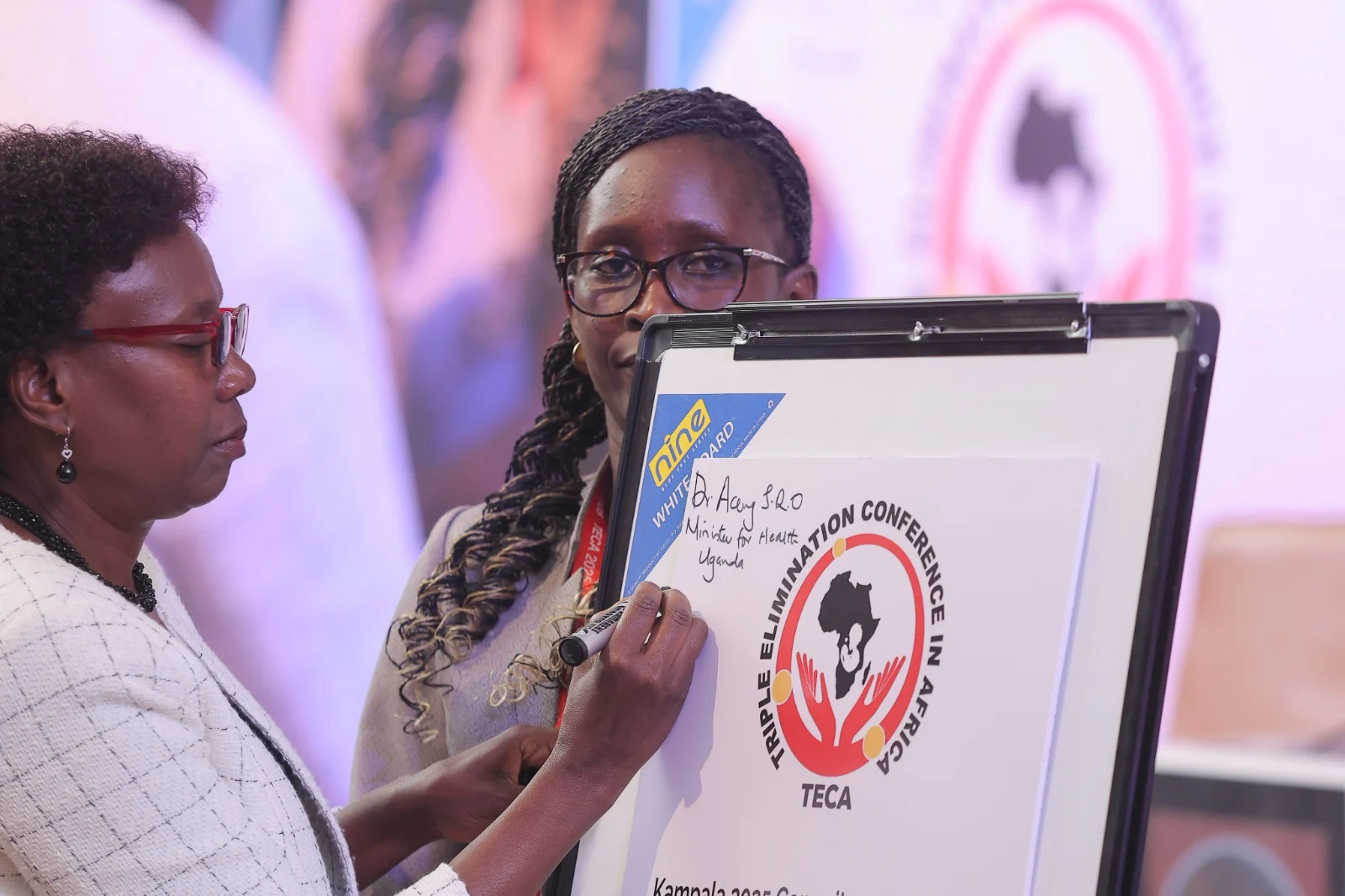
Health ministers from across the African Union (AU) have signed a landmark declaration committing to the elimination of mother-to-child transmission of HIV, syphilis, and hepatitis B by 2030.
The commitment was made during the Ministerial Conference on Triple Elimination, held from July 21 to 23, 2025, in Munyonyo, Kampala.
Uganda’s Minister of Health, Dr Jane Ruth Aceng, led the charge, urging African governments to move beyond medical solutions and confront the systemic and social barriers that continue to drive vertical transmission.
“We cannot claim success if stigma, poverty, and discrimination still prevent women especially those in remote communities from receiving timely care,” Dr Aceng said.
“The time to act is now. Every child deserves to be born free of preventable infections, and every mother deserves respectful, barrier-free healthcare,” she added.
The conference brought together health ministers from AU member states, civil society organizations, and development partners, concluding in the adoption of the Kampala Declaration, a bold 12-point commitment that outlines actionable steps to achieve triple elimination across the continent.
The ministers outlined a range of key points, including: providing timely and comprehensive antenatal care to at least 95% of pregnant women, ensuring routine first-trimester testing and counselling for HIV, syphilis, and hepatitis B and administering lifelong antiretroviral therapy to all HIV positive pregnant and breastfeeding women.
This included guaranteeing access to essential treatments such as Benzathine Penicillin and hepatitis B prophylaxis, delivering the hepatitis B birth dose vaccine to 95% of newborns within 24 hours of birth among others.
Dr Aceng emphasized that success will require deep community engagement and a people-centered approach to health delivery.
“We must listen to women, involve civil society, and design programs that respond to their real needs. This includes addressing fear, misinformation, and harmful norms that often keep them away from clinics,” she said.
She called on fellow leaders to scale up community-led outreach, increase investment in health education, and ensure health workers are trained to offer services grounded in confidentiality, informed consent, and non-discrimination.
The declaration aligns with continental frameworks such as the Africa Elimination of Vertical Transmission (AEVT) Plan and the Keeping Their Mothers Alive campaign. These initiatives serve as strategic roadmaps guiding implementation toward the 2030 goal.
Regional institutions including the Africa Centres for Disease Control and Prevention (Africa CDC) and AUDA-NEPAD have been tasked with supporting member states by establishing a continental knowledge-sharing hub and promoting mutual accountability.
Health leaders at the summit emphasized that the goal of triple elimination is not just about ending disease; it’s about restoring the right to health and dignity for mothers and children across the continent.