

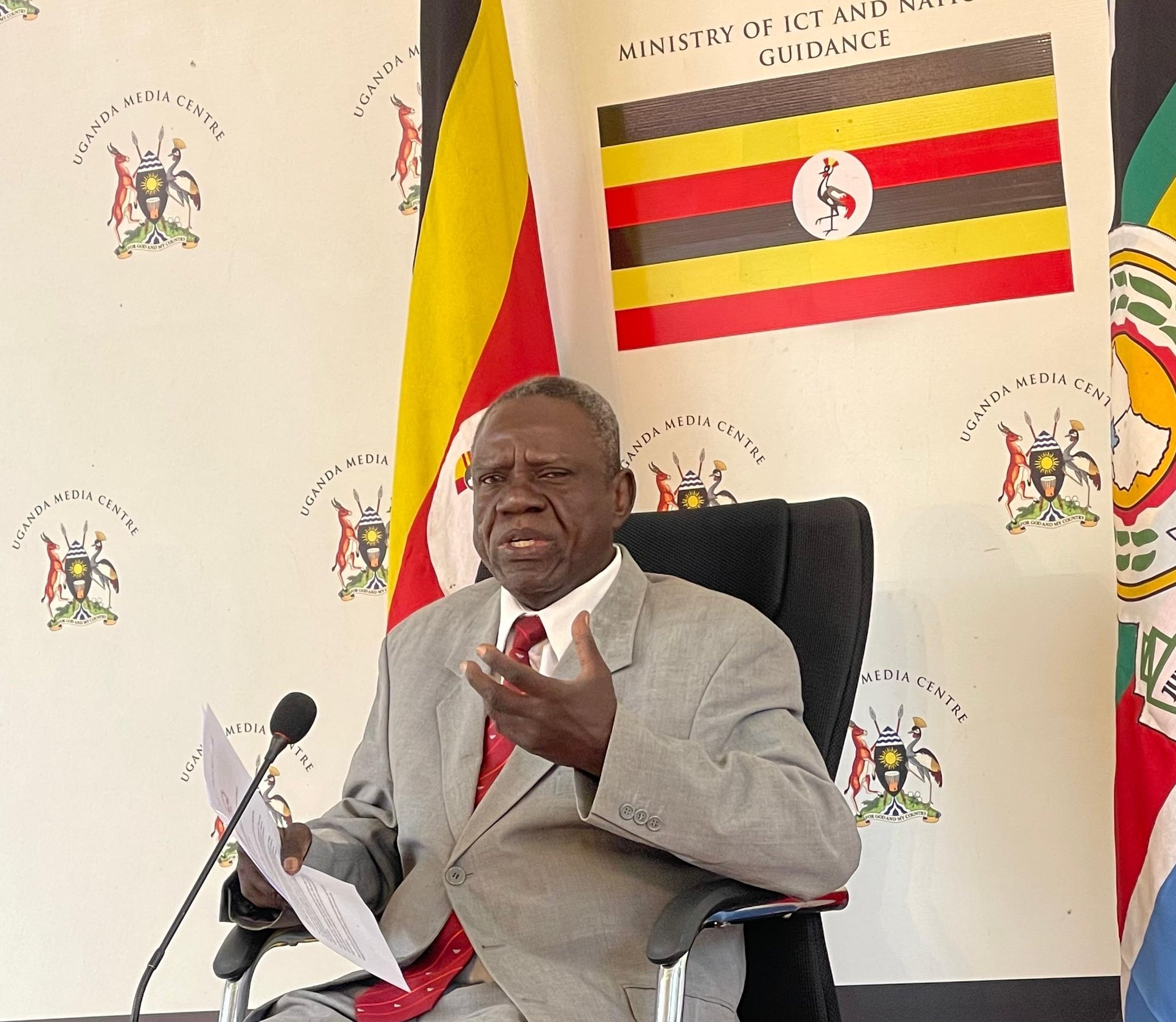
The Uganda Amnesty Commission has today, 25 February 2026,announced the pardon of 2,800 former rebels during a media briefing held at the Uganda Media Centre. The individuals had taken part in armed rebellion against the government since the National Resistance Movement (NRM) came to power in 1986.
The Chairperson of the Commission, retired Justice Peter K. Onega, said the beneficiaries were involved in insurgent activities either directly or indirectly across different parts of the country, with some operating from bases in the eastern Democratic Republic of Congo.
Justice Onega said those granted amnesty have since been resettled and reintegrated into their communities to begin new lives.
“They have returned to the villages and are gradually being absorbed back into society,” he said.
The Commission spokesperson, Moses Draku, also revealed that the Commission has recently relocated from its former premises as part of administrative changes.
Justice Onega noted that the West Nile Bank Front accounts for more than 6,000 beneficiaries under the amnesty programme, making it one of the largest groups to benefit.
He added that the Allied Democratic Forces (ADF), which operates largely in eastern DR Congo, is the third-largest beneficiary category under the arrangement.
Beyond granting pardon, the Commission also carries out dialogue initiatives, community sensitization, and resettlement programmes.
However, Justice Onega acknowledged that not all insurgent groups have fully demobilized. He said some remnants linked to the Holy Spirit Movement of Alice Lakwena, the Allied Democratic Forces (ADF), and the Lord’s Resistance Army (LRA) still exist, although the Commission remains open to dialogue.
“We continue to call upon all rebel groups to surrender and engage government in dialogue,” he said, specifically referring to the Holy Spirit Movement and its offshoots.
The Commission continues to face challenges in reintegrating former fighters, with stigma being one of the major issues. Justice Onega noted that women and children formerly associated with rebel groups are among the most affected.
“Some ex-combatants are highly mobile, and in some communities they are not easily accepted,” he said, adding that efforts are ongoing to support their reintegration into civilian life.
He also pointed to institutional challenges, including short-term staff contracts that were initially set at six months and later extended to two years. He said such limitations have affected staff performance and continuity.
Justice Onega explained the process for those seeking amnesty, noting that individuals can report to the police, the army, religious leaders, magistrates, or local council leaders, who will link them to the Commission. Ugandans outside the country can also seek help through diplomatic missions.
Regional Amnesty Commission offices remain operational in Kampala, Kasese, Mbale, Kitgum, Arua, and Gulu, and are open to any combatant willing to renounce rebellion.
Justice Onega, who has previously led dialogue efforts with insurgent leaders, urged families and communities to encourage their relatives still involved in rebellion to take advantage of the amnesty programme.