
A new medical manufacturing plant in Mukono District is targeting daily production of 60,000 HIV self-test kits, with ambitions to reduce testing costs, cut dependence on imports and position Uganda as a regional supplier of diagnostic products.
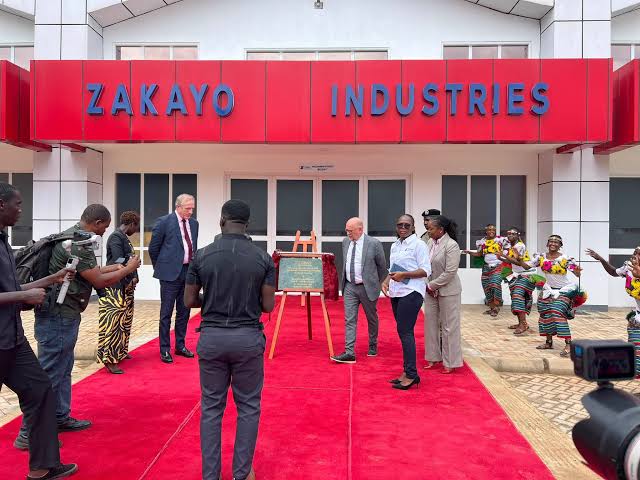
Uganda has taken a significant step towards reducing its dependence on imported medical supplies following the commissioning of a medical manufacturing plant operated by Zakayo Industries Limited in Ntenjeru, Mukono District, on October 29th, 2026.
The facility, established in partnership with US-based medical technology company OraSure Technologies, has the capacity to manufacture up to 60,000 oral rapid HIV self-test kits daily, marking a major development in the country’s efforts to strengthen local pharmaceutical and medical manufacturing.
The investment is expected to lower the cost of HIV self-testing, improve access to diagnostic services and create opportunities for Uganda to supply neighbouring markets.
Speaking at the commissioning, the Zakayo Industries Limited Chief Executive Officer, Ronald Zakayo Watanda said the development represented a major shift from Uganda’s historical dependence on imported medical products to local production and regional trade.
“Twenty-five years ago, everything was imported. Today, trucks are actively bound for Nairobi,” Watanda said.
The development gives practical expression to the Government’s Buy Uganda Build Uganda (BUBU) policy by demonstrating how local manufacturing can reduce import dependence while retaining investment, employment and industrial expertise within the country.
According to the company, the factory employs 120 Ugandans and has increased its production capacity six-fold since June, demonstrating the potential for local industries to expand and meet growing regional demand.
The facility is also expected to shorten supply chains by eliminating the previous logistical route through which raw materials travelled from the United States to Thailand before reaching African markets.
Beyond its economic significance, the investment could have considerable implications for Uganda’s HIV prevention and testing programmes, particularly by making self-testing more affordable and accessible.
Imported HIV self-test kits have traditionally retailed at between UGX 25,000 and UGX 30,000, placing them beyond the reach of some young people and low-income earners. Zakayo Industries is targeting a retail price of approximately UGX 7,000, potentially making self-testing more accessible to a wider section of the population.
Plant Manager Dr. Shamim Nagayi said the company’s production model was intended to make diagnostic products more affordable while increasing their availability in the domestic and regional markets.
The Ministry of Health has also highlighted the importance of HIV self-testing in addressing barriers that prevent people from accessing conventional testing services.
The Director General of Health Services, Dr. Charles Olaro said self-testing provides an opportunity for individuals who may be reluctant to visit health facilities because of stigma and other social barriers to know their HIV status privately.
The development comes amid continued efforts to strengthen HIV prevention and treatment services. Uganda’s HIV prevalence stands at 5.9 percent, while an estimated 200,000 people are believed to be living with the virus without knowing their status.
More affordable and accessible self-testing could help identify previously undiagnosed cases and connect more people to confirmatory testing, treatment and care. However, individuals who receive a reactive self-test result must undergo confirmatory testing at an accredited health facility.
The Mukono investment therefore presents an opportunity to link industrial development with public health priorities, while strengthening Uganda’s position in Africa’s medical manufacturing sector.
If sustained, the initiative could demonstrate how domestic manufacturing can contribute to affordable healthcare, employment creation, regional exports and reduced dependence on foreign suppliers.
For Uganda, the significance of the Mukono plant extends beyond the production of HIV test kits. It signals the country’s growing ambition to move from being primarily a consumer of imported medical technologies to becoming a producer and supplier capable of meeting its own healthcare needs and serving the wider African market.