
In a continent often defined by debt crises and bailouts, one small nation quietly made history- Namibia paid off a $750 million Eurobond in a single day. While most of us are still struggling to service loans or renegotiate repayment terms, this southern African country did what many thought impossible.
The million-dollar question is: how did they do it?
It all began in 2015, when Namibia borrowed $750 million from international investors through a 10-year Eurobond with an interest rate of 5.25%. Every year, the country paid interest faithfully. But more importantly, it planned ahead. By the time repayment was due in 2025, Namibia had already prepared for that day.
Rather than scrambling to find money at the last minute or turning to citizens for bailouts, the government saved little by little proving that “one by one makes a bundle” is not just a proverb but literal truth. There was no panic, no emergency taxes. Just foresight and discipline.
If all borrowers, both individuals and nations, had this sense of foresight, the world would be a better place.
In our own circles, we sometimes have to chase people for as little as 200,000 shillings, calling, threatening, and explaining why they should pay back what they owe. Namibia’s approach, on the other hand, was rooted in maturity and responsibility.
According to the Namibian Ministry of Finance, the country established a sinking fund through prudent fiscal management; a reserve specifically meant to repay debt. By the time the bond matured, they had saved $444 million, more than half of what was needed, without compromising service delivery or macroeconomic stability.
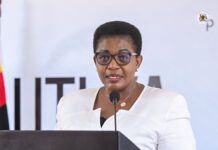
The remaining $306 million was covered by local banks, including ABSA, Standard Bank, FNB, and Bank Windhoek. According to Namibia’s Minister of Finance, Ericah Shafudah, the borrowed funds had been used for major development projects in roads, energy, education, and healthcare.
In doing so, Namibia not only proved to the world that it is a trustworthy borrower, but also offered developing nations a lesson in planning and accountability.
A Eurobond, for context, is an international bond issued by a country or company in a currency other than its own, usually sold to investors outside the issuer’s home country. In simpler terms, it’s a way for governments or corporations to borrow money from international investors and repay it later with interest often in U.S. dollars or euros.
For example, Uganda could issue a Eurobond in U.S. dollars, meaning it would borrow from international investors and repay in that foreign currency.
Kenya first entered the international borrowing scene in 2014, issuing its first $2 billion Eurobond, the largest in sub-Saharan Africa at the time. Since then, it has continued borrowing through additional Eurobonds in 2018, 2021, and beyond, accumulating about $5.2 billion in Eurobond debt alone.
But unlike Namibia, Kenya’s approach reflects a familiar African pattern, borrowing to refinance old loans. It’s a cycle that keeps repeating, offering short-term relief but long-term pain. With global interest rates now higher than ever, that strategy is becoming dangerously expensive.
Uganda’s situation is no less concerning. As of June 2025, the country’s public debt had soared to UGX 116.2 trillion (US$32.3 billion) a 26.2% increase from the previous year, according to the Ministry of Finance.
Legislators have called this trend “alarming,” warning that the burden will ultimately fall on ordinary citizens. Others defend continued borrowing as necessary for infrastructure development.
Still, the Ministry insists that Uganda’s debt growth has slowed, thanks to more caution amid rising global interest rates. Concessional and semi-concessional loans now make up the majority of external financing. Multilateral lenders like the International Development Association (IDA), African Development Fund, and IMF hold about 66% of Uganda’s external debt
If you are to ask me, I think every country needs an Ericah Shafudah, someone who says “the money will come,” and it actually does.
Namibia didn’t just repay a bond, it restored confidence in itself, its leadership, and its citizens. It reminded us that financial freedom begins with self-control.
For countries like Uganda, this is more than inspiration. It’s a challenge. We must not only pick a leaf from Namibia’s book but an entire forest. Because true independence doesn’t come from the size of your GDP, but from your ability to plan, save, and pay what you owe.