

Uganda’s long-awaited oil dream is finally becoming a reality, marking a major milestone in the country’s economic journey. After nearly two decades of preparation, the government has confirmed July 2026 as the start date for commercial oil production, bringing renewed hope for jobs, growth, and national transformation.
According to the Head of Public Service, Ms. Lucy Nakyobe, the oil project is no longer in the planning phase. “There are no more excuses, no more extensions. By July 2026, Uganda will have its first oil,” she said during an inspection visit to the Bunyoro oil fields. She noted that the investments are also boosting related sectors such as logistics, aviation, construction, and services, which will build long-term industrial capacity.
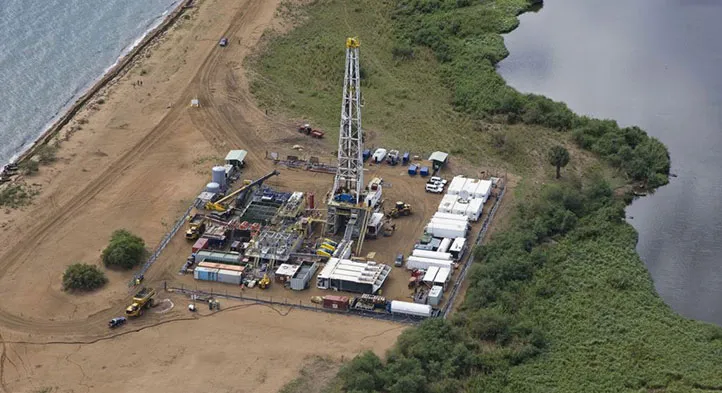
The Permanent Secretary in the Ministry of Energy, Ms. Irene Batebe, explained that the country has entered the critical development phase, which includes construction of Central Processing Facilities (CPFs), pipeline welding, and drilling of production wells. So far, Uganda’s oil and gas sector has attracted $7.5 billion (UGX 25.9 trillion) in foreign direct investment, the largest single investment in Uganda’s history.
One of the key components of this progress is the East African Crude Oil Pipeline (EACOP) , a 1,443-kilometre pipeline that will transport crude oil from Hoima to the port of Tanga in Tanzania. This pipeline is expected to enhance regional trade and energy cooperation between Uganda and its East African neighbors.
Infrastructure developments linked to oil are also transforming communities in western Uganda. The Kabaale International Airport in Hoima, nearing completion, will serve as a logistics hub for the oil sector and strengthen Uganda’s aviation and cargo capacity. New roads, power lines, and water systems have improved access to previously remote areas such as Buliisa and Kikuube, opening new opportunities for business and investment.
Local residents are already feeling the change. “We used to take three hours to reach the nearest hospital. Now we have new roads and investors opening shops. Oil has changed how people look at this place,” said Grace Atuhairwe, a businesswoman in Kabaale.
The oil project is also creating new jobs for Ugandans, especially in welding, transport, catering, and construction. Institutions like the Uganda Petroleum Institute in Kigumba are training youth for specialized roles in drilling, pipeline operations, and environmental safety. “Oil is giving our youth a reason to stay and build their future here,” said Dr. Michael Mugisa, a lecturer at the institute.
Uganda expects to produce 230,000 barrels of oil per day from the Tilenga and Kingfisher projects, with production expected to last over 20 years. The revenues will support the national budget, funding key sectors like education, health, and infrastructure.
In addition, Uganda plans to refine part of the crude oil locally to reduce fuel imports, stabilize prices, and strengthen energy security. “For the first time, Uganda will control its own energy destiny,” said an official from the Petroleum Authority of Uganda.
As the Kingfisher Central Processing Facility reaches 97% completion, the dream feels within reach. For many Ugandans, the upcoming oil era symbolizes transformation and self-reliance.
“This project is more than oil; it’s about transformation for our people, our economy, and our future,” Ms. Nakyobe said.
Uganda’s oil journey reflects strong leadership, clear vision, and strategic planning. With infrastructure in place and local participation growing, the nation stands on the verge of an economic breakthrough that could shape generations to come.