
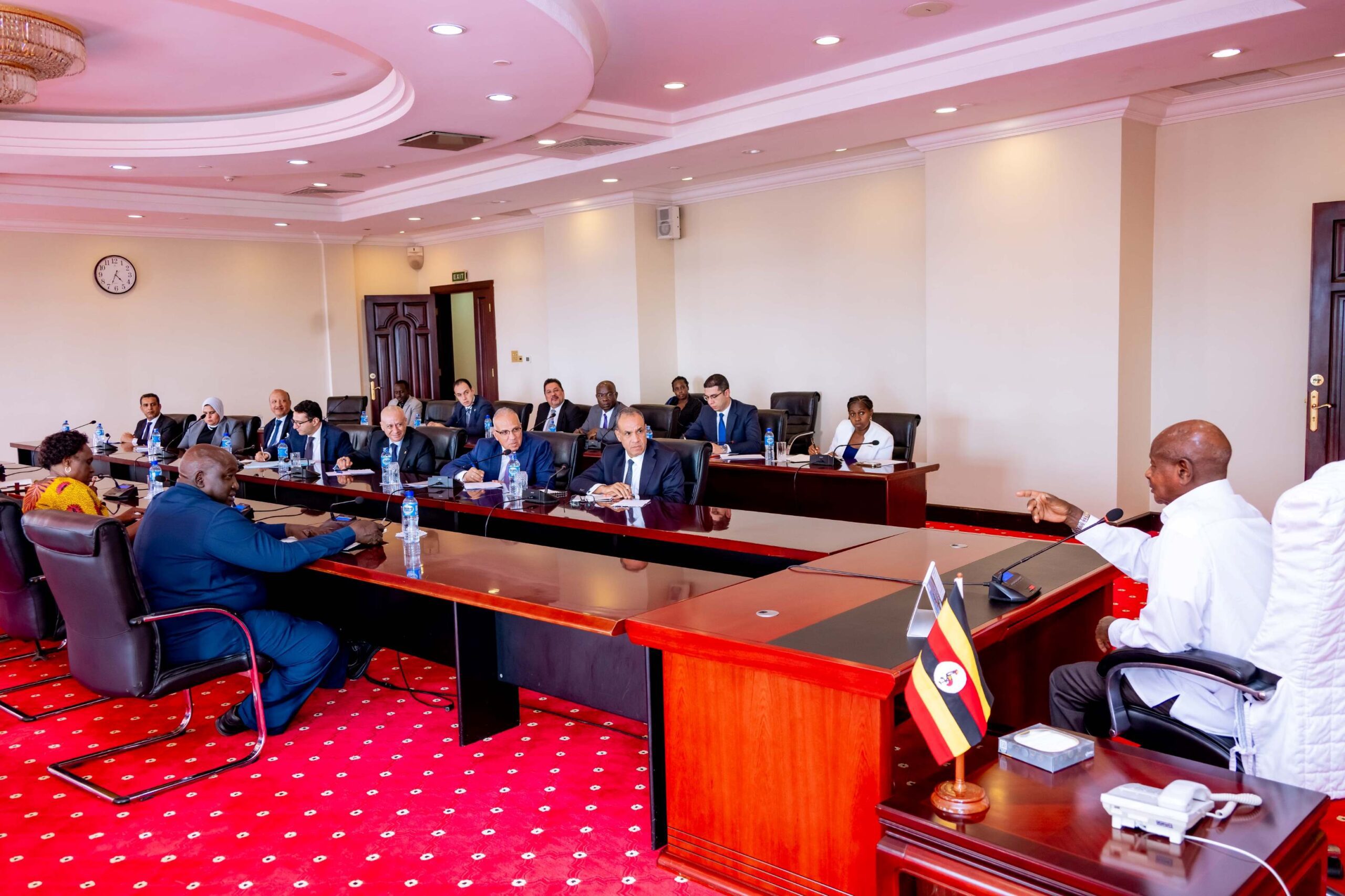
Uganda and Egypt have proposed the formation of a Joint Business Council as a strategic platform to accelerate bilateral investment and cooperation in key sectors such as energy, infrastructure, pharmaceuticals, and regional security.
The proposal was discussed on Monday, August 4th 2025 during a meeting at State House Entebbe between President Yoweri Museveni and Egypt’s Foreign Minister Dr. Badr Abdelatty.
The council is expected to facilitate private-sector collaboration, boost cross-border investment, and target key sectors like energy, pharmaceuticals, construction, and digital infrastructure.
For Uganda, the initiative presents an opportunity to attract Egyptian capital and technical expertise aligned with its National Development Plan III.
Dr. Badr emphasized Cairo’s commitment to regional partnerships, backed by a newly established development finance mechanism.
The meeting also addressed regional water security concerns, with Museveni calling for shared stewardship of Africa’s natural resources.
“Our president looks forward to a business forum that connects investors from both sides. We see enormous opportunities for mutual benefit,” Dr. Badr said.
The proposal comes at a time when geopolitical dynamics shift across the Nile Basin and Africa’s internal trade ambitions gain momentum under the African Continental Free Trade Area (AfCFTA).
“We must work together to industrialize Africa. It is time to shift from raw exports to value-added production, and partnerships like this can help accelerate that transformation,” President Museveni emphasized during the meeting.
Egypt’s push for economic cooperation is closely tied to its broader foreign policy goals in sub-Saharan Africa.
Amid persistent concerns over water security and the Grand Ethiopian Renaissance Dam (GERD), Cairo is strategically extending its diplomatic reach southward using investment as a tool of influence.
While the meeting touched briefly on Egypt’s existential concerns over Nile waters, President Museveni reaffirmed the need for shared stewardship of Africa’s natural resources.
“Our waters must be preserved in a way that supports peace and development. Water should unite us, not divide us,” Museveni noted.
This balanced posture allows Uganda to act as a bridge between upstream and downstream Nile states, while also positioning itself as a stable gateway for regional investment.
Dr. Badr’s praise for Uganda’s leadership in peacekeeping particularly in Somalia further solidifies Uganda’s status as a reliable political and security partner.
This combination of stability, strategic location, and economic ambition makes Uganda a natural focus for Egypt’s regional outreach.
The proposed Joint Business Council is expected to serve as a formal mechanism for advancing commercial ties, easing trade barriers, and facilitating joint ventures between Ugandan and Egyptian companies.