


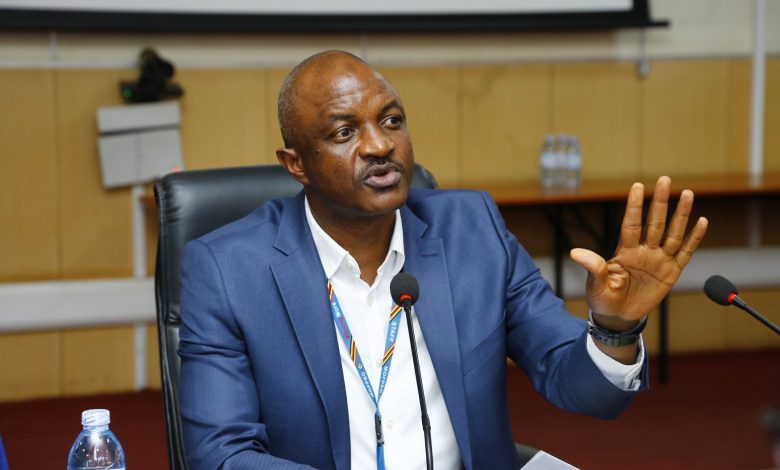
Uganda’s Ministry of Finance Permanent Secretary and Secretary to the Treasury (PSST), Ramathan Ggoobi, has raised alarm over increasing cases of under-declaration by business operators, warning that the practice is undermining the country’s domestic revenue mobilization efforts.
Speaking on a local broadcast on Thursday morning, November 13th, 2025, with a discussion focusing on Uganda’s fiscal outlook ahead of 2026, Ggoobi said that several businesses across sectors continue to evade taxes by declaring less income than they actually earn, thereby reducing the government’s ability to collect the required revenue meant to finance critical public services and development programs.
“We have challenges of under-declaration of tax where business people are only declaring a fraction of what they earn, others are bribing tax collectors and their goods are smuggled in the country, and falsification of documents, which is costing the country billions in lost revenue every year,” he said.
He explained that while the government has intensified efforts to widen the tax base and improve compliance, such practices threaten Uganda’s goal of reducing dependence on external borrowing and aid.
Basing on the Uganda Revenue Authority (URA) data for the financial year 2024/2025, Ggoobi highlighted that around gx 43 trillion was the targeted collection but only Ugx 32 trillion was collected from revenue, adding that Ugx 37 trillion is the target for this financial year and so far Ugx 450 billion has been collected cumulatively since July this year.
According to data from URA, revenue collection in the financial year 2024/25 fell short of targets, partly due to tax evasion and under-reporting among traders and corporate entities. The tax body has since embarked on tightening enforcement measures, including the roll-out of the Electronic Fiscal Receipting and Invoicing Solution (EFRIS) to monitor real-time sales and transactions.
Ggoobi emphasized that the government is not against businesses making profits, but urged entrepreneurs to fulfill their tax obligations as the government is trying to make tax revenue very comfortable.
“Nobody wants to pay tax but tax is a requirement for a state to function. When you decide not to pay tax, you are making your country weak and unstable. You cannot do much without revenue. The public needs to be sensitized,” he said.
The PSST, however, appreciated URA for enforcing automating systems that are assisting in curbing tax invasion.
He further called on URA to continue strengthening its data analytics capabilities to identify under-reporting patterns.
Nonetheless, Ggoobi noted that irrespective of the challenges, the shilling is gaining against the dollar and that the country is growing at one of the best rates globally making the shilling stable and appreciating.
“The shilling is stable and actually appreciating against other major currencies driven mainly by exports. The key numbers of the economy are still very good. We have turned in 6.3% growth from 6.1% the previous year. We are now back to the pre-COVID levels of growth. In the coming fiscal year, we are targeting growth of between 6.5% and 7%,” Ggoobi noted.
Tax experts have long noted that Uganda loses substantial revenue each year through informal sector activities and weak compliance among medium-sized enterprises. Economists warn that unless addressed, such practices could jeopardize government plans to increase domestic revenue to at least 18% of GDP by 2027 from the current approximately 14.2%.
The URA Commissioner General, John R. Musinguzi Rujoki, recently noted that the authority is enhancing taxpayer education, digital monitoring, and enforcement to close leakages in the system.
Background
Uganda’s tax-to-GDP ratio currently stands at about 13%, below the sub-Saharan Africa average of 16%. The government has prioritized improving domestic revenue collection to finance its ambitious National Development Plan (NDP III) and reduce fiscal deficits.