

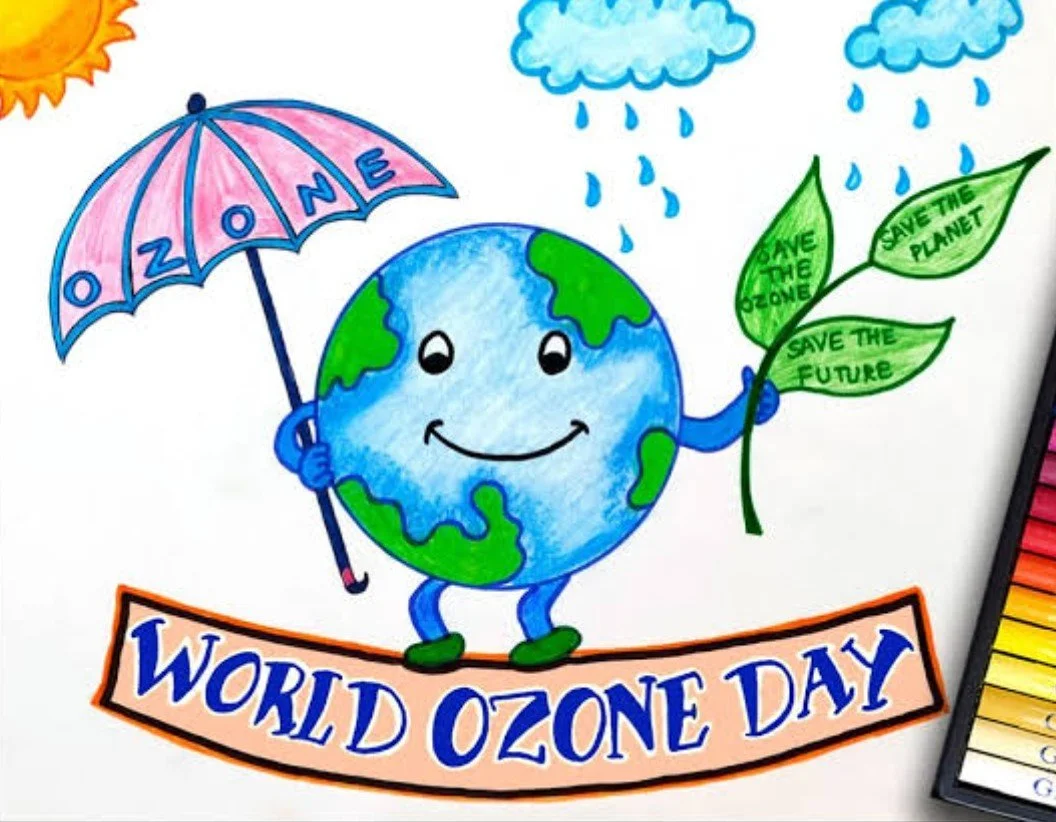
Every 16th of September, the world pauses to mark World Ozone Day, officially known as the International Day for the Preservation of the Ozone Layer. This year’s theme, “From Science to Global Action — Celebrating 40 Years of the Vienna Convention,” reminds us of a rare global success story: when science sounded the alarm about ozone depletion, nations came together to protect the planet.
Through the Vienna Convention in 1985 and the Montreal Protocol in 1987, the world phased out chlorofluorocarbons (CFCs) and other harmful chemicals, setting the ozone layer on the path to recovery. It proves that when the world unites behind evidence and urgency, real change is possible.
Uganda should see this as more than just a commemorative day. Our country lies along the equator, receiving some of the most intense solar radiation on Earth. The ozone layer is our natural sunscreen without it, the risks of skin cancer, cataracts, and immune system disorders would soar. But beyond human health, UV radiation also harms crops, livestock, and entire ecosystems.
As a largely agrarian nation, Uganda’s food security hinges on stable climate systems. If ozone depletion and climate change converge, they could devastate our coffee, maize, and banana harvests, crippling rural livelihoods and pushing more families into poverty.
Uganda has taken positive steps. We are party to the Vienna Convention and Montreal Protocol, and we ratified the Kigali Amendment to phase down hydrofluorocarbons (HFCs), which are potent greenhouse gases. Imports of ozone-depleting CFCs have been banned, and customs officers are being trained to detect illegal refrigerants.
These are commendable milestones, but they are not enough. Our cities are growing fast, waste is poorly managed, and many small businesses still use old cooling systems that leak harmful chemicals. Public awareness about ozone protection remains low, even as climate shocks — floods, droughts, and heatwaves become more frequent and severe.
This is why World Ozone Day should spark serious national conversations about our environmental responsibility. The same unity that saved the ozone layer can help us confront our own climate crisis. Uganda cannot afford to treat environmental action as the duty of government alone. Every citizen must become a steward.
We can choose ozone-friendly appliances, demand eco-conscious business practices, and support local tree-planting drives. Schools can teach children about environmental protection not as an optional topic, but as a duty to future generations. Religious institutions and community leaders can mobilize local action, while government enforces stronger regulations on waste, pollution, and emissions.
The story of the ozone layer is proof that science-driven global cooperation works. If the world could rally around invisible gases high above the Earth, surely Uganda can rally around the forests, rivers, and farmlands that sustain us. Protecting the ozone is not separate from fighting climate change it is part of the same struggle to safeguard life itself.
As we celebrate 40 years of the Vienna Convention, let us also look 40 years ahead. What kind of Uganda will our grandchildren inherit? One choked by heat, floods, and hunger or one thriving in balance with nature? The answer depends on what we do now. This World Ozone Day, may we remember: the sky protected us, and now it is our turn to protect it.