


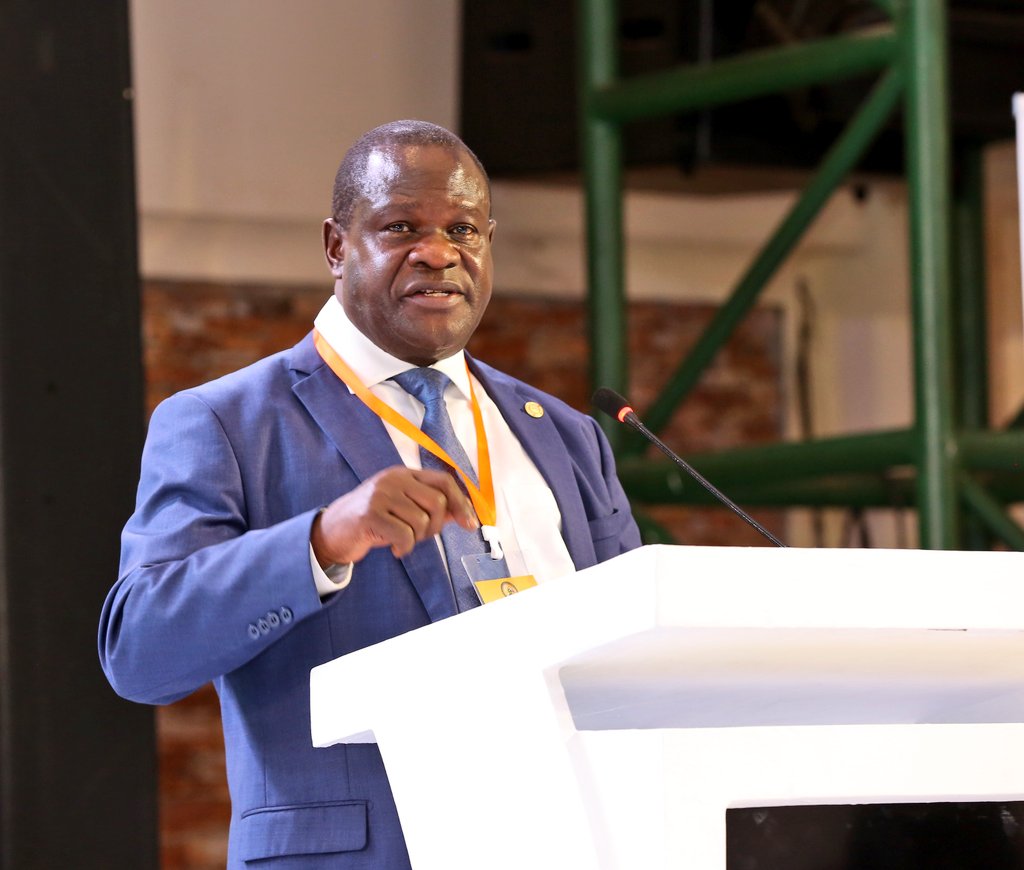
The Acting Permanent Secretary and Secretary to the Treasury, Patrick Ocailap, has called for the establishment of a competitive animal feeds industry to position Uganda as a key supplier in the fast-growing African food market.
Speaking at the 16th National Competitiveness Forum (NCF) today, October 23rd, 2025, at Golf Course Hotel in Kampala, Ocailap emphasized that Uganda should make use of its abundant local raw materials such as maize, soybeans, sunflower, cottonseed, cassava, sweet potatoes, and fish meal to produce high-quality and affordable animal feeds.
“There is need to establish a competitive animal feeds industry to take advantage of the locally available raw materials. This will not only reduce import dependence but also make Uganda a regional hub for feed production.” he said.
He also noted that rising incomes, urbanization, and a growing middle class across Africa are driving unprecedented demand for processed foods and animal proteins.
“By 2040, demand for processed foods is projected to increase sevenfold,” Ocailap added, urging Uganda’s agribusinesses to tap into this continental appetite.
Currently, Uganda exports 58% of its products to African markets, with over half of its animal feeds heading to neighboring countries. The African Continental Free Trade Area (AfCFTA), Ocailap added, further opens access to 1.4 billion consumers with a combined GDP of more than USD 3 trillion.
The Acting Permanent Secretary and Secretary to the Treasury, also highlighted government support through the Parish Development Model (PDM), which has disbursed UGX 3.209 trillion to 3.25 million beneficiaries as of October 2025.
The initiative is empowering local producers and fueling agro-industrial growth. Key allocations include UGX 350.3 billion for piggery, UGX 334.2 billion for coffee, UGX 325.8 billion for poultry, UGX 289 billion for goats, UGX 247.9 billion for maize, UGX 154.4 billion for bananas, UGX 135 billion for beef cattle, and UGX 134 billion for cassava.
“This support is not just boosting production; it is creating backward linkages with smallholder farmers and expanding opportunities for value addition,” Ocailap said.
The National Competitiveness Forum, now in its 16th edition, serves as a public-private dialogue platform to shape Uganda’s competitiveness agenda and inform national budget priorities.
This year’s forum, themed “Leveraging Regional Opportunities to Grow Food Processing and Animal Feeds Sectors in Uganda,” aims to explore best practices and propose strategies for expanding private sector participation in regional markets.
It also marks a critical moment for Uganda as it begins implementing the Fourth National Development Plan (NDP IV) under the Tenfold Growth Strategy, which targets industrial transformation and export growth.
“The opportunities are before us. If we organize our industries well, Uganda can feed the region and earn from it,” he concluded.
As Uganda intensifies its drive toward agro-industrialization, Ocailap emphasized that the country’s next growth opportunity lies in regional value chains, and by leveraging its resources, market, and momentum, Uganda can establish itself as a leading food supplier in Africa.