
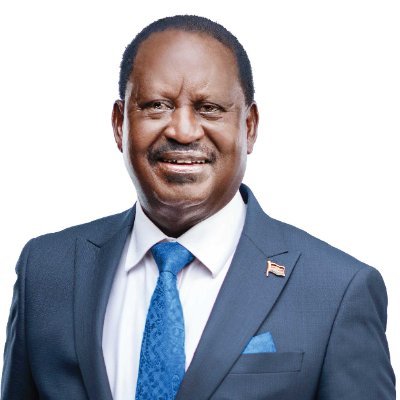
The nation of Kenya is mourning after the sudden passing of veteran statesman Raila Odinga this morning.
The 80-year-old succumbed to a cardiac arrest at the southern Indian state of Kerala where he had been undergoing treatment.
The Kenyan opposition leader whose four decade quest for the presidency defined much of the nation’s turbulent post independence politics, died early Wednesday morning.
The announcement came from Odinga’s family in a somber statement released, confirming that the veteran politician succumbed to complications from a sudden cardiac event following a brief hospitalization for what was initially described as routine check up.
“Baba has gone home to join the ancestors after a lifetime of fighting for justice and equality,” the statement read, signed by his wife, Ida Odinga.
Raila’s family urged Kenyans to honor his memory with unity rather than division.
Who was Raila Odinga?
Born on January 7, 1945, in Maseno, Kisumu District, to Jaramogi Oginga Odinga Kenya’s first vice president and Mary Juma, Raila Odinga inherited a legacy steeped in the fight for multiparty democracy. Educated in Germany as a mechanical engineer, he returned to Kenya in the 1970s to work in the family business but quickly plunged into activism. Detained without trial for nearly a decade under President Daniel Arap Moi’s regime in the 1980s and early 1990s, Odinga emerged as a key architect of Kenya’s shift to multiparty rule in 1991. His political career was marked by near misses at the presidency.
In 2007, widespread allegations of electoral fraud in his contest against Mwai Kibaki sparked post-election violence that claimed over 1,000 lives and displaced hundreds of thousands.
Odinga served as prime minister in a power-sharing government from 2008 to 2013, a role that stabilized the nation but left him hungry for the top job. Twice more in 2017 and 2022, Odinga challenged the outcome of presidential elections, leading to Supreme Court annulments and reruns that reshaped Kenya’s judiciary. Though he lost to William Ruto in 2022, their subsequent handshake alliance in 2024 paved the way for Odinga’s pivot to continental politics.
He ran for chair of the African Union Commission in February 2025, only to be narrowly defeated by Djibouti’s Mahamoud Ali Youssouf. Junked the clip as disinformation, but it underscored the high stakes of his enduring influence. Just days ago, on October 9, Odinga had appeared vigorous at a rally in Kisumu, calling for electoral reforms ahead of Kenya’s next polls.
President William Ruto, once Odinga’s running mate, declared a seven day national mourning period and postponed all non-essential government business.
Funeral arrangements will be communicated in due course.