

The Uganda Land Commission (ULC) has announced plans to roll out a comprehensive digital inventory system aimed at tracking and protecting all government owned land across the country, in a bid to detect and deter encroachers.
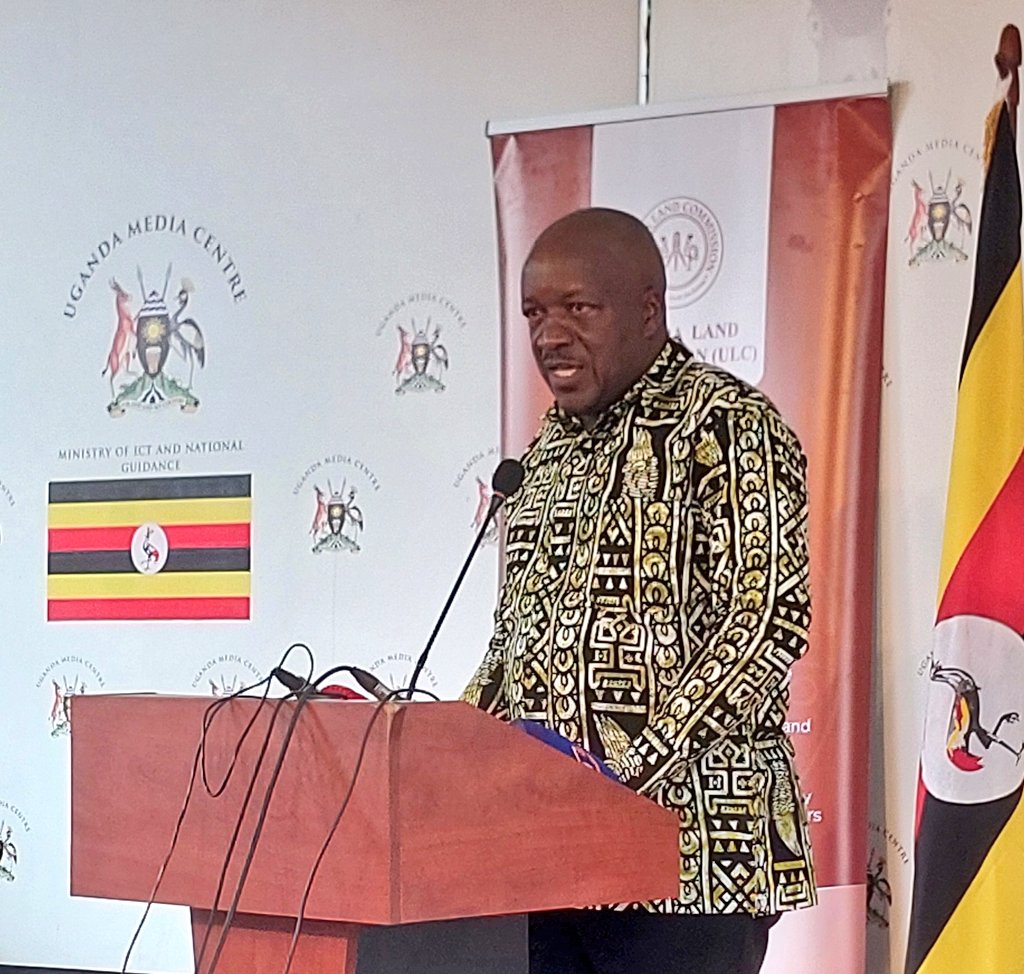
Speaking at a press briefing held at the Uganda Media Centre on December 15th, 2025, ULC officials outlined the initiative, which builds on a nationwide campaign launched earlier this month in Jinja.
Representing the Chairperson of Uganda Land Commission, Prof Jack Pen-Mogi Nyeko, Commissioner Kasenge Tom John Fisher, declared that the system is designed to create an updated, centralized database of government land and properties, enabling real-time monitoring and swift action against illegal occupations.
“The digital inventory will be a game-changer in stemming land fraud, disputes, and encroachments, it will allow us to identify all government land, including areas where titles have been irregularly issued, and regularize occupations where necessary while securing public assets,” Kasenge said.
The campaign, which began with stakeholder engagements in Jinja on December 9, involves verifying land records, canceling fraudulent titles on government property, and assisting legitimate occupants in formalizing their status.
Kasenge emphasized that payments made to government entities for such land would be considered in regularization processes. Government land in Uganda has long been vulnerable to encroachment due to outdated records and manual management systems.
According to Kasenge, the new digital platform is expected to integrate with existing tools like the Uganda National Land Information System (UgNLIS), enhancing transparency, guiding development, and identifying available land for investment.
He urged the public to utilize the 22 Ministry Zonal Offices nationwide for land services and warned against dealing with brokers.
He also highlighted the system’s role in reminding leaseholders of annual obligations, reducing inconveniences from accumulated arrears.
This initiative aligns with the Commission’s constitutional mandate to hold, manage, and secure government land. It comes amid ongoing efforts to enact the Uganda Land Commission Bill for greater autonomy and funding to support such projects.