

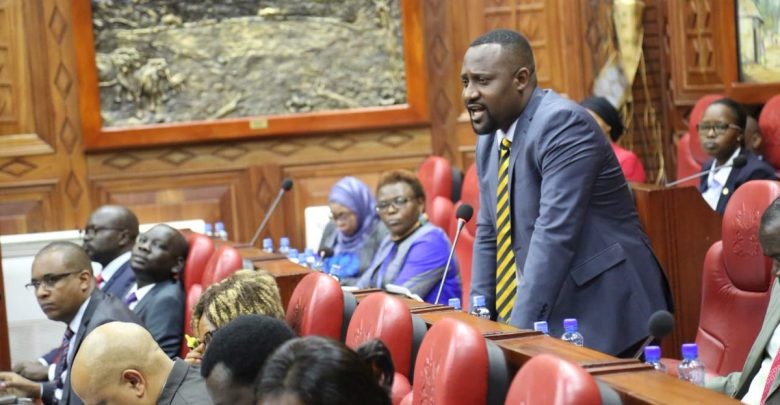
A directive from the East African Legislative Assembly (EALA) has halted Uganda’s move to replace two of its representatives, exposing a clash between national political processes and regional legal requirements.
The guidance, issued by the legal office of the East African Community on March 23, 2026, states that no vacancies currently exist in Uganda’s EALA delegation, despite the recent election of Denis Namara and James Kakooza to the country’s 12th Parliament.
According to the legal interpretation, the two remain members of EALA until they are officially sworn in as Members of Parliament when the new Parliament begins its term in May 2026. The position is grounded in Article 51(3) of the EAC Treaty, which provides that a seat is only vacated once a member formally assumes a role in a national legislature.
The memo underscores the importance of timing, noting that although Namara and Kakooza have been elected, their new mandates have not yet taken effect. As a result, their EALA seats cannot be declared vacant at this stage. It also cautions that premature declarations could trigger legal and procedural complications.
This interpretation disrupts ongoing efforts by Uganda’s ruling National Resistance Movement (NRM), which had already started identifying potential replacements. Earlier in the week, the NRM Electoral Commission, chaired by Tanga Odoi, shortlisted 38 aspirants to compete for the party’s endorsement for the two EALA slots, with plans to submit final nominees by April 15, 2026.
The replacement process had been initiated following the legislators’ victory in the January parliamentary elections, on the assumption that their EALA positions would soon fall vacant. However, the latest legal guidance effectively pauses the exercise, leaving contenders in limbo.
The development highlights a broader challenge of synchronizing Uganda’s domestic political timelines with regional legal frameworks. While national systems may act quickly in anticipation of vacancies, EAC rules require strict observance of formal procedures and timelines.
EALA is the legislative arm of the East African Community, responsible for enacting laws that support regional integration, trade, and cooperation. Uganda has been keen to maintain a strong presence in the assembly, making representation a key priority.
With the current directive in place, Uganda may now have to wait until the new Parliament is formally inaugurated in May before proceeding with the replacement process, in line with regional legal provisions.