
Uganda Red Cross Society (URCS) and the Ministry of Education & Sports have sealed a partnership that will see the establishment of First Aid Teams in every school across the country.
The initiative is set to equip students, teachers, and school staff with essential lifesaving skills, fostering a culture of safety, preparedness, and humanitarian values from an early age.
The Memorandum of Understanding (MoU) formalizing this partnership was signed on Friday, 3rd October, 2025, at Embassy House, marking the start of a nationwide effort to institutionalize first aid training in Uganda’s education sector.
Under the agreement, every public and private school will be required to establish a functional First Aid Responder Team.
These teams, composed of both teachers and students, will be trained and equipped to respond to medical emergencies, accidents, and disasters.
The initiative also extends essential first aid and fire safety skills to school support staff, including drivers and cooks, creating a comprehensive safety network within school communities.
The program will build on existing Red Cross clubs in schools, turning them into hubs for practical lifesaving skills and humanitarian education.
By integrating first aid knowledge into the school system, the program aims not only to prepare young people for emergencies but also to instill lifelong skills and confidence.
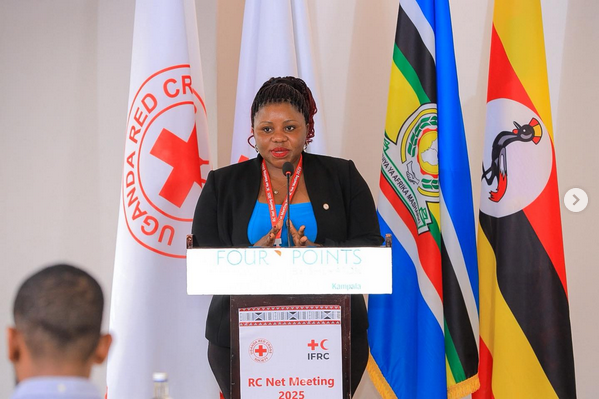
Irene Nakasiita, Head of Communications and Partnerships at URCS, emphasized the transformative potential of the initiative.
“We are transforming students from bystanders into empowered lifesavers. There is profound power in a young person who has the confidence and skill to assist a friend, a teacher, or a family member in a critical moment,” Nakasiita said.
The URCS Head of Communications and Partnerships further highlighted the strategic importance of the partnership for national resilience.
“This initiative is not a short-term effort but a long-term system being built into the education sector,” she revealed.
”By collaborating closely with the Ministry, we are making first aid knowledge a permanent and evolving part of school culture. Together, we are creating safer schools and nurturing a generation that is resilient and ready to act in critical moments,” Nakasiita added.
The rollout of the program will be conducted in phases, with monitoring and evaluation systems established to ensure its long-term effectiveness and sustainability nationwide.
This initiative is expected to significantly strengthen emergency preparedness in schools and develop a generation capable of acting decisively in critical moments.