


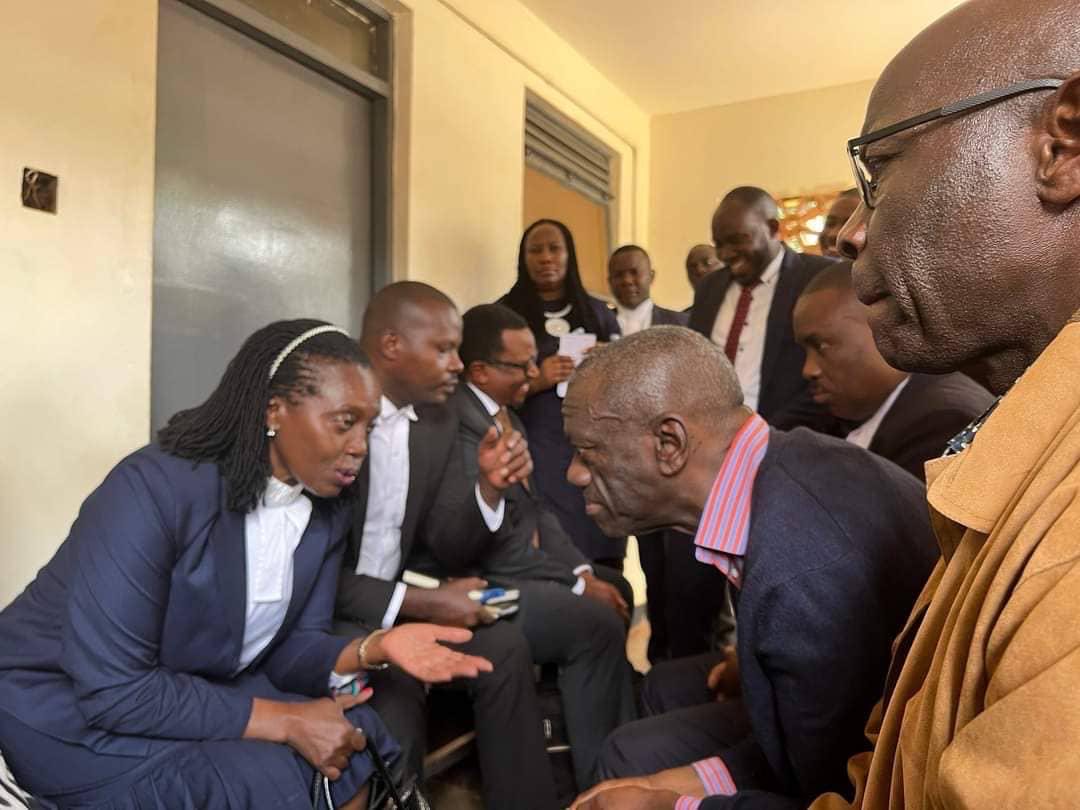
Today, Monday, 17th November, 2025, marks exactly one year since the detention of Dr Kizza Besigye, Uganda’s key opposition figure whose case has remained under close legal scrutiny since November 2024.
His continued remand, alongside his aide Obeid Lutale, has become a major point of national discussion balancing constitutional safeguards with the State’s mandate to investigate serious security related offences.
Dr Besigye, a four-time presidential contender, is facing charges including treachery, illegal possession of firearms and ammunition, misprision of treason, and other security-linked allegations. The duo first appeared before the General Court Martial between 20th November 2024 and 14th February 2025 before their matter was transferred to the High Court following the Supreme Court’s landmark decision on the trial of civilians.
State Still Conducting Key Investigations
Reliable court records indicate that the Director of Public Prosecutions (DPP) recently applied for permission to inspect and extract information from electronic devices belonging to Dr Besigye signaling that investigations into the alleged offences are still active.
Appearing on a local televised broadcast, today’s morning, legal analyst, Jude Byamukama defended the state saying that such applications show the seriousness with which the State approaches matters of national security.
“The DPP was essentially informing court that investigations are ongoing. That is within their mandate,” he said.
Byamukama, however, reminded that the Constitution provides for presumption of innocence and bail considerations after 120 days issues that continue to shape public debate.
Constitutional Questions and Legal Interpretation
The High Court has in recent rulings emphasized that the 180-day remand period applies from the moment the case entered its proper jurisdiction the civilian court in February 2025. This interpretation explains why recent bail applications have been denied.
Byamukama raised concerns on procedure, arguing that Dr Besigye was arraigned “from prison,” contrary to the usual practice where suspects appear from police or via summons. But legal experts note that Uganda’s law allows court to remedy procedural errors once proper jurisdiction is established.
In a message that has been widely circulated mostly on social media, Besigye’s wife, Winnie Byanyima extended her heartfelt appreciation to supporters and the legal teams that have handled the case.
However, Byanyima shunned the legal process for dragging on the case for too long.
“It is now one year since my spouse, Kizza Besigye, was abducted from Nairobi and taken to prison in Uganda,” she said.
Nexus Media attempted to contact Deputy Attorney General Jackson Kafuuzi to comment on the ongoing investigations and the implementation of the Supreme Court ruling on court-martial jurisdiction.
Mr Kafuuzi did not answer repeated phone calls.
However, government has previously stated on record that cases involving security implications must be handled thoroughly, and that the transition from the Court Martial to civilian courts demonstrates adherence to legal guidance.