
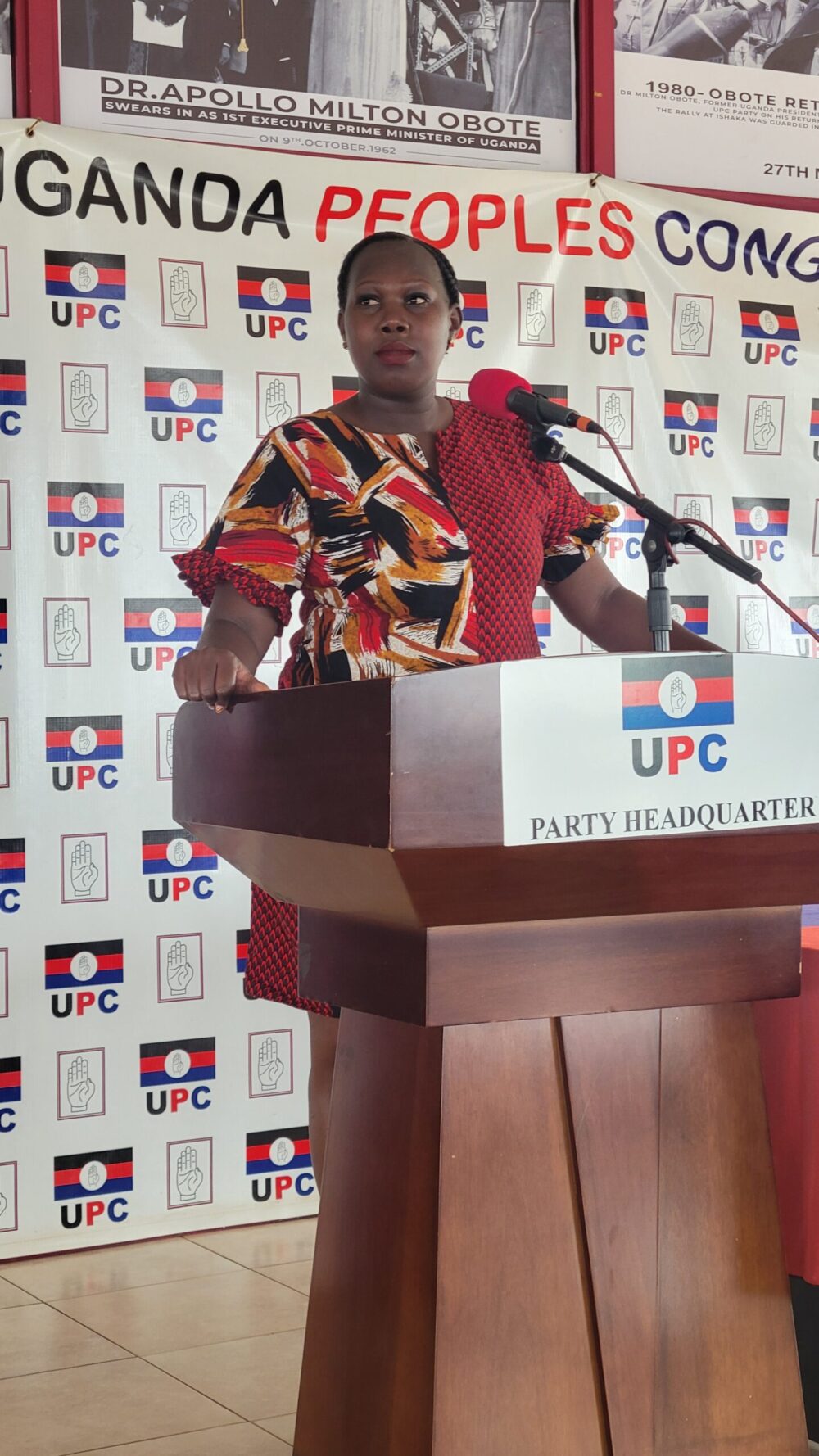
The Uganda People’s Congress (UPC) party has called for the immediate withdrawal of the proposed Protection of Sovereignty Bill, 2026, describing it as unconstitutional and a threat to citizenship rights and civil liberties.
Speaking to the media at Uganda House on April 29th, 2026, the UPC Spokesperson, Sharon Arach Oyat, said the party had already submitted a memorandum to Parliament’s Committee on Defense and Internal Affairs and the Committee on Legal and Parliamentary Affairs on April 24th, 2026, outlining its concerns.
“While the stated goal of safeguarding national sovereignty is legitimate, we contend that this bill is fundamentally unconstitutional and should be withdrawn without further consideration,” she said.
Oyat argued that the proposed law duplicates existing legislation, including the NGO Act, the Anti-Money Laundering Act, and the Political Parties and Organizations Act, while introducing sweeping provisions that could undermine citizens’ rights.
“Any bill that takes away your nationality, citizenship, or sense of belonging is an infringement on the Constitution,” Oyat noted, adding that the process lacked meaningful nationwide consultations.
On a separate matter, the UPC also criticized the government’s decision to resume enforcement of the Trade Order in Kampala despite a prior suspension and public concern.
Oyat said the enforcement had led to destruction of property, confiscation of goods, and significant disruption to small-scale traders and their households.
She questioned what measures were in place to support those affected, particularly traders struggling with loans, school fees, and business continuity.
“These actions of implementing the Trade Order are directly or indirectly killing the livelihoods of our citizens,” Oyat said.
Oyat further called for genuine stakeholder engagement and a more balanced, humane approach.
The party urged the government to prioritize vulnerable citizens, noting that small businesses remain central to the supply chain and everyday survival for many Ugandans.