

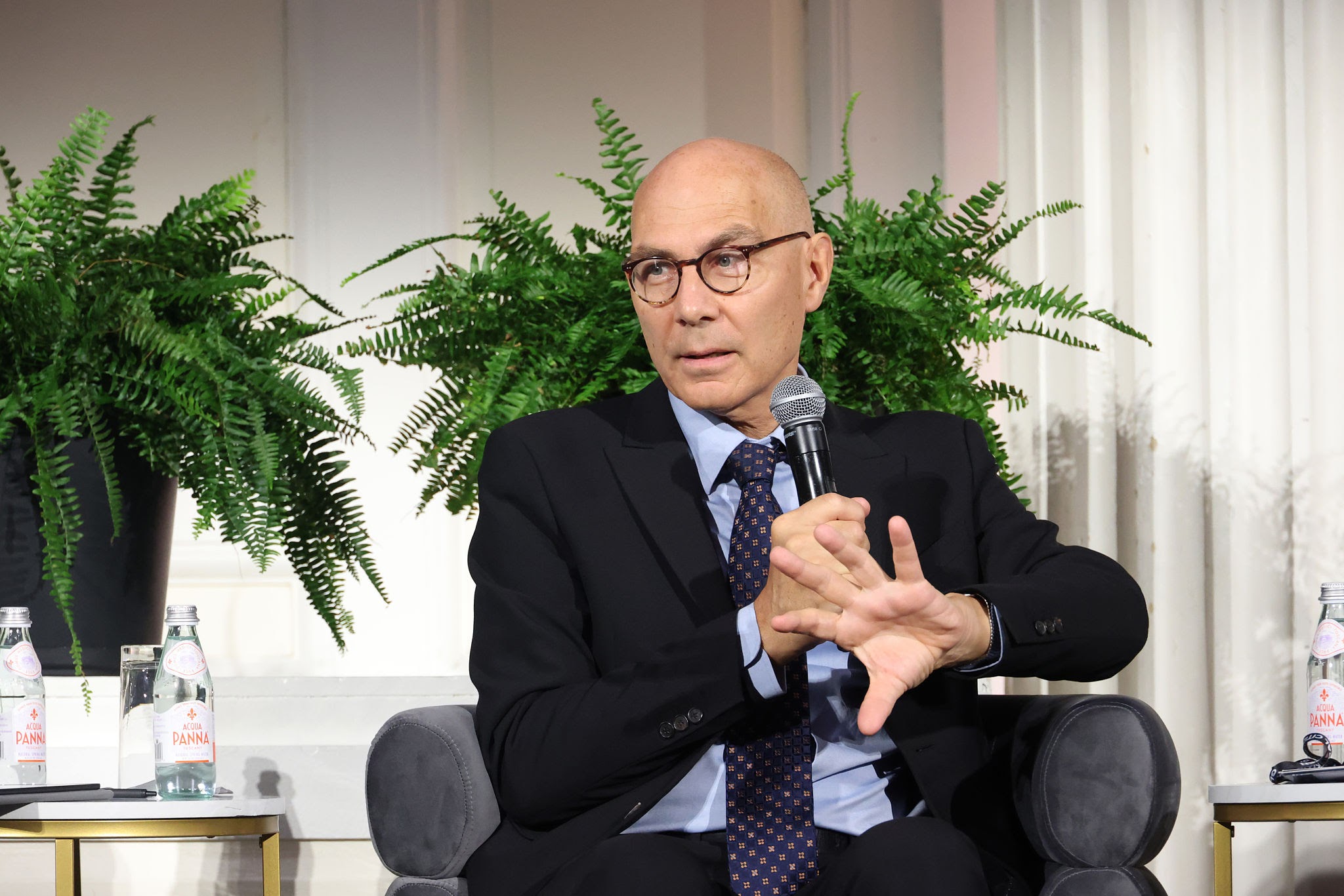
The United Nations High Commissioner for Human Rights, Volker Türk, has cautioned leaders against the rising global competition for power degrading human rights worldwide.
Addressing the 61st session of the UN Human Rights Council on Friday, February 27th, 2026, Türk said the current global climate is increasingly defined by geopolitical rivalry rather than concern for human dignity.
“The world is upside down, we all feel it. Discussions on power are everywhere: who has power; how power is shifting; how power will evolve. But to what end?” he questioned.
He noted that the number of armed conflicts has nearly doubled since 2010 to about 60, with attacks on civilians increasing by a third, warning of a growing normalization of violence.
Türk condemned human rights violations in Sudan, Ukraine, the occupied Palestinian territory, Myanmar and Yemen, and called for an end to the transfer of arms that could be used in breaches of international law.
He also urged stronger accountability measures, including the use of universal jurisdiction, and called for action against hate speech and incitement.
Turk warned of a rise in authoritarian practices, describing a “familiar playbook” that includes vague legislation, control of information, attacks on dissent and the scapegoating of minorities. He cited examples in Belarus, Egypt, India, the Russian Federation, Tunisia, Türkiye, Pakistan, Georgia and Venezuela.
“In Iran, I urge independent, impartial, and transparent investigations, fair trial guarantees, and an immediate moratorium on the death penalty,” he said.
Türk cited growing discrimination worldwide, including the racial profiling of Africans, marginalization of Indigenous Peoples, and increases in antisemitism and Islamophobia.
He also pointed to hostility toward migrants in Europe, Libya and the United States, and attacks on LGBTIQ+ human rights defenders in Hungary and Türkiye.
Türk warned that global systems continue to concentrate wealth while leaving millions in poverty.
He said billionaires accumulated enough wealth in 2025 to end extreme poverty 26 times over, while cuts to international aid could contribute to the deaths of 22 million people by 2030.
He called for reform of international financial systems and an end to “unjustified” blockades, including the one affecting Cuba.
“There is ample evidence that companies that respect human rights also perform better financially,” he said.
Türk also raised concerns about climate change, warning that current trajectories could lead to a global temperature increase of 2.3°C by the end of the century, and questioned whether inaction could amount to ecocide or even a crime against humanity.
On artificial intelligence, he stressed the need to integrate human rights into its development and use.
“Human rights need to be hard-wired into AI design, development, and deployment,” he said.
Türk announced the launch of a Global Alliance for Human Rights to unite governments, businesses and civil society in defending fundamental freedoms.