The Uganda Law Society (ULS) has criticised the Constitutional Court’s decision in Faruku Muhamed and Others VS Attorney General, describing it as a serious setback to the protection of non-derogable rights and the rule of law.
In a statement released on Tuesday, June 2nd, 2026, the ULS characterized the ruling, delivered this morning in Constitutional Petition No. 17 of 2024 and Constitutional Reference No. 2 of 2024, as “a regrettable retreat from the protection of non-derogable rights.”
The Court ruled that Section 11(2) of the Human Rights (Enforcement) Act, 2019 is unconstitutional. The provision had required the automatic nullification of proceedings and acquittal where an accused person’s non-derogable rights, particularly the right to freedom from torture, are violated.
“The exclusionary rule in Section 11(2) … is not a mere procedural technicality. It is a foundational epistemic safeguard. Evidence or proceedings tainted by torture are inherently unreliable,” the statement read in part.
The Society cautioned that the ruling could legitimise Uganda’s widely documented history of torture rather than help eliminate it.
It faulted the Court for placing emphasis on “completion of criminal trials over the absolute prohibition of torture-tainted processes” and for relying on concerns regarding “victims” of crime and the public interest in prosecution.
“This reasoning is profoundly misguided. Torture is never a legitimate investigative tool. Excusing it by allowing tainted proceedings to continue creates a dangerous moral hazard,” the statement read.
The ULS also pointed to what it called internal contradictions within the judgment, its failure to engage with Uganda’s constitutional history, and its disregard of key provisions in the 1995 Constitution, the East African Community Treaty, the ICCPR, the African Charter, and the Convention Against Torture.
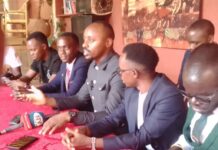
The Radical New Bar Governing Council has resolved to file an appeal before the Supreme Court, organise a nationwide lawyers’ strike on June 26th, 2026, to increase public awareness, and engage regional and international human rights mechanisms.
The statement was issued by the ULS Council at ULS House, Kololo, and signed by President Isaac K. Ssemakadde, S.C. together with other council members.