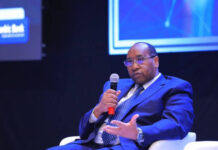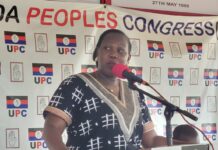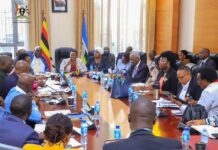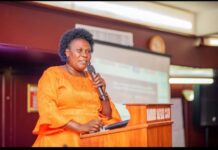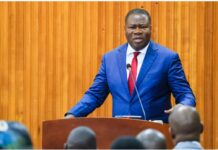

The Minister of State for Agriculture, Fred Bwino Kyakulaga, has announced plans to establish a committee focused on land reform. This initiative aims to address various land-related issues.
According to the minister, the committee will evaluate existing policies and propose necessary changes to improve land rights and responsibilities.
Kyakulaga noted this as he was speaking to journalists at the Uganda Media Centre on December 4, 2024.
He emphasized the critical need for sustainable land utilization in Uganda. The minister also noted that increasing population pressure is diminishing agricultural land, leading to poor management practices among communities.
“Soil is the lifeblood of agriculture, supporting about 95% of food production,” Kyakulaga noted.
Read Also: Lands Ministry to Enact Land Reforms to Boost Uganda’s Economy
This comes as the ministry is in preparation to celebrate World Soil Day on December 5, 2024, at Busitema University, Arapai campus, Soroti city, alongside the launch of the Uganda Soil Institute (USI).
This year’s celebrations are under the theme Conserve Soil for Wealth Creation and Livelihood.
Communities face several challenges in managing land effectively, like fragmentation, lack of cohesion, resource constraints, regulatory barriers, and inequality in access.
Kyakulaga urged farmers to adopt better land management strategies to enhance productivity and sustainability, highlighting that improper usage could jeopardize food security and economic growth.