For many Ugandans who lose limbs through accidents, disease or other medical conditions, the journey to recovery does not end in hospital.
The high cost of prosthetic limbs, limited access to specialized rehabilitation and financial constraints leave many struggling to regain their independence.
Life and Limb Initiative, a non government organization founded by lawyer Eric Geoffrey Mkwe, an accident survivor, hopes to bridge some of these gaps through medical support, rehabilitation and referrals.
For a person who has lost a leg, the prospect of walking again can represent much more than physical recovery. It can mean returning to work, providing for a family, attending school, moving independently and reclaiming a sense of dignity.
But for many Ugandans living with limb loss, that prospect comes with a significant financial burden.
Beyond the immediate costs of surgery, medication and hospitalization, amputees often face another expensive stage of recovery including acquiring an artificial limb, undergoing physiotherapy and learning to use the prosthesis effectively.
For low-income households, these costs can place essential rehabilitation services beyond reach, leaving some people dependent on crutches, wheelchairs or family members for mobility long after their wounds have healed.
For many families, the struggle is therefore twofold, meeting the immediate costs of treatment while finding the resources needed to rebuild the affected person’s independence.
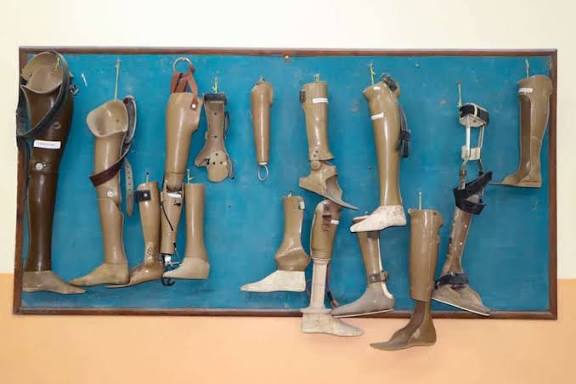
Prosthetic limbs are essential assistive devices that help people with limb loss regain mobility and participate in everyday activities. However, acquiring one is not always affordable.
The cost depends on several factors, including the level of amputation, the materials used, the technology involved, the patient’s physical condition and the degree of customization required.
A basic prosthetic device may serve some users, while others require more specialized solutions depending on their mobility needs and medical circumstances.
However, access to specialized services can be difficult, particularly for people living outside major urban centres or those unable to afford repeated visits to rehabilitation facilities.
The distance between patients’ homes and specialized healthcare providers can add transport costs to an already expensive recovery process.
For people from rural communities, attending regular rehabilitation appointments may mean travelling long distances, sometimes requiring assistance from relatives.
A 2022 Ministry of Health assessment of rehabilitation services found that multidisciplinary rehabilitation personnel were available at Mulago National Referral Hospital and regional referral hospitals, but services faced shortages of staff, space and equipment. It also identified limited provision of prosthetic and orthotic devices, with services concentrated in a small number of public facilities and private workshops.
A 2023 study examining prosthetic rehabilitation services in Ugandan referral hospitals similarly identified inadequate equipment, limited materials and shortages of supporting resources as major constraints.
A report published in October 2026 indicated that artificial limbs in Uganda can cost between UGX 500,000 and more than UGX 30 million, depending on their type and complexity.
For families with limited financial resources, raising such amounts can be extremely difficult, particularly when the individual who requires the device has also lost their source of income.
The costs do not end with purchasing the device. Patients may need repeated assessments, fitting adjustments, physiotherapy and maintenance to ensure the prosthesis remains functional and comfortable.
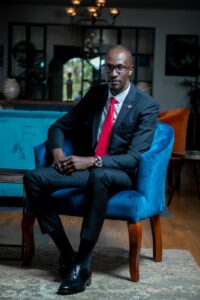
It is against this background that Life and Limb Initiative, founded by Ugandan lawyer Erick Geoffrey Mkwe, seeks to contribute to improving the lives of people living with limb loss.
The organisation, covering the entire Uganda, was inspired by Mkwe’s personal experience following a road accident in December 2025, which left him undergoing multiple surgeries and spending four months confined to a hospital bed.
During his recovery, he encountered other amputees struggling to access prosthetic limbs, medical care, income opportunities and information about their rights.
The experience inspired him to establish the organisation to help amputees access care, rebuild their livelihoods and defend their dignity.
Its mission includes improving access to medical care and rehabilitation, supporting skills development and livelihoods, advocating for disability rights and collaborating with stakeholders to strengthen amputee care.
Under its medical care and rehabilitation programme, Life and Limb Initiative intends to connect amputees to qualified medical professionals, rehabilitation specialists and prosthetic service providers.
The proposed interventions include facilitating access to artificial limbs, physiotherapy and other rehabilitation services, as well as helping patients navigate referrals to appropriate healthcare facilities.
The organization also seeks to work with hospitals, orthopedic specialists, government institutions and development partners to improve access to specialized services.
Its approach recognizes that recovery requires more than providing an artificial limb. Patients need professional assessment, proper fitting, physical rehabilitation and continuing support to adapt to their devices and regain independence.
For Mkwe, addressing these gaps is particularly important because he experienced how an injury can disrupt not only physical health but also employment, financial stability and personal dignity.
While access to prosthetic devices remains a priority, Life and Limb Initiative’s broader ambition is to ensure that people living with limb loss can rebuild their lives.
The organisation intends to complement medical and rehabilitation support with vocational skills development, livelihood opportunities and advocacy for equal treatment.
It also seeks to promote awareness among employers and communities about the capabilities of people living with disabilities, challenging attitudes that often result in discrimination and exclusion.
The initiative’s vision is a Uganda where people living with limb loss can move freely, earn a living and participate in society with dignity.