

Uganda’s latest $150 million financing deal with the Arab Bank for Economic Development in Africa (BADEA) marks more than just another line of credit. It represents a deeper, strategic pivot toward private sector-led economic transformation signaling an evolving view of development financing on the continent.
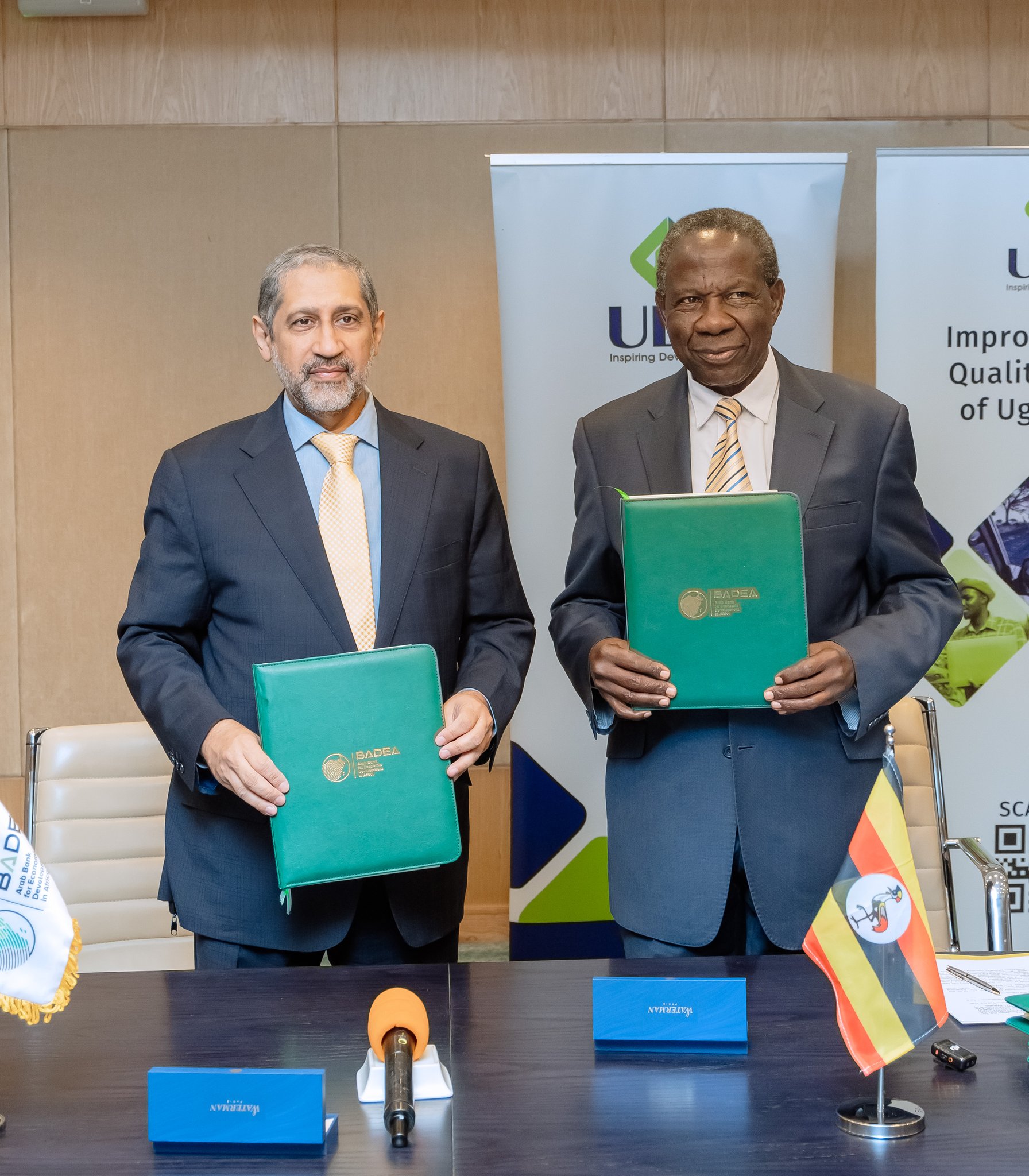
Signed on August 1, 2025, during the 41st Board of Governors meeting of the Trade and Development Bank (TDB) Group in Kigali, Rwanda, the loan targets Uganda’s private sector, with a special focus on micro, small, and medium-sized enterprises (MSMEs), agro-industrialization, and infrastructure.
For decades, Uganda’s financial partnerships with institutions like BADEA have primarily supported public infrastructure like roads, power projects, and state-run services but this new agreement signals a notable shift with financial resources flowing more deliberately toward private enterprise.
“Over the last five decades, our partnership has leaned heavily on public sector infrastructure. But today, BADEA has responded to the call for development finance in the private sector,” said Finance Minister Matia Kasaija during the signing ceremony.
According to the Ministry of Finance, $100 million of the BADEA loan will be administered through the Uganda Development Bank (UDB) to finance agro-processing and industrial projects. The remaining $50 million will directly support MSMEs across key sectors, including agriculture, manufacturing, health, and infrastructure.
Uganda’s economy is largely informal and MSMEs contribute nearly 90% of employment and over 70% of GDP. Yet, these enterprises face chronic barriers including lack of affordable credit, inadequate business support systems, and stifling regulatory hurdles.
This loan comes at a critical time. With global economic shocks, rising inflation, and a youth-heavy population demanding jobs, targeted financing for MSMEs could help catalyze both employment and local production.
However, experts warn that without structural and institutional reforms, the funds may fall short of their potential.
“It’s not just about the money, it’s about how efficiently it is absorbed. If the Uganda Development Bank lacks the agility to disburse loans fairly and swiftly, this could become another missed opportunity,” said Dr. Sarah Kiggundu, an economist at Makerere University.
BADEA President Abdullah Almusabeeh said the agreement with Uganda demonstrates how governments can tap into BADEA’s diverse financial instruments from public sector support to private enterprise and trade windows.
It’s a model that mirrors broader development trends, where the private sector is no longer a peripheral player but a central driver of jobs, innovation, and long-term economic resilience.