

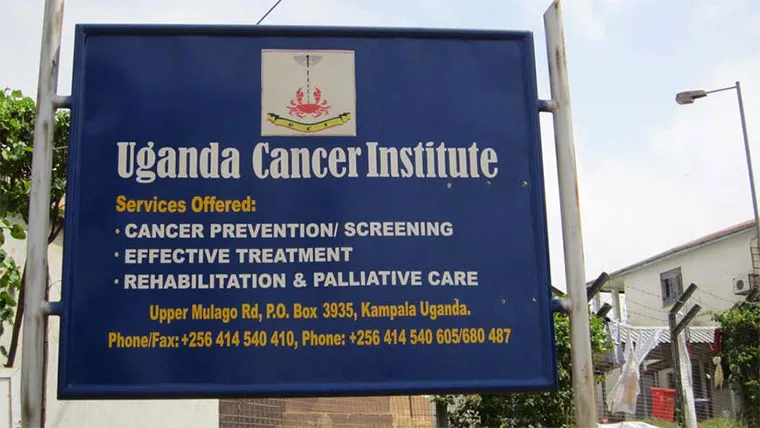
The Uganda Cancer Institute (UCI) has renewed efforts in the fight against childhood cancer with new campaigns to ensure that patients in Uganda not only survive but thrive through treatment.
Together with the Ministry of Health, the institute officially launched its 2025 September Gold campaign, marking Childhood Cancer Awareness Month with a call to action: shift the narrative from dying to living.
Dr Alfred Jatho, Head of Community Cancer Services at UCI, said that 3,278 children and adolescents develop cancer annually in Uganda while only 36% reach care at UCI or regional centers and 7 out of 10 children are missed.
According to UCI’s five-year survival data, for those who reach care, survival rates are promising: 68% for Hodgkin’s lymphoma, 55% for Burkitt’s lymphoma, and 44% for Wilms tumor.
Read Also: Experts Advocate Early Screening in Reducing Burden of Cervical Cancer
“Survival is real and possible in Uganda,” Dr Jatho remarked.
However, he stated that cultural perceptions often equate a cancer diagnosis with a death sentence, leading to stigma, despair, and reliance on alternative remedies.
Additionally, survivors face other challenges, including disrupted education and limited access to fertility preservation, which impact their quality of life post-treatment.
In this new campaign, Dr Jatho emphasized that the new focus on survivorship this September, champions three key priorities including; education continuity, fertility preservation, and equity in survival.
He made these remarks on Thursday, September 4, 2025, in a press conference at Uganda Media Centre.
Read Also: UCI Registers Success in Free Mass Cancer Screening Camp
Moses Echodu, a childhood cancer survivor, proudly shared that he has been cancer-free for 25 years, a testament to the progress Uganda has made in cancer care.
He said survivorship doesn’t end when treatment stops stressing the need for programs that help children rebuild their lives, including returning to school and catching up with peers.
Echodu called for an education system that supports children to keep learning during treatment to avoid falling behind. “Cancer is not contagious,” he noted.