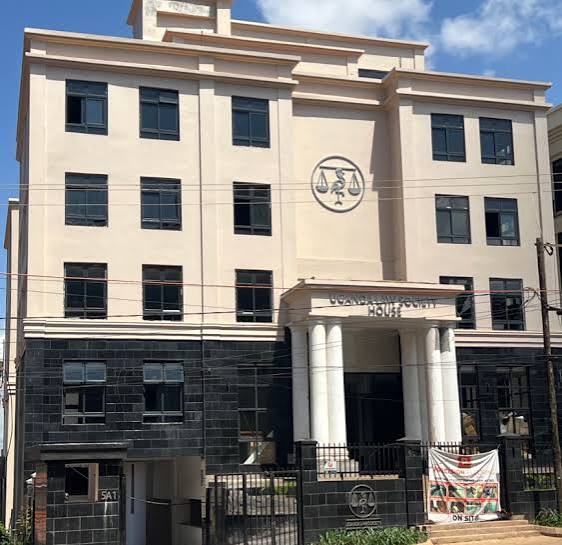
The next president of the Uganda Law Society will inherit an institution caught between internal governance disputes, strained relations with government and growing public expectations. The challenge will be to restore confidence in the Bar while ensuring that the Society remains an independent defender of the rule of law.
The Uganda Law Society (ULS) is approaching an important leadership transition at a time when Uganda’s political, economic and institutional environment demands sober leadership. The High Court’s November 17th, 2026, order directing the Society to convene its Annual General Meeting and conduct elections within 14 days provides an opportunity to resolve its internal leadership dispute and begin institutional renewal.
Whoever assumes the presidency must appreciate that the responsibility extends beyond representing lawyers or confronting government. It involves rebuilding an institution whose credibility depends on its ability to engage government, question its decisions when necessary and defend citizens without appearing politically aligned.
The political context makes this responsibility even more delicate. Uganda emerged from the January 15th, 2026, general elections amid disagreements over the electoral process, opposition grievances and allegations of human rights violations. In July, the UN High Commissioner for Human Rights raised concerns about restrictions on civic space, arbitrary arrests and the treatment of government critics. These are serious allegations that require transparent investigation and appropriate responses from the relevant authorities.
Around this same time, the country faces economic pressures that should not be overlooked. Inflation reached 5.8 percent in October 2026, while the Bank of Uganda revised its economic growth forecast for the 2026/27 financial year downwards to between 5.5 and 6 percent. Public debt and the cost of servicing it also remain important policy concerns.
Looking at these events, the next ULS president must recognise that Uganda needs functioning institutions, predictable laws, investor confidence and peaceful political engagement. The current Society leadership has publicly aligned itself largely with opposition politics, however, an extension of either the opposition or government political machinery is a big mistake that puts credibility at stake.
One of the immediate priorities should be rebuilding trust with government. The relationship between the Bar and the State should not be defined entirely by court battles, public confrontations and political accusations. The incoming leadership should establish regular, structured engagement with the Ministry of Justice and Constitutional Affairs, the Attorney General, the Judiciary, Parliament and security institutions. Such engagement should provide an opportunity to discuss justice sector reforms, human rights concerns, access to justice and the administration of law.
However, rebuilding trust must not mean exchanging professional independence for political accommodation. Government must understand that an independent Bar is not an adversary but an essential partner in constitutional governance. Equally, ULS must appreciate that constructive criticism carries greater institutional value when supported by evidence, legal reasoning and clear recommendations rather than political rhetoric confrontations.
The Society must also address perceptions that it has become politically aligned. The opposition should enjoy the same legal protection and access to professional representation as government officials and their supporters. Where opposition members allege unlawful violations of their constitutional rights, ULS should investigate and respond through established legal mechanisms. Equally, where government officials face allegations or require legal representation, the Society must uphold the same professional principles.
Internally, the next ULS president must prioritise institutional reconciliation. The recent leadership disputes have exposed weaknesses in governance, internal accountability and the management of disagreements within the Society. Transparent elections, respect for statutory mandates, financial accountability and inclusive decision-making should form the foundation of the new administration. The Society must first demonstrate the governance standards it expects from other institutions.
The incoming leadership should also pay attention to the country’s economic transformation. Legal certainty, protection of property rights, contract enforcement, investment protection and access to justice are essential to Uganda’s development ambitions, including the emerging oil and gas economy. ULS should become a constructive contributor to discussions on taxation, public debt, investment laws, commercial disputes and the protection of businesses and ordinary citizens other than becoming an activist Society.
Ultimately, the next ULS president must understand that the Society’s influence does not come from how frequently it confronts government, but from the credibility of its interventions and the confidence it commands across the development sectors of Uganda.
Uganda needs a Law Society that can sit at the same table with government without being compromised, defend and at the same time whip the opposition without becoming its political instrument, and challenge the State without becoming hostile to national interests.
That is the delicate balance the next president must strike. Rebuilding trust with government, restoring confidence among lawyers and maintaining public credibility should not be competing objectives. They should be the defining measures of successful leadership.